







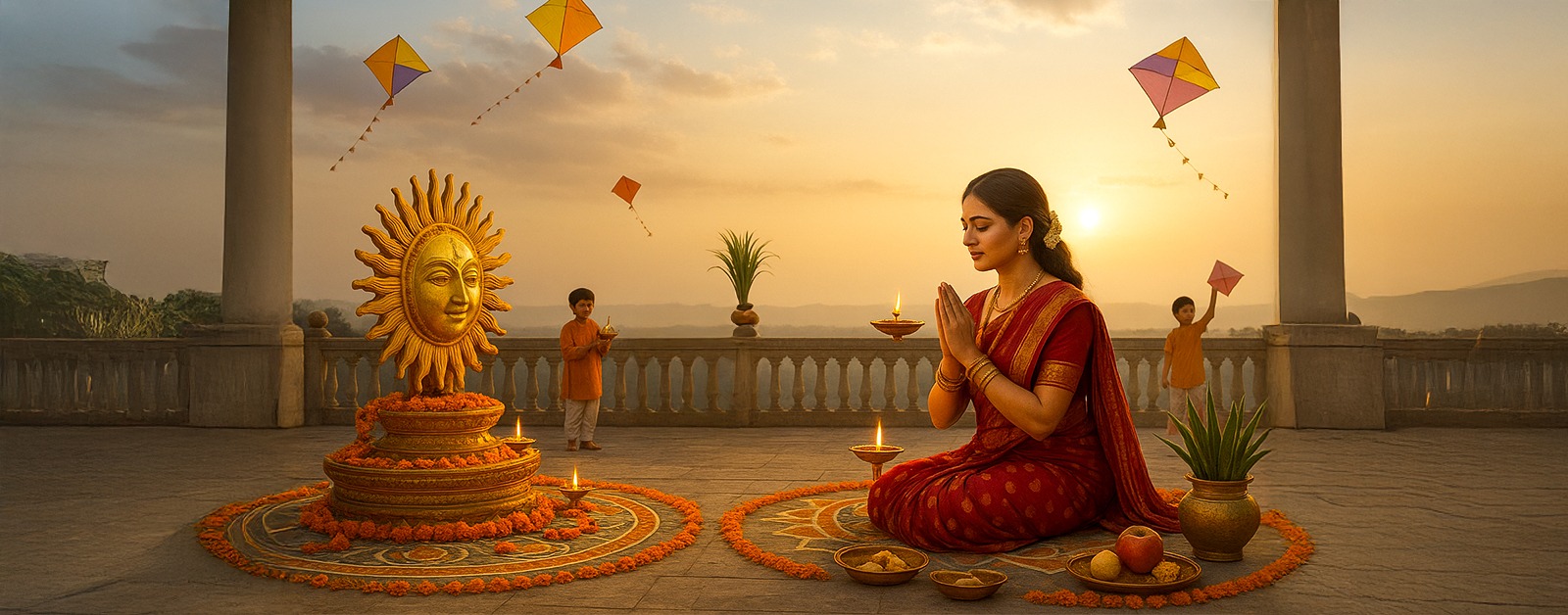
Makar Sankranti is one of the most revered Hindu festivals, celebrated as a symbol of new beginnings, harvest, gratitude, and spiritual upliftment. Unlike most Hindu festivals that follow the lunar calendar, Makar Sankranti is based on the solar cycle, marking the Sun’s transition from Dakshinayan (southern solstice) to Uttarayan (northern solstice). This transition is considered deeply auspicious as it signifies the return of light, warmth, clarity, and spiritual consciousness.
In 2026, Makar Sankranti will carry amplified spiritual importance because of its precise celestial alignments and favourable planetary energies.
Here are the accurate Panchang details for Makar Sankranti 2026:
- Date: Wednesday, 14 January 2026
- Makar Sankranti Moment (Punya Kaal Begins): 07:52 AM
- Punya Kaal Duration: From 07:52 AM to 05:46 PM
- Mahapunya Kaal: 07:52 AM – 09:18 AM
- Ravi Nakshatra Influence: Uttara Ashadha (major part of the day)
Mahāpunya Kāla is considered the most auspicious time for taking a holy dip, performing daan, chanting mantras, and practising spiritual austerities. Every punya karma performed during this period is believed to yield multiplied results.
Spiritual Essence of Makar Sankranti
Makar Sankranti marks the entry of Surya Dev (the Sun God) into Makara Rashi (Capricorn), governed by Lord Shani. This divine meeting symbolises harmony between father (Surya) and son (Shani). It is said that offering prayers on this day helps resolve past karmic burdens, strengthens discipline, improves vitality, and brings inner balance.
The festival also signifies:
- The beginning of Uttarayan, which the scriptures call the day of the devas.
- The start of an auspicious six-month period for spiritual growth and self-realisation.
- A harvest celebration thanking nature for abundance, grains, and nourishment.
According to the Bhagavad Gita, even the final breath leaving the body in Uttarayan grants upliftment:
🕉️ Bhagavad Gita Shloka on Uttarayan
“Uttarayanam tatra prayataḥ gacchanti uttamaṁ gatim.”
—Those who depart during the Sun’s northern path attain higher realms.
Sacred Mantras to Chant on Makar Sankranti
Chanting mantras on this day multiplies spiritual merit. Some recommended mantras:
1. Surya Gayatri Mantra
“Om Bhaskaraya Vidmahe
Mahatejaya Dhimahi
Tanno Aditya Prachodayat.”
2. Surya Beej Mantra
“ॐ ह्रां ह्रीं ह्रौं सः सूर्याय नमः।”
3. Aditya Hridayam Stotra (Verse Opening)
“रविर्विरोचनः सूर्य भानुःखग पूषा गृहेश्वरः।”
Rituals & Traditions of Makar Sankranti
Makar Sankranti is rich with rituals that connect one to nature, divinity, and gratitude. These rituals have been practised for thousands of years, and each carries deep symbolic meaning.
1. Holy Dip in Sacred Rivers (Snan Puja)
A ritual bath in rivers like the Ganga, Yamuna, Godavari, Narmada, Kaveri, or local tirthas washes away karmic impurities.
Why is Snan Important?
- Enhances sattva (purity)
- Removes stress and negative energy
- Aligns chakras
- Grants spiritual purification
This is ideally done during Mahāpunya Kāla.
2. Arghya to Surya Dev
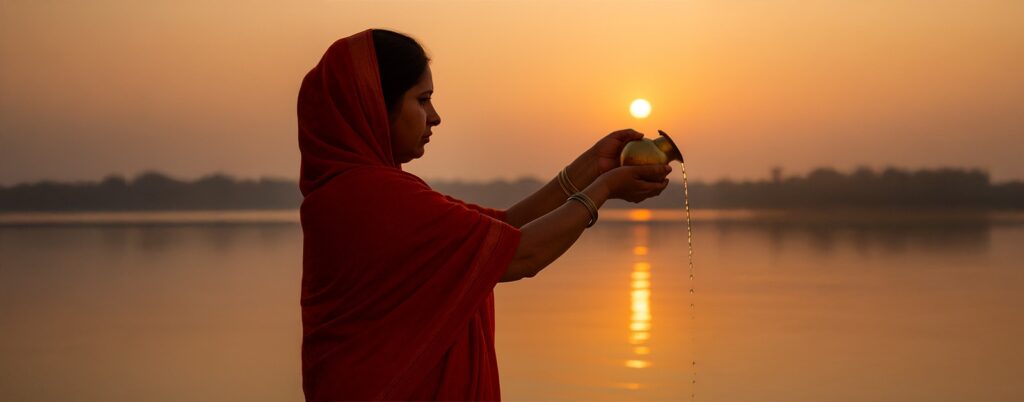
After bathing, devotees offer water to the Sun while chanting mantras.
Benefits of Surya Arghya
- Energises the mind
- Improves eyesight
- Balances circadian rhythm
- Enhances gratitude
The copper vessel (kalash) should be used for Arghya for maximum benefits.
3. Daan & Charity (The Heart of the Festival)
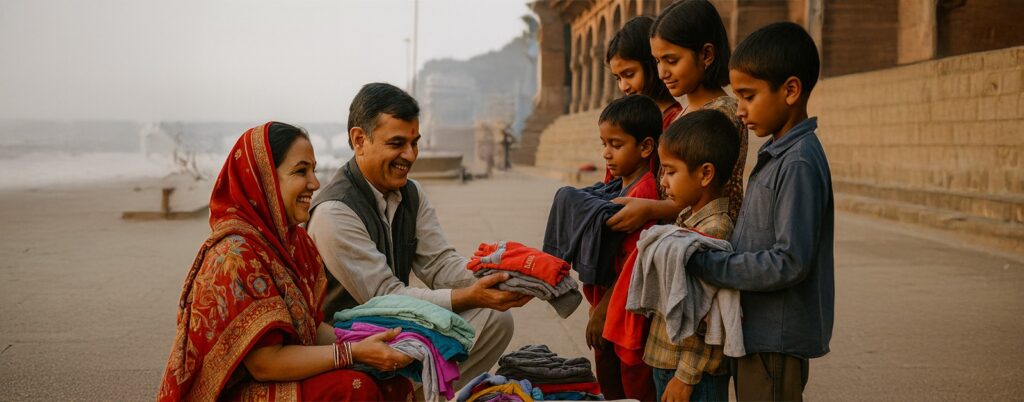
Makar Sankranti is one of the most powerful days for daan.
Traditional offerings include:
- Til (sesame seeds)
- Gud (jaggery)
- Blankets
- Warm clothes
- Fruits
Cow donation (Gau-daan)
The scriptures say:
“दानं पुण्याय जीवनं धान्याय।”
—Daan purifies life; charity nourishes the soul.
Giving til and gud symbolises dissolving bitterness and cultivating sweetness in life.
4. Til-Gud Prasad
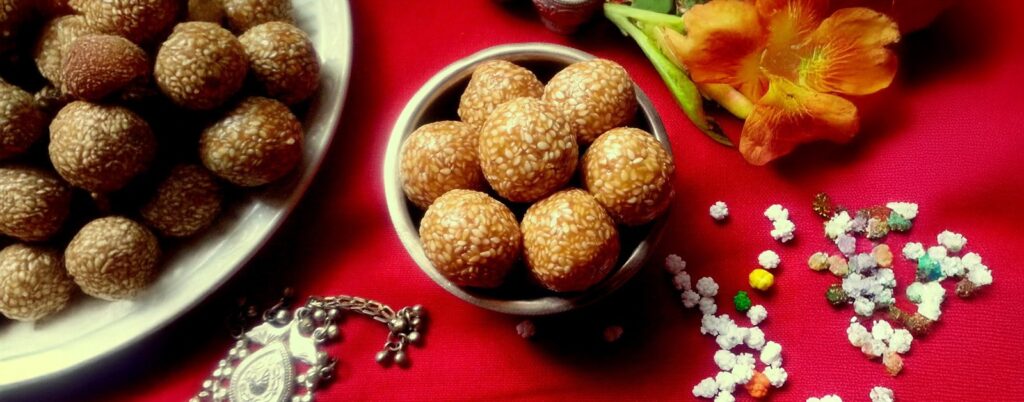
Eating til (sesame) and gud (jaggery) is considered extremely auspicious. These ingredients:
- Purify the body
- Increase heat & vitality during winter
- Symbolise harmony and sweet relationships
The famous phrase:
“Til-gud ghya, god god bola”
—Accept this sweet, and speak sweetly.
reflects the festival’s message of kindness and forgiveness.
5. Kite Flying: Soaring Aspirations
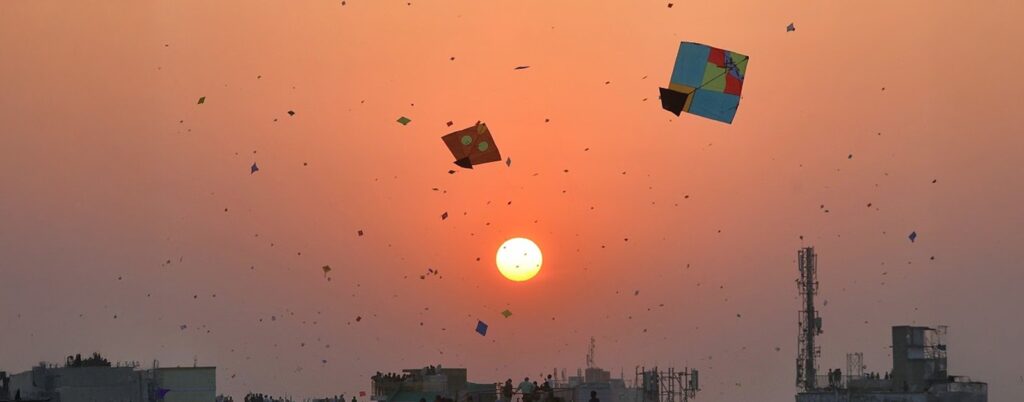
Across India, especially in Gujarat and Rajasthan, people celebrate Makar Sankranti through kite flying. This joyful ritual connects humans to the sun’s renewed energy. It signifies:
- Rising above obstacles
- Aiming higher
- Letting go of past burdens
- Finding joy in the sky’s infinite possibilities
Makar Sankranti Across India — One Festival, Many Colours
Though the essence is the same, the celebration has different flavours across the country.
1. Lohri (Punjab & Haryana) – Gratitude to Fire
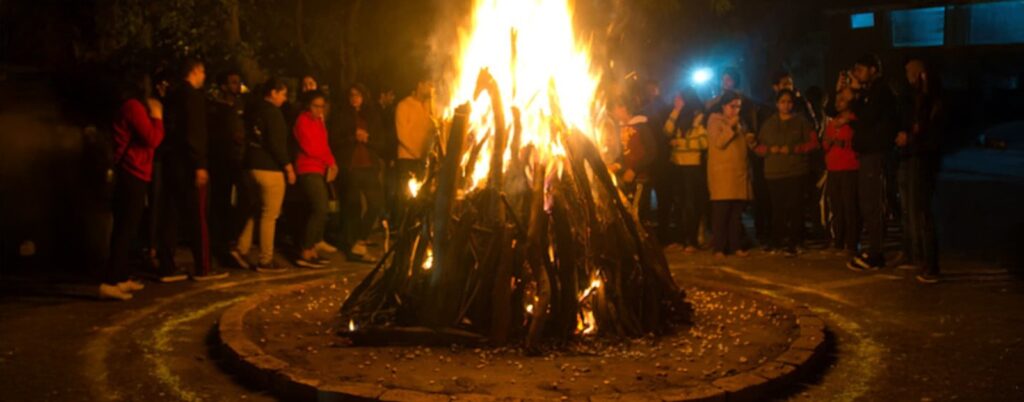
Celebrated one night before Sankranti, Lohri honours Agni Dev (fire). People gather around bonfires, dance to dhol beats, and offer peanuts, sesame, rewri, and popcorn.
Symbolism:
- Burning away negativity
- Welcoming warmth and prosperity
2. Pongal (Tamil Nadu) – A Four-Day Harvest Celebration
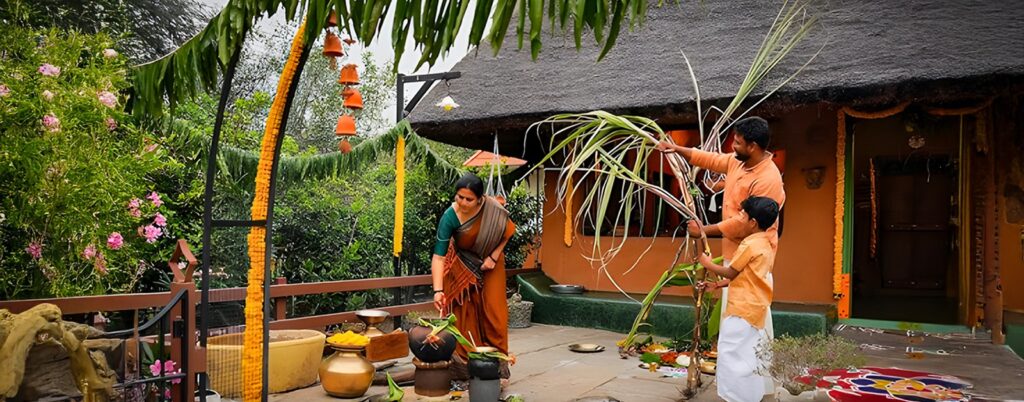
Pongal is a vibrant festival where rice is cooked in new pots under the sun.
“Pongal” means overflowing abundance, and the ritual signifies:
- A full harvest
- Prosperity in every home
- Gratitude to Surya and cattle
3. Uttarayan (Gujarat) – The Sky Turns Colourful
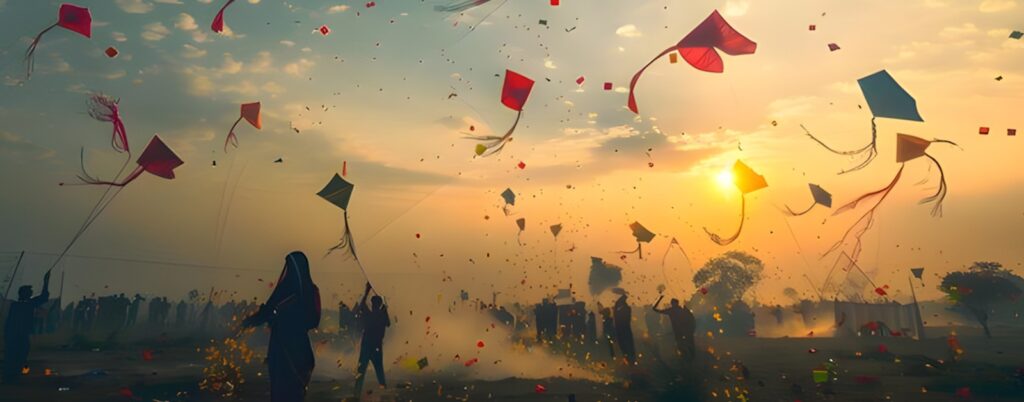
The International Kite Festival attracts millions. Every rooftop becomes a celebration zone.
Symbolism:
- Ambitions taking flight
- Renewed enthusiasm
- Freedom and creativity
4. Magh Bihu (Assam) – Feasts & Community Joy
Assam celebrates with community feasts, bonfires, and traditional Assamese delicacies.
5. Khichdi Parv (North India)
In Uttar Pradesh, Bihar, and nearby states, people offer khichdi, til, and daal at temples. Devotees throng Prayagraj for the Gangasagar Snan, a ritual considered highly meritorious.
Spiritual Benefits of Observing Makar Sankranti
Makar Sankranti is not just a festival — it is an energetic gateway. Performing rituals mindfully on this day can bring profound benefits.
1. Cleansing of Past Karma
Sun’s transition to Capricorn symbolises discipline and karmic correction.
2. Blessings for Prosperity & Growth
Charity and gratitude open doors for abundance.
3. Emotional Healing & Renewal
Letting go of negativity allows inner peace.
4. Strength & Vitality
Surya Arghya strengthens both mind and body.
5. Spiritual Upliftment (Uttarayan Effect)
The scriptures declare this a period ideal for meditation, mantra chanting, and self-realization.
What to Do on Makar Sankranti (Do’s & Don’ts)
Here are simple guidelines to align yourself with the sacred energy of this day:
✔️ Do’s
- Take a holy bath during Mahapunya Kaal
- Offer Arghya to Surya Dev
- Donate sesame, jaggery, and blankets
- Prepare and share til-gud sweets
- Feed cows, crows, and the poor
- Chant Surya Mantras
- Wear warm, clean clothes
- Keep your mind calm and heart grateful
❌ Don’ts
- Avoid consuming alcohol or non-vegetarian food
- Avoid anger, harsh words, and negativity
- Do not engage in unnecessary arguments
- Avoid sleeping during the day
- Do not harm animals or birds as this day is for spreading kindness
The Deeper Message of Makar Sankranti 2026
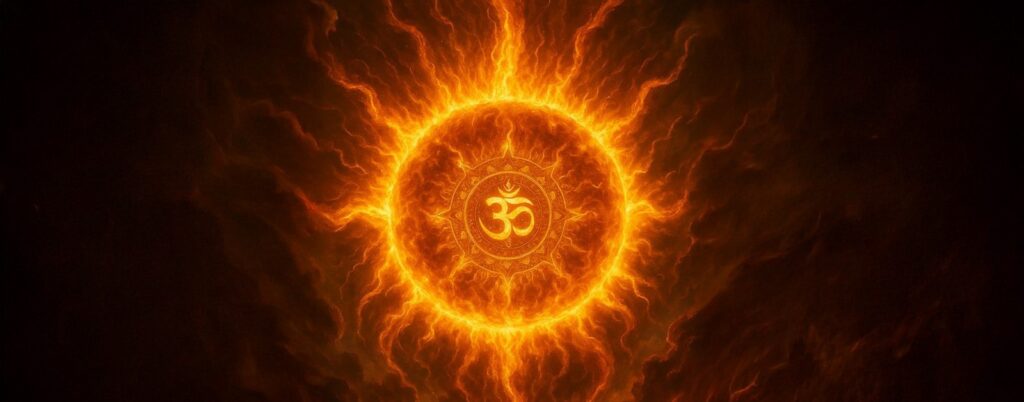
Each Makar Sankranti brings the promise of light winning over darkness, but 2026 holds a unique energy due to favourable planetary alignments. Capricorn represents:
- responsibility
- structure
- discipline
- spiritual maturity
When the Sun enters this sign, it illuminates our life path and encourages clarity, purpose, and inner strength.
The festival teaches us:
- to rise above the past,
- to embrace transformation,
- to cultivate purity within,
- and to let our consciousness move toward light.
It is believed that:
“सूर्यस्य्य रश्मयो लोकाय जीवनाय च।”
—The rays of the Sun are the givers of life and liberation.
Rudraksha Blessed by Planet Sun
The Sun, central to the Makar Sankranti celebrations, also blesses certain Rudrakshas. Wearing 12 Mukhi Rudraksha can amplify the Sun’s positive effects in one’s life. These Rudrakshas, when worn with faith, can enhance one’s vitality, leadership qualities, and overall well-being.
India’s Most Famous Sun Temples and Their Uniqueness
- Konark Sun Temple, Odisha: An architectural marvel, this temple is designed as a massive chariot with intricately carved wheels, walls, and pillars.
- Modhera Sun Temple, Gujarat: Known for its magnificent stepwell and the annual dance festival that celebrates the Sun God.
- Martand Sun Temple, Jammu & Kashmir: A testament to Kashmiri architecture, this temple offers a panoramic view of the Kashmir Valley.
- Suryanar Kovil, Tamil Nadu: This temple is unique as it houses shrines for all the nine planetary deities, with the Sun God as the main deity.
- Arasavalli Sun Temple, Andhra Pradesh: One of the ancient sun temples, it’s believed that worshipping here can cure skin ailments and blindness.
Importance of the Sun for Human Beings and Existence of Life
The Sun, our primary energy source, plays a pivotal role in sustaining life on Earth. Its light and warmth are essential for photosynthesis, the process by which plants produce food. This not only sustains plant life but also forms the base of the food chain for all organisms. Moreover, the Sun helps regulate our planet’s climate and weather patterns, ensuring a balance that supports diverse ecosystems. On a biological level, sunlight aids in the production of Vitamin D in humans, crucial for bone health and immune function. In essence, without the Sun, life as we know it would cease to exist.
Conclusion: Welcoming Light Into Life
Makar Sankranti 2026 is not just a date on the calendar; it is an opportunity for renewal. As the Sun begins its northward journey, humanity, too, steps into a phase of hope, clarity, and rejuvenation. By observing the rituals, practising charity, and embracing gratitude, one aligns with cosmic rhythms that uplift the body, mind, and soul.
May Surya Dev bless you with:
- radiant health
- abundance
- positive energy
- spiritual wisdom
- and a harmonious life ahead
“ॐ सूर्याय नमः।”
Happy Makar Sankranti 2026!




Leave a comment