






Every year, for fifteen days, Hindu families pause to remember the ones who came before them.
Water is offered, pinds are made, crows and cows are fed, and names of ancestors are spoken with folded hands. But why do we do this, and why these particular days? The answers live in the Pitru Paksha stories passed down through the Mahabharata, the Puranas and generations of storytelling.
In 2026, Pitru Paksha begins on Saturday, 26 September with Purnima Shraddha and ends on Saturday, 10 October with Sarva Pitru Amavasya.
This blog brings together the most loved Pitru Paksha stories, from Karna’s lesson in heaven to the sacred ground of Gaya, and explains what each one means for devotees today.
Key Takeaways
- Pitru Paksha 2026 runs from Saturday, 26 September to Saturday, 10 October, ending with Sarva Pitru Amavasya
- The story of Karna explains why offering food and water to ancestors matters as much as offering wealth
- The legend of Gayasura explains why pind daan at Gaya holds such special importance
- Mata Sita’s pind daan at the Phalgu river shows that sincerity counts more than grandeur
- Sarva Pitru Amavasya is the day to honour all ancestors, including those whose tithi is unknown
- Japa with a Rudraksha mala during Pitru Paksha helps keep the mind steady and devoted
What Is Pitru Paksha and Why Do Its Stories Matter?
Pitru Paksha, also called Shraddha Paksha, is the fortnight dedicated to Pitrs, our departed ancestors.
It falls in the Krishna Paksha of Ashwin month (by the Purnimanta calendar) and closes on Amavasya. During these days, families perform shraddh, tarpan and pind daan on the tithi on which an ancestor passed away.
The rituals can look complex, but the Pitru Paksha stories make their meaning simple.
Each story answers a question: Why food and not gold? Why Gaya? Why does a handful of sand count as an offering? Knowing these stories helps devotees perform shraddh with understanding rather than habit.
Pitru Paksha 2026 at a glance
| Day | Date |
| Purnima Shraddha | Saturday, 26 September 2026 |
| Pratipada Shraddha (Krishna Paksha begins) | Sunday, 27 September 2026 |
| Sarva Pitru Amavasya (Mahalaya Amavasya) | Saturday, 10 October 2026 |
Shraddha timings vary by city. Please check the Panchang for your location before performing rituals.
The Story of Karna: How Pitru Paksha Began
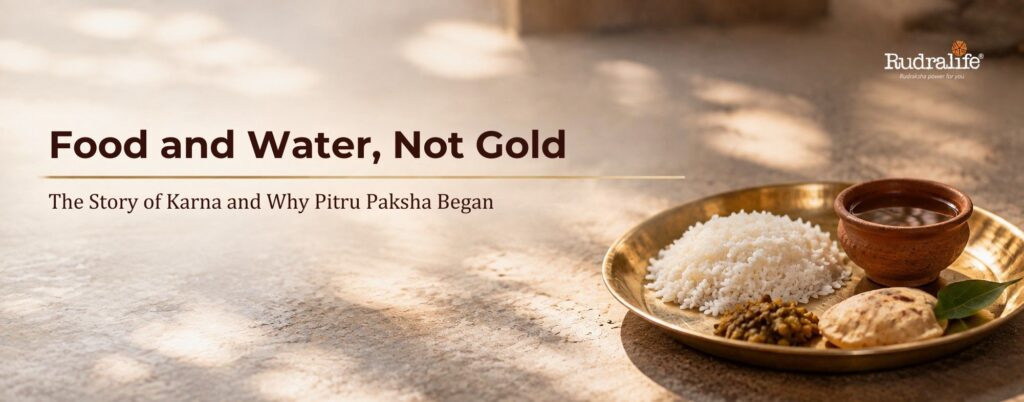
Of all the Pitru Paksha stories, the story of Karna is the one most often told to explain why this fortnight exists at all.
Karna, the great warrior of the Mahabharata, was known across the land as Daanveer, the one who never refused anyone who came to him asking. He gave away gold, jewels and wealth all his life. When he fell at Kurukshetra and his soul reached swarga, he was welcomed with honour. But when he felt hungry, he was served not food but gold and precious jewels.
Puzzled, Karna asked Lord Indra why. Indra explained that in his lifetime Karna had donated gold generously, but he had never once offered food or water to his ancestors. What one gives is what one receives.
Karna replied that he had never known who his ancestors were. He learnt the truth of his birth, that he was the son of Kunti, only just before the war. The mistake was not one of neglect but of not knowing.
Understanding this, Indra allowed Karna to return to earth for a period of about fifteen days. During this time, Karna offered food and water to his ancestors and performed shraddh. When he returned to swarga, his hunger was satisfied. That fortnight came to be observed as Pitru Paksha.
What Karna’s story teaches: Wealth has its place, but the most basic offerings, food and water given with remembrance, are what nourish our ancestors. It also reminds us that it is never too late to begin honouring them.
The Legend of Gayasura: Why Gaya Is Sacred for Pind Daan
When families speak of pind daan, one place is named before all others: Gaya, in Bihar. The reason lies in the legend of Gayasura, told in the Gaya Mahatmya of the Vayu Purana.
Gayasura was an asura, but unlike most asuras he was deeply devoted. He performed such intense penance that the gods were moved to grant him a boon. He asked that his body become so pure that anyone who saw or touched him would be freed from all sins and attain moksha.
The boon was granted, and soon people everywhere were attaining liberation simply by seeing Gayasura, without any effort of dharma or devotion. The balance of the three worlds began to shift. The gods approached Lord Brahma, who asked Gayasura for his body as a sacred ground for a great yagna. Gayasura agreed and lay down.
Even so, his body would not stay still. Finally, Lord Vishnu placed his divine foot upon Gayasura, and he became still. Pleased with Gayasura’s surrender, Lord Vishnu granted him a final boon: the land over which his body lay would become the holiest place for liberating ancestors. Whoever offered pind daan there would free their Pitrs.
That land is Gaya. The Vishnupad Temple stands over the footprint of Lord Vishnu, and the Phalgu river flows beside it. Lakhs of devotees travel to Gaya during Pitru Paksha to offer pind daan.
What Gayasura’s story teaches: Surrender turns even an asura into a blessing for the world. And a sacred place carries the power of the devotion that shaped it.
Mata Sita’s Pind Daan at the Phalgu River
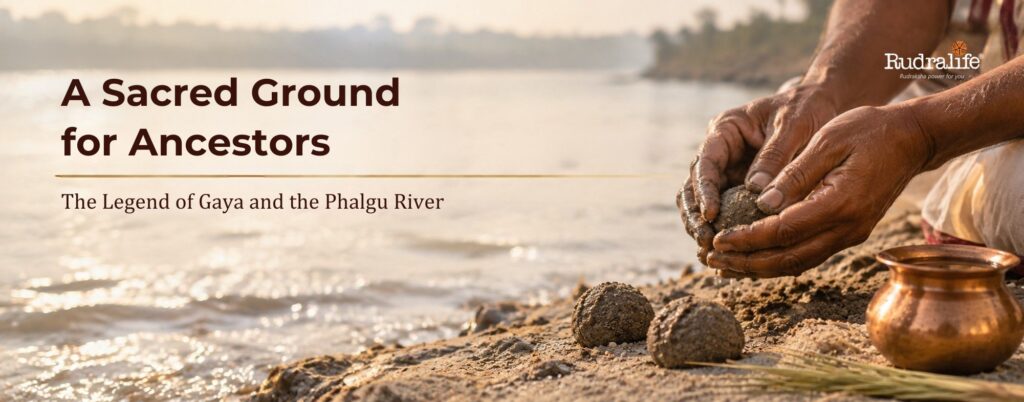
Gaya holds another story, one that is especially close to devotees’ hearts because it shows the power of a sincere offering, however humble.
In popular retellings of the Ramayana tradition, Shri Ram, Mata Sita and Lakshman came to Gaya to perform the shraddh of Raja Dashrath. Shri Ram and Lakshman went to gather the items needed for the ritual. While they were away, the auspicious time began to pass, and Raja Dashrath’s spirit appeared before Mata Sita, asking for pind.
With no rice, no ingredients and no time to wait, Mata Sita made pinds from the sand of the Phalgu riverbank and offered them to Raja Dashrath. He accepted them and was satisfied. She asked five witnesses to stand by her: the Phalgu river, a cow, a Tulsi plant, a Ketaki flower and the Akshayavat, the undying banyan tree.
When Shri Ram returned, he found it hard to believe that the shraddh had been completed with sand. Mata Sita turned to her witnesses. The Phalgu river, the cow, the Tulsi and the Ketaki stayed silent or denied what they had seen. Only the Akshayavat spoke the truth.
Hurt, Mata Sita cursed those who denied her. It is said that this is why the Phalgu flows beneath the sand at Gaya, and why the Ketaki flower is not offered in worship. The Akshayavat she blessed to remain evergreen forever, and pind daan beneath the Akshayavat is still considered an essential part of the Gaya pilgrimage.
What Mata Sita’s story teaches: Ancestors receive what is offered with sincerity. It is the bhav, the devotion behind the offering, that matters, not how grand it is.
Why Crows, Cows and Dogs Are Fed During Shraddh
Many Pitru Paksha stories share one common thread: offerings reach ancestors through living beings. During shraddh, a portion of food is set aside for the crow, the cow, the dog, along with a share offered to a Brahmin or given as daan in the ancestors’ name. This is known as Panchbali.
The crow in particular is seen as a messenger between our world and the world of the Pitrs. When a crow accepts the food, families take it as a sign that their ancestors are pleased.
Feeding the cow is an act of seva, and feeding a hungry person or a Brahmin completes the offering with daan.
Sarva Pitru Amavasya: The Day for All Ancestors
Sarva Pitru Amavasya is the final and most significant day of Pitru Paksha. In 2026, it falls on Saturday, 10 October.
This day is set aside for honouring all ancestors together. According to the Garuda Purana, if a family does not know the tithi of an ancestor’s passing, or was unable to perform shraddh on the right tithi, shraddh on this Amavasya is the most favourable choice. It is also known as Mahalaya Amavasya.
For many families, especially those living away from their hometowns or unable to travel to Gaya, Kashi or other tirthas, performing a puja on this day through experienced pandits is a meaningful way to complete their duty to their Pitrs.
Rudralife’s Pitru Moksh Maha Puja
On Sarva Pitru Amavasya, Rudralife will conduct the Pitru Moksh Maha Puja, dedicated to the peace and liberation of devotees’ ancestors.
The puja honours our ancestors, respects their teachings and offers liberation to their departed souls, bringing peace to their spirits and blessings to their living descendants.
Puja details:
| Date | Saturday, 10 October 2026 |
| Time | 2:15 pm IST (Laabh Muhurat) |
| Duration | 3 to 4 hours |
| Pandits | 5 Vedic Brahmins |
Vedic rituals included: Shodasopchar Puja, 108 Tulsi Archan, Vishnu Sahasranam Paath and Pitru Pujan.
Why this puja is for you: It helps overcome karmic debts, brings harmony within the family and supports personal well-being. It also helps bring spiritual growth, clarity and the blessings of ancestors, giving a sense of guidance and support in life.
Your Sankalp: The pandits take your Sankalp with your full name and Gotra, as per Vedic scriptures. You also receive a personal video on WhatsApp of the Vedic pandits chanting your name and Gotra during the puja.
The puja is conducted online, so devotees can participate from anywhere in the world without travelling to a tirtha.
Book your participation in the Pitru Moksh Maha Puja →
Japa During Pitru Paksha: Keeping the Mind in Devotion
Pitru Paksha is a time for quiet remembrance. Along with shraddh and tarpan, many devotees make japa a daily part of these fifteen days. Chanting with a steady mind helps turn the whole fortnight into an offering.
Chanting “Om Namah Shivaya” or the Maha Mrityunjaya Mantra during Pitru Paksha is a simple practice any devotee can follow at home. Lord Shiva is worshipped as the lord of liberation, and chanting his name while remembering one’s ancestors keeps the heart focused on their peace.
A Rudraksha japa mala helps in this practice. Its 108 beads keep count so the mind can stay with the mantra instead of the numbers, and the Rudraksha itself helps bring calm and focus to the chanting. Every Rudralife japa mala is X-ray authenticated and ACE energised with 1,25,000 mantra chantings before it reaches the devotee.
Explore Rudralife’s authentic Rudraksha japa malas →
What These Pitru Paksha Stories Teach Us Today
Read together, these Pitru Paksha stories carry a few clear lessons:
- From Karna: Food and water offered with remembrance nourish our ancestors in a way wealth alone cannot.
- From Gayasura: Surrender and devotion can make a place, and a person, a source of blessing for others.
- From Mata Sita: Sincerity is the true measure of an offering.
Above all, they remind us that we are part of a long line of people whose prayers, sacrifices and blessings made our lives possible. Pitru Paksha is our chance to say thank you.
FAQ
1. When is Pitru Paksha 2026? Pitru Paksha 2026 begins on Saturday, 26 September with Purnima Shraddha and ends on Saturday, 10 October with Sarva Pitru Amavasya. Timings vary by city, so check your local Panchang.
2. What is the story behind Pitru Paksha? The most popular Pitru Paksha story is that of Karna. In swarga, he was served gold instead of food because he had never offered food to his ancestors. Lord Indra allowed him to return to earth for about fifteen days to perform shraddh, and this period became Pitru Paksha.
3. Why is Gaya important for pind daan? According to the Gaya Mahatmya of the Vayu Purana, Lord Vishnu placed his foot on the devoted asura Gayasura and blessed the land as the holiest place for liberating ancestors. The Vishnupad Temple marks this spot.
4. Why did Mata Sita offer pind made of sand? While Shri Ram and Lakshman were away gathering items for Raja Dashrath’s shraddh, the auspicious time was passing and Raja Dashrath appeared asking for pind. Mata Sita offered pinds of sand from the Phalgu riverbank, and he accepted them.
5. What if I don’t know the tithi of my ancestor’s passing? Shraddh can be performed on Sarva Pitru Amavasya, which falls on Saturday, 10 October 2026. This day is meant for honouring all ancestors together.
6. Why are crows fed during shraddh? The crow is seen as a messenger between our world and the world of the Pitrs. When a crow accepts the offered food, families take it as a sign that their ancestors are pleased.
7. Can I chant mantras during Pitru Paksha? Yes. Chanting “Om Namah Shivaya” or the Maha Mrityunjaya Mantra with a Rudraksha japa mala during Pitru Paksha helps keep the mind devoted and steady through these fifteendays.
Bottom Line
The Pitru Paksha stories of Karna, Gayasura and Mata Sita all point to one truth: our ancestors are remembered through sincere offerings of food, water and prayer.
This Pitru Paksha, from 26 September to 10 October 2026, is a chance to honour them with understanding and devotion.
For 25 years, Rudralife has helped devotees bring authentic Rudraksha and Vedic pujas into their spiritual lives. On Sarva Pitru Amavasya, devotees can participate in Rudralife’s Pitru Moksh Maha Puja for the peace of their ancestors, and continue their daily japa with an authentic, X-ray tested and ACE energised Rudraksha japa mala.
Book the Pitru Moksh Maha Puja →
Explore Rudraksha japa malas →







Leave a comment