







The 12 Jyotirlinga temples are the twelve self-manifested (swayambhu) shrines of Lord Shiva spread across India, and Shravan, the monsoon month sacred to Shiva, is considered the most spiritually potent time to visit any of them, with Mondays (Somwar) drawing the largest crowds.
The best time to visit the 12 Jyotirlinga temples during Shravan is early morning on any day except Monday, since Shravan Somwar (Mondays) draws the heaviest crowds of the entire year.
Shravan 2026 runs July 30 to August 28 in North India and August 13 to September 11 in South and West India, and every temple on this list sees peak devotion during this sacred month, so timing your darshan around crowd levels, monsoon weather, and temple booking systems makes all the difference.
Key Takeaways
- There are 12 Jyotirlinga temples across India, from Somnath in Gujarat to Rameshwaram in Tamil Nadu.
- Shravan Somwar (Mondays) sees the heaviest crowds at Mahakaleshwar, Vishwanath, Vaidyanath, and Trimbakeshwar.
- Kedarnath is weather-sensitive during Shravan monsoon and needs real-time road/travel checks before departure.
- Nageshwar, Rameshwaram, and Grishneshwar offer a calmer Shravan darshan for those avoiding festival crowds.
- Devotees often pair Jyotirlinga darshan with Rudraksha worship, since both are rooted in Shiva devotion.
What Are the 12 Jyotirlinga Temples?
A Jyotirlinga literally means “pillar of light,” referring to sites where Shiva is believed to have manifested as a radiant column rather than being installed by human hands.
These twelve temples hold the highest devotional significance among Shiva shrines in India, and Shravan is when they see peak pilgrim activity nationwide.
Complete List of 12 Jyotirlinga Temples and Locations
- Somnath, Gujarat
- Mallikarjuna, Srisailam, Andhra Pradesh
- Mahakaleshwar, Ujjain, Madhya Pradesh
- Omkareshwar, Madhya Pradesh
- Kedarnath, Uttarakhand
- Bhimashankar, Maharashtra
- Vishwanath, Varanasi, Uttar Pradesh
- Trimbakeshwar, Nashik, Maharashtra
- Baidyanath, Deoghar, Jharkhand
- Nageshwar, Dwarka, Gujarat
- Rameshwaram, Tamil Nadu
- Grishneshwar, Aurangabad, Maharashtra
Best Time to Visit Each Jyotirlinga During Shravan
| Region | Shravan 2026 Dates | Somwar (Monday) Dates |
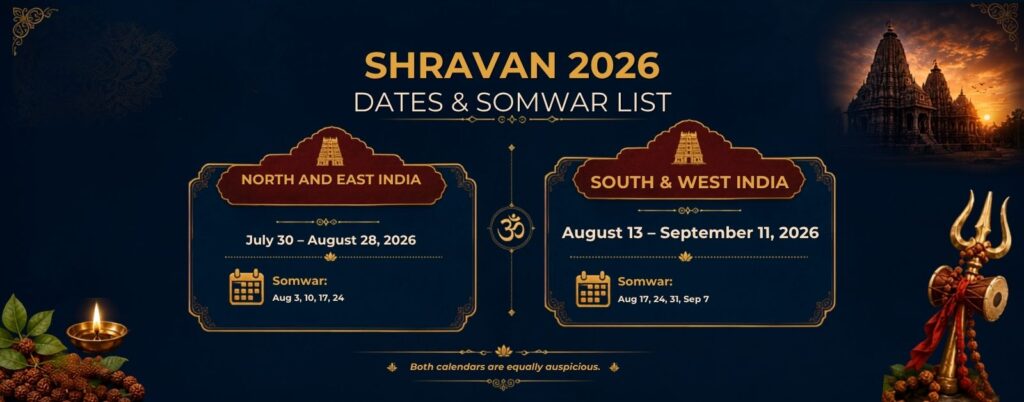
| North & East India | July 30 – August 28, 2026 | August 3rd, 10th, 17th, 24th |
| South & West India | August 13 – September 11, 2026 | August 17th, 24th, 31st, September 7th |
The gap is due to North India following the Shree Kashi Panchang for tithi and Purnimant Calendar for dates, In Purnimant Calendar the month starts on the day right after the full moon (Purnima). This makes the month begin about 15 days earlier.
and in South/West India following the Date Panchangfor tithi and Amavasyant / Amanta Calendar for dates, In Amavasyant / Amanta Calendar month starts on the day right after the new moon (Amavasya). This pushes the start date about half a month later than the North. both are equally valid, not a discrepancy.
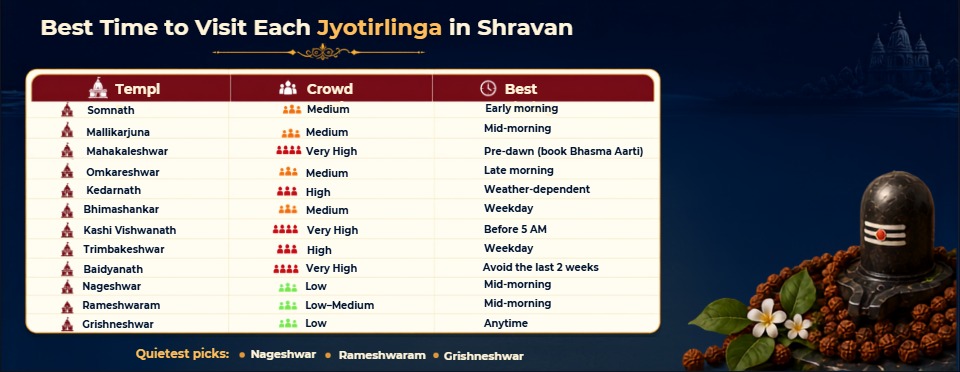
- Somnath: Coastal monsoon weather; early morning darshan avoids peak crowds.
- Mallikarjuna: Heavy hill rainfall; mid-morning visits are safer than early morning.
- Mahakaleshwar: One of the busiest Jyotirlingas in Shravan. The pre-dawn Bhasma Aarti needs advance online booking through the temple’s official portal, and Shravan Monday slots are known to fill within minutes of the booking window opening.
- Omkareshwar: Narmada riverbanks can flood; late morning visits are advisable.
- Kedarnath: For 2026, the temple opened on April 22 and is expected to close around November 11 (Bhai Dooj), so it remains open through all of Shravan, but the route stays highly monsoon-sensitive, and road/trek advisories should be checked close to your travel date.
- Bhimashankar: Landslide-prone hill roads; a clear-weather weekday visit is ideal.
- Vishwanath (Varanasi): Extremely crowded, especially with the Kanwar Yatra overlapping; pre-5 AM darshan is calmest.
- Trimbakeshwar: Heavy rain and large Somwar crowds due to proximity to Nashik.
- Vaidyanath (Deoghar): A major Kanwar Yatra stop; crowds peak in the last two weeks of Shravan.
- Nageshwar: Comparatively low crowd levels, a good choice for a peaceful visit.
- Rameshwaram: Steady but manageable crowds through the season.
- Grishneshwar: Lighter crowds than northern Jyotirlingas; easy to combine with Ellora Caves.
The four temples with the heaviest Shravan Somwar crowds are Mahakaleshwar, Vishwanath, Vaidyanath, and Trimbakeshwar.
For a quieter darshan, Nageshwar, Rameshwaram, and Grishneshwar are better picks.
Rituals to Perform During Jyotirlinga Darshan in Shravan
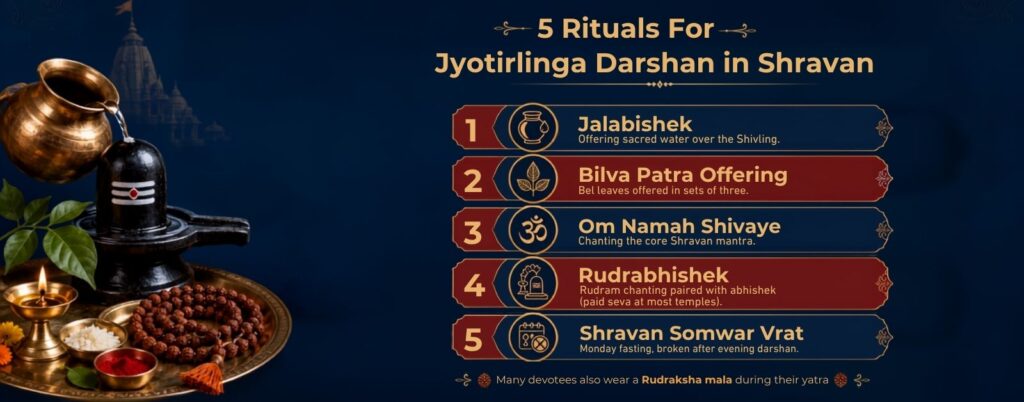
- Jalabhishek, offering water over the lingam
- Bilva Patra offering, bel leaves offered in sets of three
- Chanting Om Namah Shivaye, the core Shravan mantra
- Rudrabhishek, Rudram chanting paired with abhishek, offered as a paid seva at most temples
- Shravan Somwar vrat, fasting, broken after evening darshan
Many devotees also wear a Rudraksha mala during their Jyotirlinga yatra, since it’s traditionally tied to Shiva worship and chanting.
Planning to wear one on your yatra?
Get a free consultation → and carry an authentic, ACE-energised Rudraksha chosen for you.
If you’re picking one up before travel, it’s worth learning how to spot an authentic bead first; the market for both Rudraksha and puja items sees a rise in mislabeled and fraudulent products every Shravan season.
Please note: Always check with the temple trust in advance about whether these rituals are permitted on the day of your visit. During Shravan Somwar, the crowds are so heavy that many temples are unable to allow individual rituals such as Rudrabhishek or extended Jalabhishek, so confirming ahead of time saves disappointment.
Travel Tips for Shravan Jyotirlinga Yatra
- Book darshan slots online in advance, especially at Mahakaleshwar, Vaidyanath, and Vishwanath.
- Avoid Mondays if you prefer shorter queues; Tuesday to Thursday is noticeably calmer.
- Check monsoon travel advisories for Kedarnath, Bhimashankar, and Omkareshwar before departure.
- Carry rain gear and waterproof footwear.
- Build extra buffer time into your schedule; Shravan queues run longer than usual.
FAQs
1. Which Jyotirlinga is best to visit on Shravan Somwar?
Mahakaleshwar in Ujjain is the most popular choice for Shravan Somwar due to its Bhasma Aarti, though it also sees the highest crowds.
2. Is Kedarnath open during Shravan month?
Yes. Kedarnath opened for the 2026 season on April 22 and is expected to close around November 11 (Bhai Dooj), so it stays open through all of Shravan, though monsoon travel advisories should be checked closer to your travel date.
3. Can I visit more than one Jyotirlinga in a single Shravan trip?
Yes, several devotees combine nearby Jyotirlingas; for example, Trimbakeshwar and Grishneshwar are both in Maharashtra and can be covered in one regional trip.
4. Do I need to wear or carry anything specific for Jyotirlinga darshan?
There’s no mandatory item, but many devotees carry Bilva leaves and wear a Rudraksha mala as part of their Shiva worship practice.
5. Which Jyotirlinga has the least crowd during Shravan?
Nageshwar, Rameshwaram, and Grishneshwar typically see far lighter Shravan crowds compared to Mahakaleshwar or Vaidyanath.
Bottom Line
Shravan is the most meaningful time to undertake a Jyotirlinga yatra, but crowd levels, monsoon weather, and temple-specific booking systems vary significantly across the twelve sites; planning makes all the difference.
If a Rudraksha mala is part of your Shravan devotion, make sure it’s authenticated before you carry it into any of these sacred spaces.
Speak With a Rudralife Expert, Free Personalised Consultation →
Purpose-based guidance using your birth details. Authenticated, ACE-energised beads. 25 years of expertise behind every recommendation.
Note: The temple timings, darshan details, and opening/closing dates in this guide have been taken from the official temple websites listed below. As these are updated by the temple authorities from time to time, please reconfirm on the official sites before planning your visit.
Temple Sources:
- Kedarnath (Badri-Kedar Temple Committee): https://badrinath-kedarnath.gov.in
- Mahakaleshwar Jyotirlinga, Ujjain (official booking portal): https://shrimahakaleshwar.com
- Mahakaleshwar Temple (Madhya Pradesh Govt): https://www.shrimahakaleshwar.mp.gov.in
- Char Dham Yatra Registration (Uttarakhand Govt): https://registrationandtouristcare.uk.gov.in








Leave a comment