







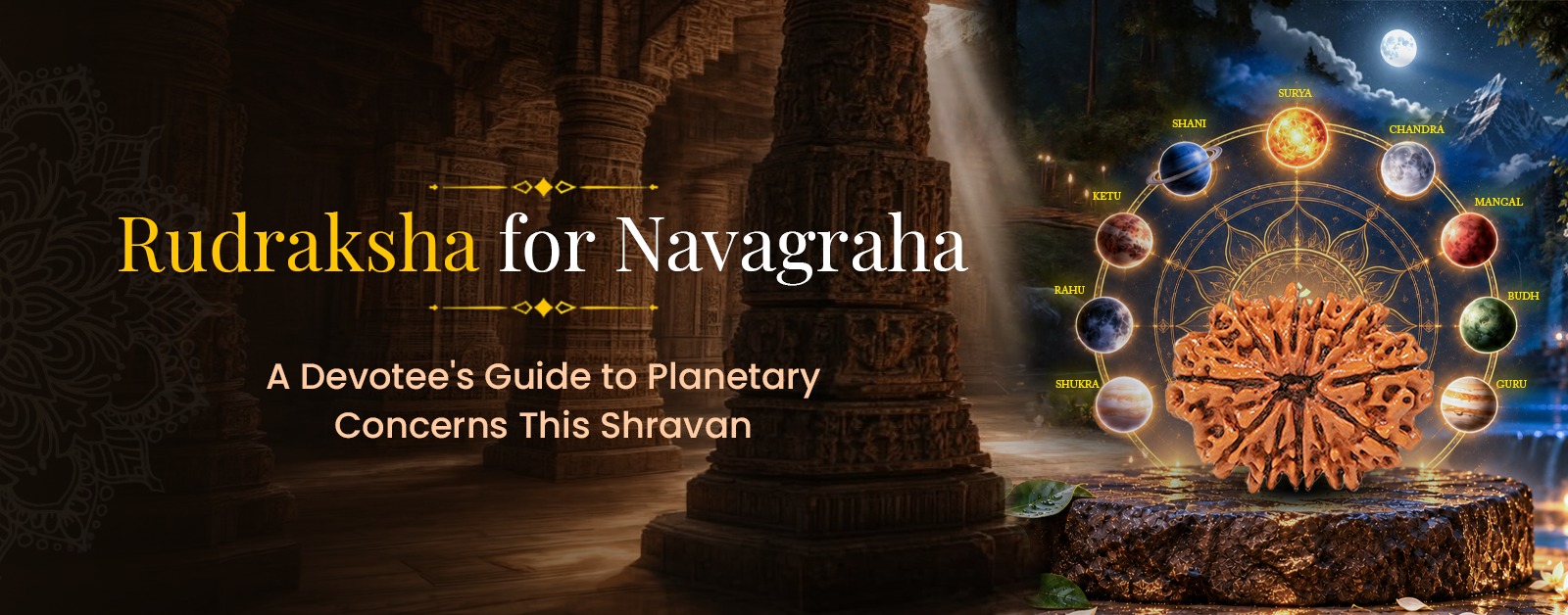
Rudraksha for planets is one of the most common questions devotees bring us, especially during Shravan, when a difficult Shani period or a restless Rahu phase starts asking for attention.
Navagraha, the nine planetary influences of Vedic thought, sit at the centre of a lot of that reflection. This guide walks through each of the nine grahas, the traditional mukhi association tied to it, and why Shravan is considered a good time to sit with these concerns rather than rush past them.
Key Takeaways
- Navagraha refers to the nine planetary influences recognised in Vedic astrology: Surya, Chandra, Mangal, Budh, Guru, Shukra, Shani, Rahu, and Ketu
- Each mukhi Rudraksha carries a traditional association with one of these nine influences, along with a presiding deity and beej mantra
- Shravan’s link to Shiva, who governs time and cosmic rhythm, is why the month is considered auspicious for this kind of reflection
- None of this replaces medical, legal, or financial guidance, it sits alongside it, not in place of it
- Personalised mukhi guidance at Rudralife is based on date of birth only, through astro-numerology
Which Rudraksha for Which Planet
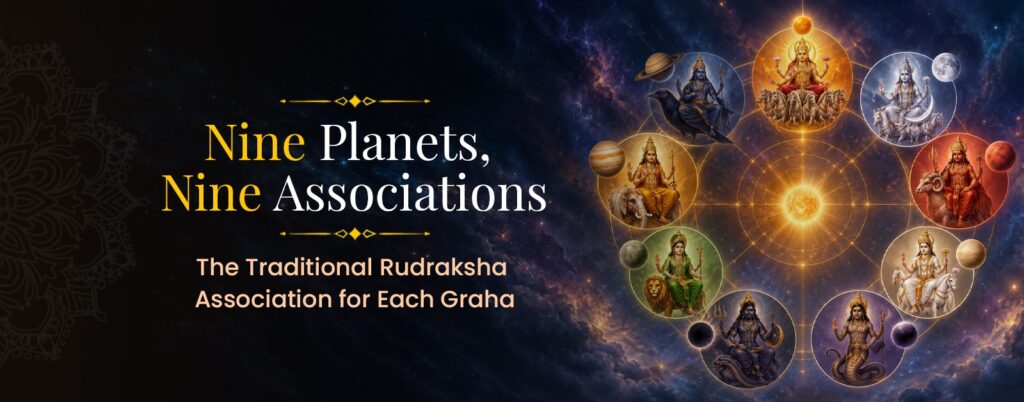
Surya (Sun), 1 Mukhi, 12 Mukhi, 19 Mukhi
Surya governs vitality, confidence, and one’s sense of authority in the world. Devotees who feel low on energy or unsure of their standing often look to Surya first. The 1 Mukhi Rudraksha carries the traditional association with this influence.
Presiding Deity of 1 Mukhi: Bhagwan Shiva
Presiding Deity of 12 Mukhi: Bhagwan Surya
Presiding Deity of 19 Mukhi: Bhagwan Vishnu
Chandra (Moon), 2 Mukhi, 20 Mukhi, Gauri Shankar
Chandra governs the mind, emotional steadiness, sleep, and peace of mind. It’s often the first planet devotees ask about, because its effects are the ones felt most directly, day to day. The 2 Mukhi Rudraksha is traditionally linked to Chandra.
Presiding Deity of 2 Mukhi: Ardhanarishwara
Presiding Deity of 20 Mukhi: Brahma Dev
Presiding Deity of Gauri Shankar: Bhagwan Shiva and Devi Parvati
Mangal (Mars), 3 Mukhi, 11 Mukhi, 14 Mukhi, 18 Mukhi
Mangal governs courage, drive, and how conflict gets handled, within a household, at work, or within oneself. A difficult Mangal period often shows up as short temper or restlessness. The 3 Mukhi Rudraksha carries this traditional association.
Presiding Deity of 3 Mukhi: Agni Dev
Presiding Deity of 11 Mukhi: Shree Hanuman
Presiding Deity of 14 Mukhi: Bhagwan Shiva / Hanuman
Presiding Deity of 18 Mukhi: Maa Bhagwati
Rudralief’s Note: 14 Mukhi rules both Mangal and Shani, it’s listed under both planets here since it’s traditionally believed to pacify the malefic effects of both Saturn and Mars together.
Budh (Mercury), 4 Mukhi
Budh governs communication, intellect, and the ability to learn and adapt. Students, writers, and anyone whose work depends on clear thinking often ask about Budh specifically. The 4 Mukhi Rudraksha is traditionally tied to this influence.
Presiding Deity of 4 Mukhi: Brahma Dev
Guru (Jupiter), 5 Mukhi, 15 Mukhi
Guru governs wisdom, prosperity, and guidance, often the planet devotees turn to when they feel directionless. It’s also considered the most benevolent of the nine. The 5 Mukhi Rudraksha, the most commonly worn mukhi, carries this association.
Presiding Deity of 5 Mukhi: Kalagni Rudra
Presiding Deity of 15 Mukhi: Bhagwan Pashupatinath
Shukra (Venus), 6 Mukhi, 13 Mukhi, 21 Mukhi
Shukra governs relationships, harmony, and creative expression. Devotees navigating a strained relationship or a dry creative period often ask about Shukra. The 6 Mukhi Rudraksha carries this traditional link.
Presiding Deity of 6 Mukhi: Bhagwan Kartikeya
Presiding Deity of 13 Mukhi: Indra Dev
Presiding Deity of 21 Mukhi: Shree Kuber
Shani (Saturn), 7 Mukhi, 14 Mukhi, 17 Mukhi
Shani governs discipline, karma, and perseverance through hardship, the planet most devotees already recognise by name, given how often a “Shani period” comes up in conversation. The 7 Mukhi Rudraksha is traditionally associated with Shani.
Presiding Deity of 7 Mukhi: Devi Mahalakshmi and Bhagwan Shani
Presiding Deity of 14 Mukhi: Bhagwan Shiva / Hanuman
Presiding Deity of 17 Mukhi: Shree Vishwakarma
Rahu, 8 Mukhi, 16 Mukhi
Rahu governs ambition, sudden change, and unconventional paths, the planet blamed, fairly or not, for the parts of life that don’t follow a predictable shape. The 8 Mukhi Rudraksha carries this traditional association.
Presiding Deity of 8 Mukhi: Shree Ganesh
Presiding Deity of 16 Mukhi: Shree Ram
Ketu, 9 Mukhi
Ketu governs detachment and spiritual insight, often surfacing during periods when a devotee feels pulled away from material concerns toward something quieter. The 9 Mukhi Rudraksha is traditionally linked to Ketu.
Presiding Deity of 9 Mukhi: Devi Durga
All Nine Planets, 10 Mukhi
This bead has no specific ruling planet but pacifies the malefic effects of all nine planets, acting as a protective shield against negativity.
Presiding Deity of 10 Mukhi: Bhagwan Vishnu
Get a personalised recommendation based on your date of birth →
| Mukhi | Beej Mantra |
| 1 Mukhi | Om Hreem Namah | ॐ ह्रीं नमः |
| 2 Mukhi | Om Namah | ॐ नमः |
| 3 Mukhi | Om Kleem Namah | ॐ क्लीं नमः |
| 4 Mukhi | Om Hreem Namah | ॐ ह्रीं नमः |
| 5 Mukhi | Om Hreem Namah | ॐ ह्रीं नमः |
| 6 Mukhi | Om Hreem Hum Namah | ॐ हूं नमः |
| 7 Mukhi | Om Hum Namah | ॐ हूं नमः |
| 8 Mukhi | Om Hum Namah | ॐ हूं नमः |
| 9 Mukhi | Om Hreem Hum Namah | ॐ ह्रीं हूं नमः |
| 10 Mukhi | Om Hreem Namah | ॐ ह्रीं नमः |
| 11 Mukhi | Om Hreem Hum Namah | ॐ ह्रीं हूं नमः |
| 12 Mukhi | Om Krowm Kshowm Rowm Namah Om Namah | ॐ क्रौं क्षौं रौम नमः ॐ नमः |
| 13 Mukhi | Om Hum Namah | ॐ हूं नमः |
| 14 Mukhi | Om Namah | ॐ नमः |
| 15 Mukhi | Om Hreem Namah | ॐ ह्रीं नमः |
| 16 Mukhi | Om Namah Shivaya | ॐ नमः शिवाय |
| 17 Mukhi | Om Namah Shivaya | ॐ नमः शिवाय |
| 18 Mukhi | Om Hreem Hoom Ekatvarupaye Hum Hreem Om | ॐ ह्रीं हूं एकत्वरूपाय हूं ह्रीं ॐ |
| 19 Mukhi | Om Hreem Hum Namah | ॐ ह्रीं हुं नमः |
| 20 Mukhi | Om Hreem Hreem Hum Hum Brahmaney Namah | ॐ ह्रीं ह्रीं हुं हुं ब्रह्मणे नमः |
| 21 Mukhi | Om Hreem Hum Shivmitraye Namah | ॐ हुं शिवमित्राय नमः |
Why Shravan, Specifically
Shiva is associated with mahakala, time itself, which is part of why the month devoted to him is also considered a good stretch for sitting with planetary concerns rather than avoiding them.
It isn’t that Shravan fixes anything on its own. It’s that the month’s existing rhythm, the Monday fasts, the evening puja, the pause built into an otherwise ordinary week, gives devotees a structure to actually sit with a concern instead of letting it stay in the background all year.
Which Rudraksha mala should you wear this Shravan? →
Finding What Fits
None of the mukhi associations above are meant as a diagnosis or a promise. They’re a starting point for a conversation, not a substitute for one. If you’d like guidance on which mukhi might suit your specific concern, Rudralife’s recommendations are based on your date of birth through astro-numerology, no birth time or place needed.
Get a personalised Rudraksha recommendation →
FAQ
Is there one Rudraksha for all nine planets? No single mukhi is meant to address all nine. Each of the nine traditionally corresponds to one graha, though many devotees who wear a 5 Mukhi wear it as a general, everyday bead rather than for a specific planetary concern.
Can I wear more than one mukhi at a time? Many devotees do, though it’s worth getting a personalised recommendation first rather than combining mukhis without guidance.
Read: Can Anyone Wear Rudraksha? Myths vs Facts →
Does wearing a mukhi replace consulting an astrologer? No. This guide reflects traditional associations, not a diagnosis of your chart. For a specific planetary reading, a qualified astrologer is the right resource; Rudralife’s role is guidance on the Rudraksha itself.
Why does Shravan specifically get connected to Navagraha reflection? Because of Shiva’s association with time and cosmic rhythm, and because the month’s existing rituals, weekly fasts, evening puja, give devotees a natural structure to sit with these concerns.
Bottom Line
Navagraha reflection isn’t about a quick fix, it’s a tradition devotees return to gradually, often over more than one Shravan. Each mukhi’s deity and beej mantra offer devotees a way to deepen that reflection through daily practice.
Rudralife has spent over two decades helping devotees find the Rudraksha that fits their specific concern, based on date of birth alone. If you’re not sure where to start, our experts can guide you online.
Disclaimer: The associations described here reflect traditional Vedic thought and are offered for devotional and educational purposes. They are not a substitute for medical, legal, financial, or professional astrological advice.
Related Reading
Navagraha, Wikipedia, the nine planetary deities in Vedic tradition








Leave a comment