




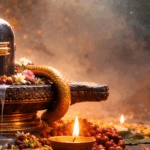



Definition: Shravan is considered the best month to start spiritual practices because it is the holiest month dedicated to Lord Shiva, when devotion, fasting, mantra chanting, and new spiritual beginnings are believed to carry amplified results according to the Shiva Purana.
Shravan is considered the best month to start spiritual practices because scriptures hold that any sadhana begun in this sacred month reaches Lord Shiva with multiplied power.
Shravan 2026 runs 30th July to 28th August in North India and 13th August to 11th September in South and West India, and across both calendars it is regarded as the single most auspicious window in the year for fasting, mantra japa, meditation, and beginning a lifelong spiritual routine.
Key Takeaways
- Shravan is the holiest month for Lord Shiva, making it the ideal time to begin any spiritual practice.
- Shravan 2026 falls 30 July – 28 August (North India) and 13 August – 11 September (South & West India).
- The month’s spiritual power is rooted in the Samudra Manthan legend, when Shiva drank the Halahala poison to save creation.
- Best practices to start now include Somwar fasting, Om Namah Shivaya japa, daily meditation, and Jalabhishek.
- Rudraksha is traditionally worn from Shravan onward, as it is closely tied to Shiva worship and daily sadhana.
Why Shravan Is the Best Month to Start Spiritual Practices
Among all twelve months of the Hindu calendar, Shravan holds a uniquely elevated place.
According to the Shiva Purana, worship and spiritual effort undertaken during Shravan yield manifold results compared to any other time of year.
For anyone who has been waiting for the “right time” to begin meditating, fasting, chanting, or wearing a Rudraksha, Shravan is traditionally regarded as that time, a month when sincere intention is believed to meet its strongest spiritual response.
The reasoning is both scriptural and symbolic. Shravan coincides with the monsoon, when the parched earth is renewed by rain.
Just as the season clears and nourishes the land, Shravan is seen as the ideal window to clear old patterns and plant the seeds of a new spiritual discipline.
What Makes the Shravan Month Spiritually Significant?
The spiritual weight of Shravan comes from the legend of the Samudra Manthan, the churning of the cosmic ocean.
When the deadly Halahala poison emerged and threatened all creation, Lord Shiva drank it to protect the universe, holding it in his throat, which turned blue, earning him the name Neelkanth.
Because this event is said to have occurred in Shravan, devotees pour water and milk over the Shivling throughout the month to cool and honour him.
The month also takes its name from the Shravan Nakshatra, the star that governs the full moon during this period.
Mondays carry special significance because “Som” refers to the moon that adorns Shiva’s head, making every Shravan Somwar the most auspicious day of the week for his worship.
Shravan 2026 Dates: When the Sacred Month Begins
Shravan 2026 begins on different dates by region because,
North India follows the Shree Kashi Panchang for tithi and Purnimant Calendar for dates, In Purnimant Calendar the month starts on the day right after the full moon (Purnima). This makes the month begin about 15 days earlier.
and in South/West India follows the Date Panchangfor tithi and Amavasyant / Amanta Calendar for dates, In Amavasyant / Amanta Calendar month starts on the day right after the new moon (Amavasya). This pushes the start date about half a month later than the North.
This is not a discrepancy; both are equally valid Vedic systems, and the spiritual significance is identical.
- North India (Purnimanta): July 30 – August 28, 2026. Somwar dates: August 3, 10, 17, 24.
- South & West India (Amavasyant): August 13 – September 11, 2026. Somwar dates: August 17, 24, 31, September 7.
If you are unsure which to follow, go by your home state. Notably, August 17 and 24 are Shravan Somwars in both calendars, making those two Mondays especially powerful.
Best Spiritual Practices to Start During Shravan Month
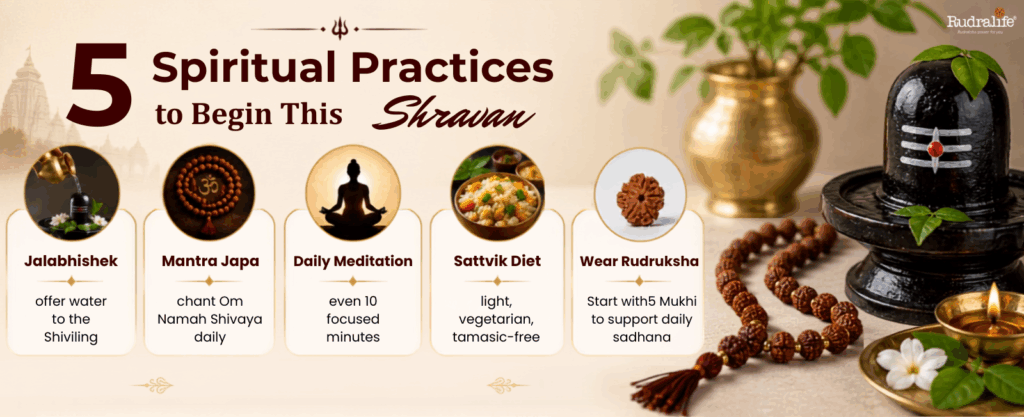
Shravan is the perfect month to begin a practice you can carry forward all year. The most rewarding starting points include:
- Jalabhishek, offering water to the Shivling, the signature ritual of the month.
- Mantra japa, chanting Om Namah Shivaya or the Mahamrityunjaya Mantra daily.
- Daily meditation, even ten focused minutes each morning, builds a lasting habit.
- Sattvik diet: Many devotees adopt vegetarian, tamasic-free eating through the month.
- Wearing Rudraksha, traditionally initiated in Shravan to support daily sadhana.
The key is to start small and stay consistent. Devotion matters far more than grandeur; a single Bilva leaf offered with sincerity is said to carry immense merit.
Shravan Somwar Vrat: Why Monday Fasting Is So Powerful
The Shravan Somwar vrat, fasting on the Mondays of Shravan, is the month’s most widely observed practice.
Devotees typically take a single fruit-based (phalahar) meal, keep only sattvik food, and break the fast after evening worship.
Beyond its devotional value, the fast is believed to strengthen willpower, bring mental clarity, and purify body and mind, which is exactly why it is such an effective anchor for beginning a disciplined spiritual routine.
Unmarried devotees sometimes begin the Solah Somwar vrat (sixteen consecutive Mondays) starting from the first Shravan Monday, carrying the practice well beyond the month itself.
Mantras and Chanting to Begin in Shravan
Two mantras are especially recommended for anyone starting out:
- Panchakshari Mantra, “Om Namah Shivaya”: the simplest and most powerful daily chant, suitable for complete beginners.
- Mahamrityunjaya Mantra: chanted for health, protection, and release from fear, ideally during the early-morning Brahma Muhurta.
Chanting even a fixed small count each day, such as one mala of 108 repetitions, establishes a rhythm that is easy to sustain after Shravan ends.
The Role of Rudraksha in Shravan Spiritual Practices
Rudraksha is deeply tied to Shiva worship, which is why tradition holds Shravan as the most auspicious time to begin wearing one.
The bead is believed to support focus during meditation and japa, making it a natural companion to any practice started this month.
Beginning your Rudraksha journey this Shravan?
Get a free consultation → and let our experts choose the right bead for you, using your birth details, not a generic report.
It is also worth ensuring any bead you buy is authentic and properly energised, since the market sees a sharp rise in mislabeled products through the Shravan season.
Common Mistakes to Avoid When Starting Spiritual Practices in Shravan
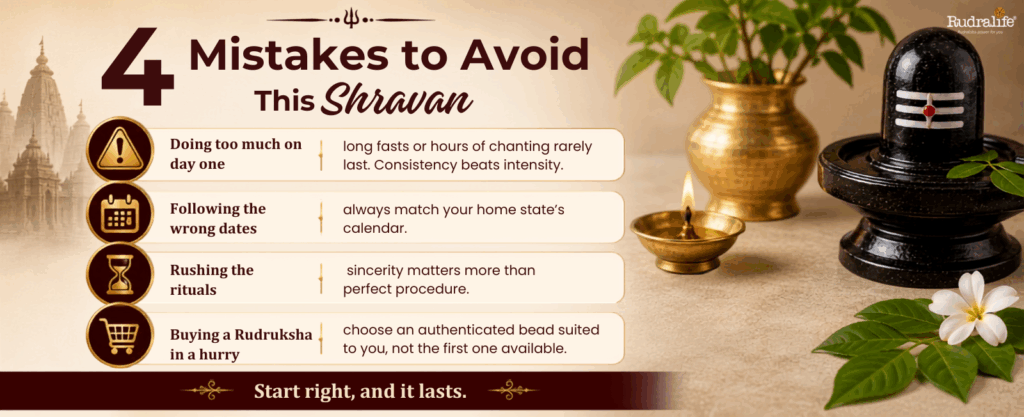
- Overcommitting on day one, attempting long fasts or hours of chanting rarely lasts; consistency beats intensity.
- Following the wrong regional dates; always match your home state’s calendar.
- Treating rituals as mechanical; sincerity carries the practice, not perfection of procedure.
- Buying an unverified Rudraksha in a rush? Choose an authenticated bead suited to you rather than the first one available.
FAQs
1. Why is Shravan the best month to start spiritual practices? Because scriptures like the Shiva Purana state that worship and spiritual effort during Shravan reach Lord Shiva with amplified power, making it the most auspicious month for new beginnings.
2. What spiritual practice should a beginner start in Shravan? Start simple: chant Om Namah Shivaya daily, offer Jalabhishek on Mondays, and keep a light sattvik diet. Consistency matters more than complexity.
3. When does Shravan 2026 begin? July 30 in North India (ending August 28) and August 13 in South and West India (ending September 11).
4. Why do people fast on Mondays in Shravan? Monday (Somwar) is sacred to Shiva, as the moon adorning his head is called “Som.” Fasting is believed to purify the mind, build discipline, and please Mahadev.
5. Is Shravan a good time to start wearing Rudraksha? Yes. Rudraksha is closely linked to Shiva worship, and tradition regards Shravan as the most auspicious month to begin wearing an authentic, properly energised bead.
Bottom Line
Shravan is widely regarded as the most powerful month of the year to begin a spiritual practice, not because of a single ritual, but because scripture, season, and symbolism all point to renewal.
Whether you start with a daily chant, a Monday fast, or your first Rudraksha, the month rewards sincerity and consistency above all.
Begin small this Shravan, and let the practice carry through the year.
Speak With a Rudralife Expert, Free Personalised Consultation →
Purpose-based guidance using your birth details. ACE-energised beads. 25 years of expertise behind every recommendation.
Disclaimer: This article is for informational and devotional guidance. Regional dates follow lunar calculations and should be confirmed against your local Panchang.








Leave a comment