






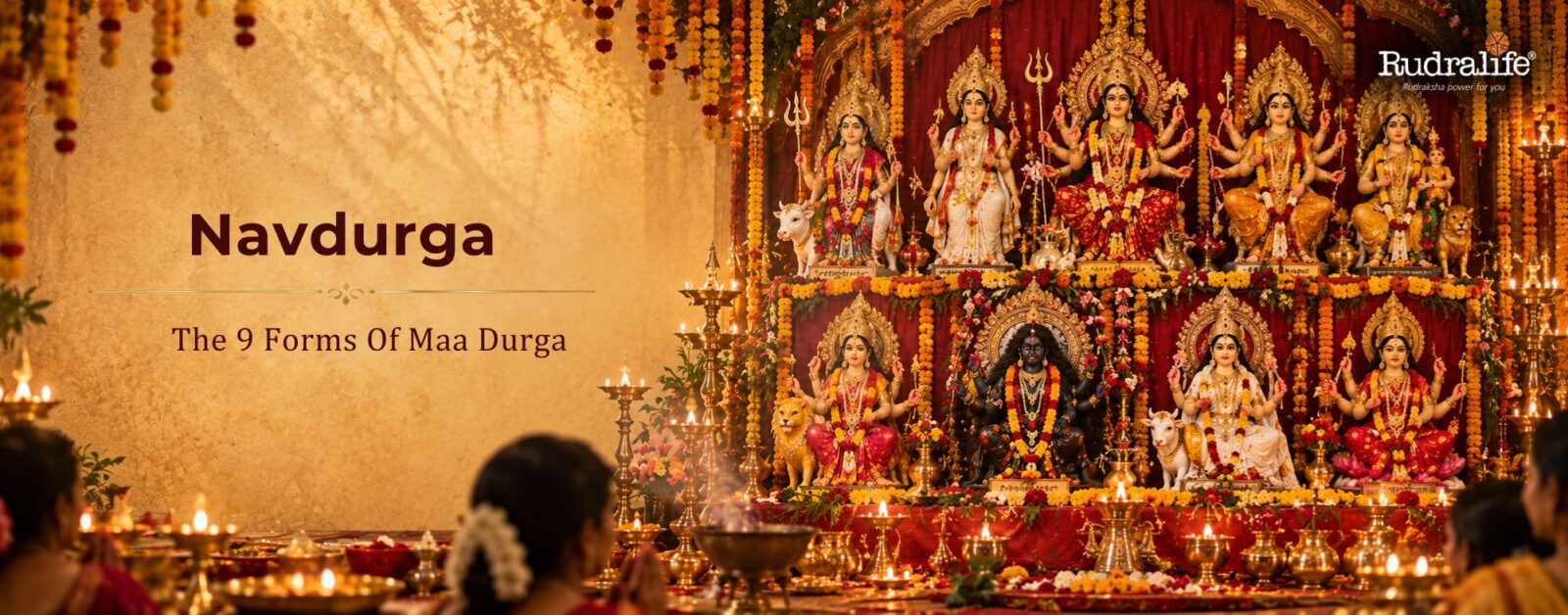
Navadurga refers to the nine forms of Maa Durga worshipped during the nine days of Navratri.
Each form has a distinct name, story, symbolism and place in the Navratri sequence, beginning with Maa Shailaputri and ending with Maa Siddhidatri.
This article covers all nine forms, the significance of each day, simple ways to worship Maa Durga at home, and the traditional mantra associated with each form.
It also looks at how the qualities associated with the Navadurga can be understood through different experiences in a woman’s life.
Sharad Navratri 2026 begins on 11 October and ends on 20 October with Vijayadashami.
Key Takeaways
- Navadurga refers to the nine forms of Maa Durga worshipped during the nine days of Navratri
- Each form carries its own story, symbolism and place in the Navratri sequence
- The nine forms can also be viewed as a journey through different expressions of Shakti
- Simple home worship can include a clean puja space, a diya, flowers, an offering and prayer
- Rudralife’s Navchandi Maha Puja honours the nine forms across the nine days through Vedic rituals, with a concluding ceremony on Dashami
Who Are the Navadurga?
The word Navadurga refers to the nine forms of Goddess Durga worshipped during Navratri:
1. Maa Shailaputri
2. Maa Brahmacharini
3. Maa Chandraghanta
4. Maa Kushmanda
5. Maa Skandamata
6. Maa Katyayani
7. Maa Kaalratri
8. Maa Mahagauri
9. Maa Siddhidatri
Each day brings a different form of Devi into focus.
The sequence itself gives Navratri a sense of progression, moving from the first step of the journey towards its culmination.
The Connection Between Navadurga and a Woman’s Life
The nine forms of Maa Durga can also be viewed through different qualities that may become important across a woman’s life.
- Maa Shailaputri — Foundation: Finding one’s identity, understanding one’s roots and choosing a direction.
- Maa Brahmacharini — Discipline: Staying committed to education, career, personal goals and responsibilities.
- Maa Chandraghanta — Courage: Speaking up, making difficult decisions and standing up for oneself or others.
- Maa Kushmanda — Creation: Building a career, home, family, ideas or a new path in life.
- Maa Skandamata — Nurturing: Caring for children, family, relationships, colleagues and community.
- Maa Katyayani — Strength: Setting boundaries, making independent choices and taking action when needed.
- Maa Kaalratri — Resilience: Facing fear, uncertainty, change and difficult phases with courage.
- Maa Mahagauri — Renewal: Regaining clarity, rebuilding and finding a fresh sense of direction.
- Maa Siddhidatri — Fulfilment: Recognising growth, understanding and spiritual attainment at the culmination of the journey.
Together, the Navadurga present nine expressions of Shakti – foundation, discipline, courage, creation, nurturing, strength, resilience, renewal and fulfilment.
These qualities are not limited to specific stages or roles. They can appear at different points in life, depending on what each phase requires.
How to Worship Maa Durga During Navratri
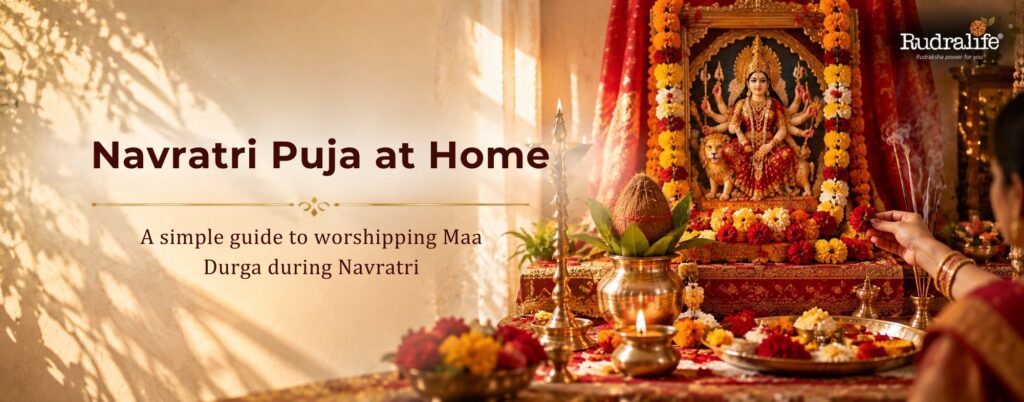
Navratri worship does not have to be complicated to be meaningful. If you are worshipping at home, begin by keeping the puja space clean and placing an image or murti of Maa Durga.
You can light a diya and offer flowers, fruits or other offerings according to your family tradition. Devotees may also recite Durga Saptashati, Durga mantras or prayers associated with the form being worshipped that day.
The most important part is to approach the puja with sincerity and devotion.
For those performing a more elaborate ritual, the exact vidhi can vary according to family tradition, sampradaya and the type of puja being performed.
Day 1: Maa Shailaputri – Beginning With a Strong Foundation
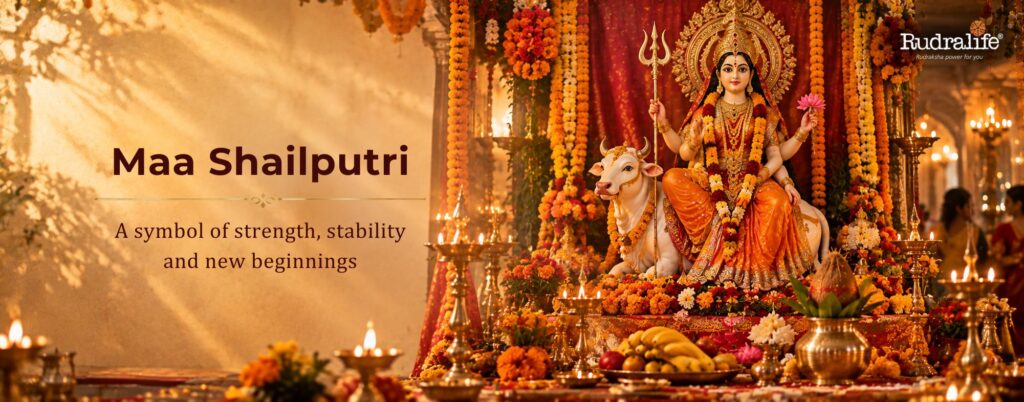
The first form of Navadurga is Maa Shailaputri, the daughter of the mountains. She marks the beginning of the Navratri journey.
Her form is traditionally associated with steadiness and strength. This makes the first day a natural time to reflect on beginnings, the things you want to start, the values you want to stay connected to and the foundation you want to build.
For a woman, this can be the stage of finding her own identity and deciding what she wants her life to stand on.
How to Worship Maa Shailaputri
Begin your puja with a clean space and a diya. Offer flowers and fruits to Maa Shailaputri and spend a few moments in quiet prayer.
You can also recite her traditional mantra:
ॐ देवी शैलपुत्र्यै नमः॥
Meaning: Salutations to Goddess Shailaputri.
Take a moment to think about one intention you would like to carry through the nine days.
Day 2: Maa Brahmacharini – The Strength to Continue
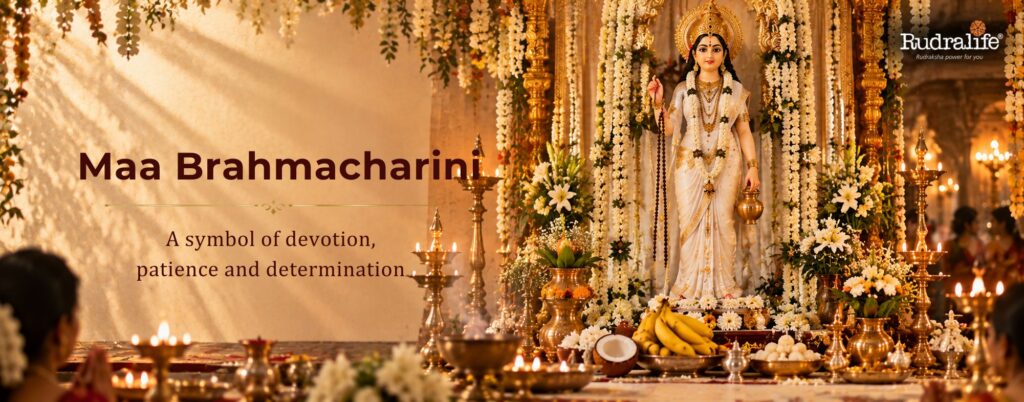
The second day is dedicated to Maa Brahmacharini. Her story is associated with penance, devotion and determination.
Not every goal is achieved quickly. Education, career, relationships and personal growth can all demand patience. This is where the second day of Navratri can become a reminder of the value of staying committed.
How to Worship Maa Brahmacharini
Offer flowers, fruits or traditional prasad and spend time in prayer or meditation.
Her commonly recited mantra is:
ॐ देवी ब्रह्मचारिण्यै नमः॥
Rather than asking only for an outcome, devotees may use this day to pray for the patience and discipline needed to continue their journey.
Day 3: Maa Chandraghanta – Finding Courage
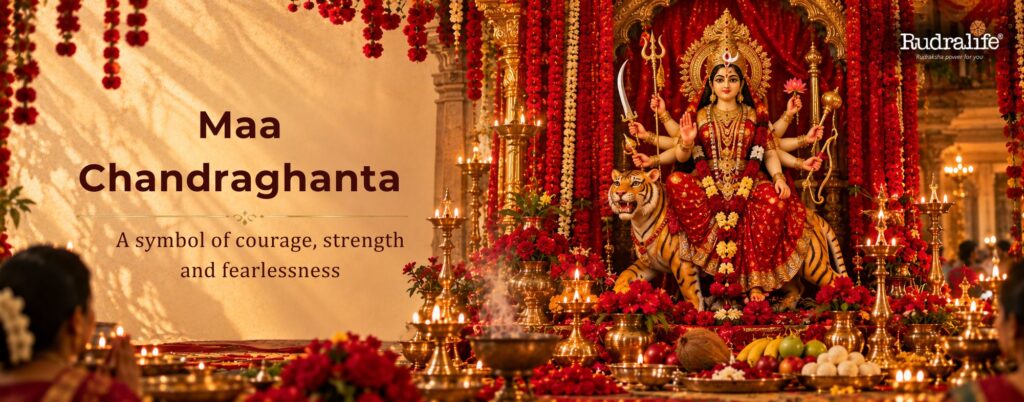
On the third day, devotees worship Maa Chandraghanta.
Her form carries a distinctly warrior-like presence. The bell-shaped moon on her forehead is an important part of her iconography, while her appearance reflects readiness and courage.
In everyday life, courage does not always look dramatic. Sometimes it is saying no, speaking honestly, taking an unfamiliar opportunity or making a decision that you have been avoiding.
How to Worship Maa Chandraghanta
Light a diya and offer flowers and prasad while remembering Maa Chandraghanta.
You may recite:
ॐ देवी चन्द्रघण्टायै नमः॥
Use the day as an opportunity to reflect on where you need courage in your own life.
Day 4: Maa Kushmanda – The Energy to Create
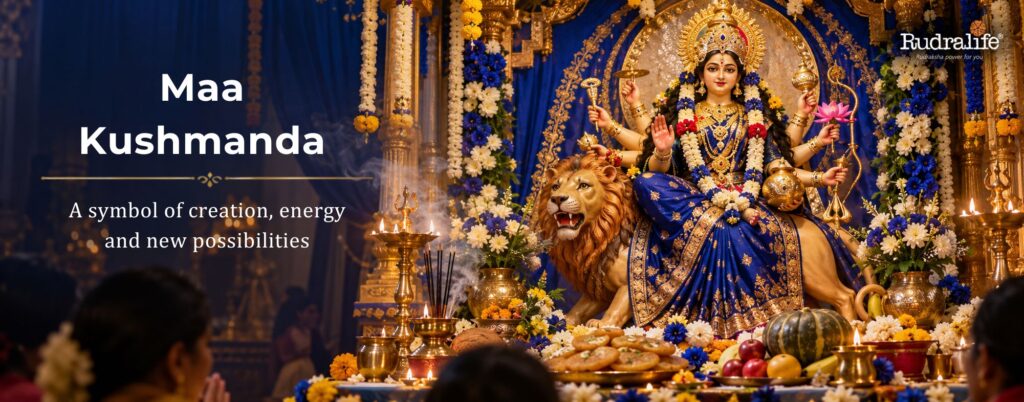
The fourth form is Maa Kushmanda, associated in traditional accounts with creation and cosmic energy.
Creation can take many forms in a woman’s life. It can mean building a career, starting a family, creating something artistic, developing an idea or simply making a life that feels true to her.
This makes Kushmanda a meaningful form to reflect on when you are beginning something new.
How to Worship Maa Kushmanda
Offer flowers, fruits and prasad to Maa Kushmanda and recite:
ॐ देवी कूष्माण्डायै नमः॥
You can also spend a few minutes thinking about something you want to create or nurture in the coming months.
Day 5: Maa Skandamata – The Strength to Nurture
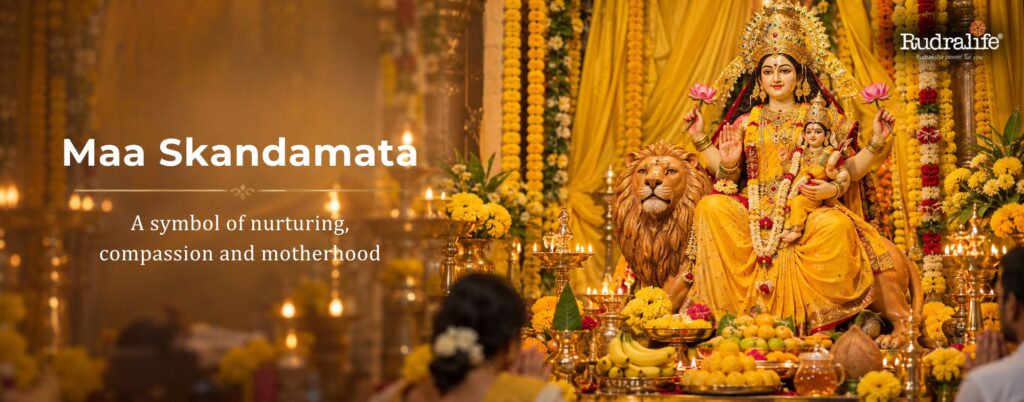
The fifth day is dedicated to Maa Skandamata, the mother of Lord Skanda.
Her form brings motherhood and nurturing into the Navadurga journey. But nurturing is not limited to motherhood.
Women often care for families, friendships, teams, communities and the people around them. At the same time, many are learning that caring for themselves also matters.
How to Worship Maa Skandamata
Offer flowers and fruits and spend a few moments expressing gratitude for the people who have supported you.
Her mantra is:
ॐ देवी स्कन्दमातायै नमः॥
This day can also be a reminder that giving care to others does not mean forgetting yourself.
Day 6: Maa Katyayani – Knowing When to Stand Your Ground
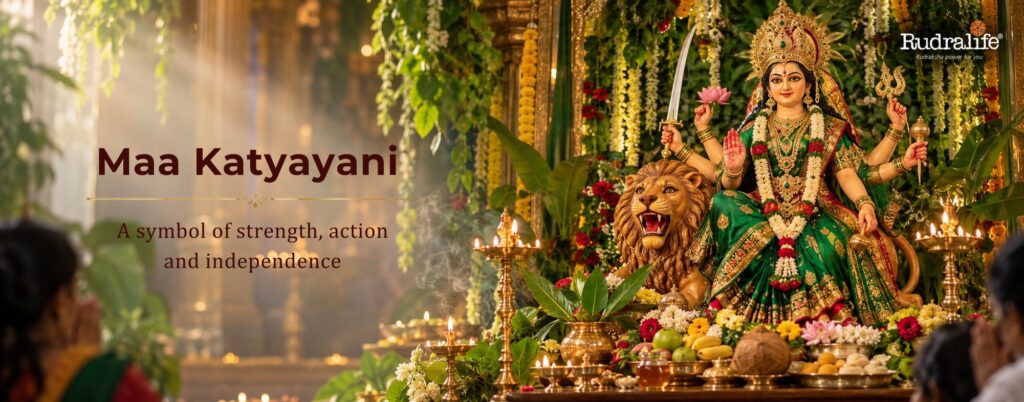
The sixth form is Maa Katyayani, traditionally depicted as a warrior form of Devi.
There are moments in life when patience needs to be followed by action. A woman may have to set a boundary, make an independent decision, speak for herself or stand beside someone else.
Katyayani brings this stronger, more decisive aspect of Shakti into the Navratri journey.
How to Worship Maa Katyayani
Offer flowers, fruits and prasad while praying with a clear mind.
You may recite:
ॐ देवी कात्यायन्यै नमः॥
Instead of focusing only on what you want to overcome, reflect on what action you can take yourself.
Day 7: Maa Kaalratri – Facing What Is Difficult
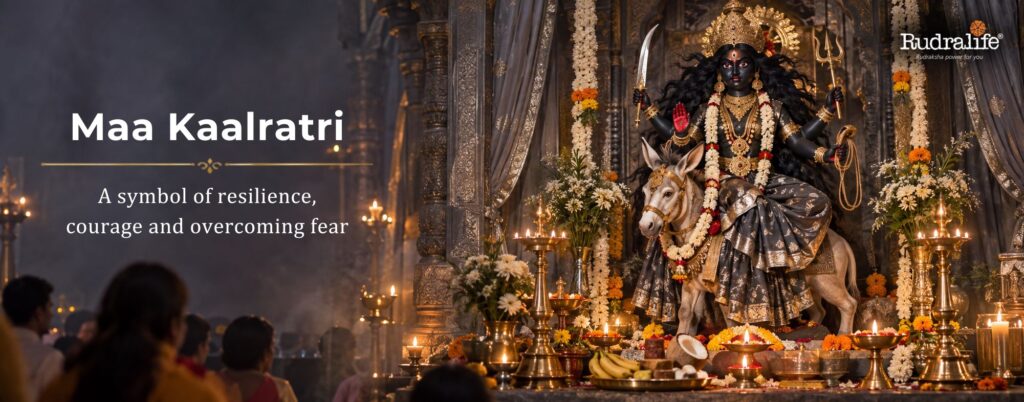
The seventh day is dedicated to Maa Kaalratri, one of the fiercest forms of Navadurga.
Her appearance is powerful and intentionally different from the gentler depictions of Devi. She represents the ability to face what is frightening or difficult.
Life can bring periods of uncertainty, change and loss. Kaalratri offers a different understanding of strength, sometimes moving forward requires us to face something rather than avoid it.
How to Worship Maa Kaalratri
Keep the puja simple and focused. Light a diya, offer flowers and pray with sincerity.
Her mantra is:
ॐ देवी कालरात्र्यै नमः॥
The seventh day can be used for quiet reflection on something you have been afraid to face.
Day 8: Maa Mahagauri – A Moment to Begin Again
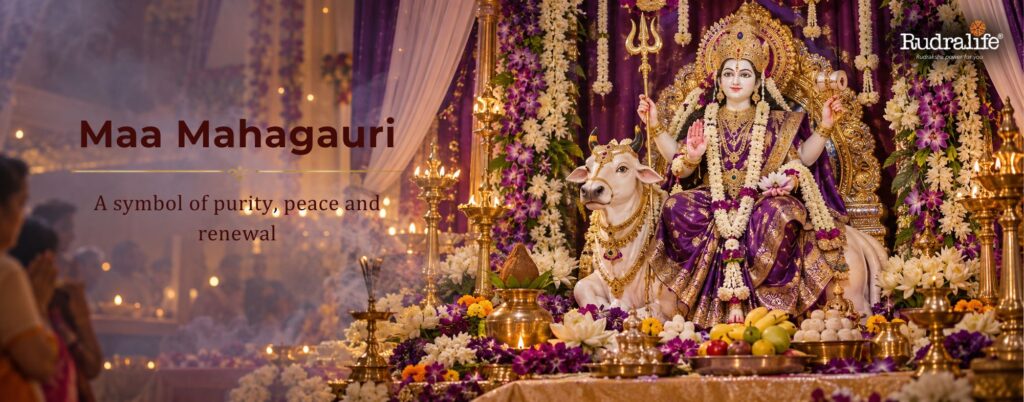
On the eighth day, devotees worship Maa Mahagauri.
Her form is associated with purity, peace and grace. Coming after Kaalratri, this placement also gives the Navratri sequence a sense of renewal.
After a difficult period, starting again can require as much strength as facing the difficulty itself.
For a woman, this may mean choosing a new direction, rebuilding confidence, letting go of what no longer serves her or simply allowing herself to rest.
How to Worship Maa Mahagauri
Offer white flowers, fruits or prasad according to your family tradition and spend some quiet time in prayer.
You may recite:
ॐ देवी महागौर्यै नमः॥
Let the day be a moment for gratitude, clarity and a fresh beginning.
Day 9: Maa Siddhidatri – Recognising the Journey
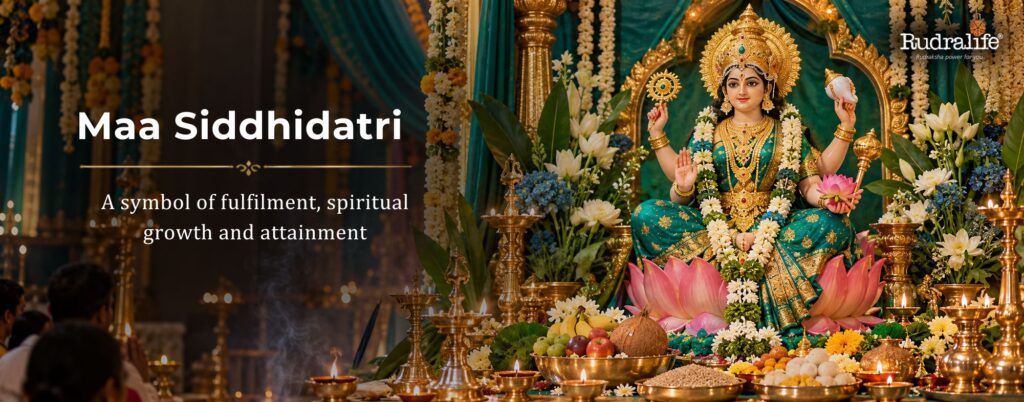
The ninth and final form is Maa Siddhidatri.
She is traditionally associated with siddhis, spiritual attainment and perfection. Her position at the end of Navratri gives the nine-day journey its natural culmination.
By this point, the focus is no longer only on beginning or overcoming something. It is also about recognising what the journey has taught you.
For a woman, fulfilment can look different at different stages of life. It may be professional achievement, a family she has built, creative work, independence, spiritual growth or simply becoming comfortable with who she is.
How to Worship Maa Siddhidatri
Offer flowers and prasad and conclude the nine-day worship with gratitude.
Her mantra is:
ॐ देवी सिद्धिदात्र्यै नमः॥
Take a few moments to look back at the nine days and reflect on what has changed in your thoughts, intentions or outlook.
5 Simple Navratri Mantras for Devotees
Navarna Mantra
ॐ ऐं ह्रीं क्लीं चामुण्डायै विच्चे
Navarna Mantra is a very powerful mantra because in this mantra lies the powers of three goddesses Mahasaraswati, Mahalakshmi and Mahakali. It is described in Durga Saptashati that by worshipping these three goddesses, Mother Durga herself becomes happy.
So when the mother is pleased in all forms ie knowledge, wealth, power and the form of the mother, then the seeker gets benefits in all these areas of life. The Navakshari mantra of Mata is as follows.
Durga Mantra
सर्वमङ्गलमाङ्गल्ये शिवे सर्वार्थसाधिके। शरण्ये त्र्यम्बके गौरि नारायणि नमोऽस्तुते।।
The Durga mantra, known for its profound potency, is chanted during various festivities, ceremonies, and occasions dedicated to the worship of Goddess Durga.
It acknowledges the divinity of the Goddess as the epitome of auspiciousness and the source of blessings for the world.
Mahakali Mantra
ओम जयंती मंगला काली भद्रकाली कपालिनी। दुर्गा क्षमा शिवा धात्री स्वाहा स्वधा नमोस्तुते।।
This Powerful Mantra is Dedicated to Goddess Kali.
According to religious beliefs, Maa Kalaratri is the seventh goddess of Navratri i.e. Maa Kalaratri is worshipped on the seventh day of Navratri, is traditionally associated with protection and the ability to face fear and difficulties.
Maa Durga-Sarv-Baadha-Mukti Mantra
सर्वाबाधाविनिर्मुक्तो धन धान्य सुतान्वित।
मनुष्यो मत्प्रसादेन भविष्यती न संशय।।
This mantra is traditionally recited as a prayer for relief from difficulties and obstacles. Devotees may include it in their Navratri prayers according to their personal or family tradition.
Devi Stuti Mantra
या देवी सर्वभुतेषु क्षान्तिरूपेण संस्थिता
या देवी सर्वभुतेषु शक्तिरूपेण संस्थिता
या देवी सर्वभुतेषु मातृरूपेण संस्थिता
या देवी सर्वभुतेषु बुद्धिरूपेण संस्थिता
नमस्तस्यै नमस्तस्यै नमस्तस्यै नमो नमः
Reciting this Mantra can enhance one’s inner strength and promote the cultivation of positive, affectionate connections. The practice of chanting this Mantra can serve as a barrier against pessimistic thoughts and eliminate ignorance.
The Durga mantra, known for its profound potency, is chanted during various festivities, ceremonies, and occasions dedicated to the worship of Goddess Durga.
It acknowledges the divinity of the Goddess as the epitome of auspiciousness and the source of blessings for the world.
How Rudralife’s Navchandi Maha Puja Connects With the Nine Forms
For devotees who want to observe Navratri through a more structured Vedic puja, Rudralife conducts Navchandi Maha Puja during Navratri.
The puja follows the nine-day sequence of the Navadurga, beginning with Maa Shailaputri and moving through the nine forms. Our Navchandi puja includes daily rituals such as Chandi Path, Abhishek, Navarna Mantra Jaap and Abhishek, followed by a concluding Dashami ceremony with Chandi Path Havan, Nav Chandi Yagna, Purna Ahuti and Aarti.
For the devotee, this creates a structured way to mark each day rather than treating Navratri as one single occasion.
The Puja will be live on our YouTube channel and the Sankalp is taken with the devotee’s name and gotra, allowing the prayer to be made specifically in their name.
Navadurga and Navchandi: Are They the Same?
The terms can sound similar, but they refer to different things.
Navadurga refers to the nine forms of Maa Durga worshipped across the nine days of Navratri.
Navchandi Puja, on the other hand, is a ritual dedicated to Devi Chandi and incorporates sacred recitation and Vedic rituals. At Rudralife, the Navchandi Maha Puja is conducted across the Navratri period, with each of the nine forms honoured through the sequence of the puja.
So, Navadurga refers to the nine forms of Devi, while Navchandi refers to a form of worship dedicated to Devi.
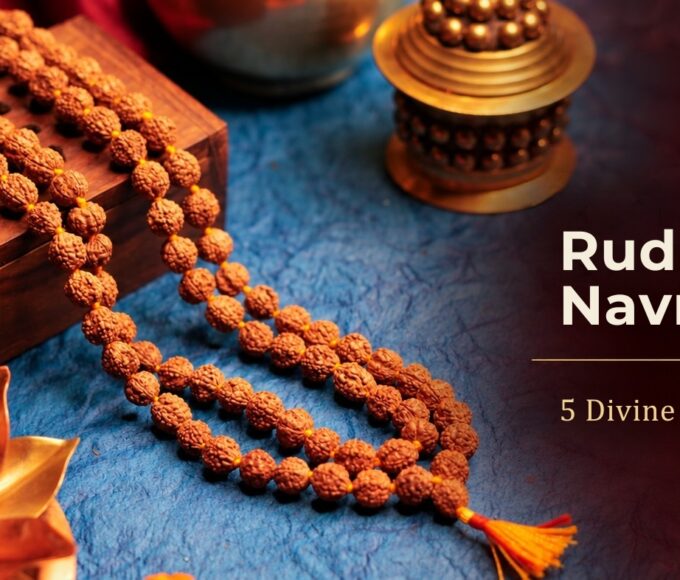
Rudraksha Associated with the Divine Mother
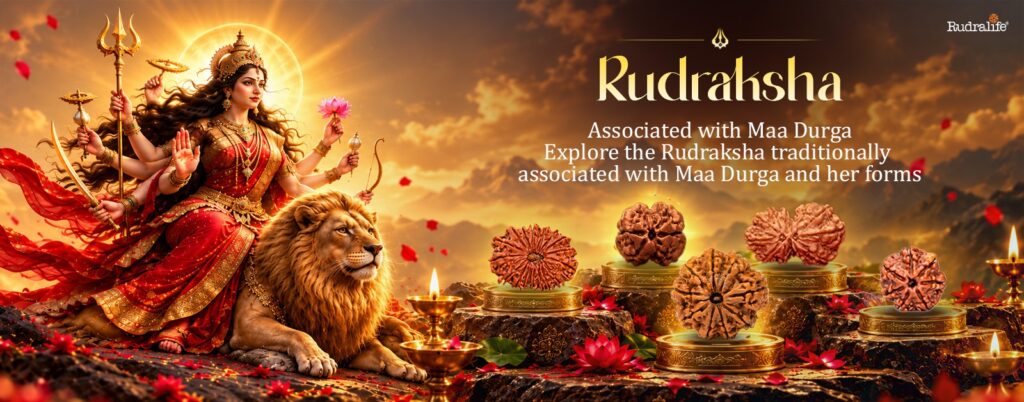
Many devotees choose Navratri to begin wearing Rudraksha linked to the Divine Mother. Five beads are traditionally associated with her forms.
9 Mukhi Rudraksha (Goddess Durga): The 9 Mukhi is associated with Goddess Durga and her nine forms, which makes it the bead most closely connected to Navratri. It is believed to support courage, self-confidence and inner strength.
Buy the 9 Mukhi Durga Shakti Bracelet →
18 Mukhi Rudraksha (Bhumi Devi): The 18 Mukhi is associated with Bhumi Devi, the Earth Mother. It is traditionally worn for stability, grounding and the well-being of the home.
7 Mukhi Rudraksha (Mahalakshmi): The 7 Mukhi is associated with Goddess Mahalakshmi and is traditionally worn for prosperity and financial stability.
Gaurishankar Rudraksha (Gauri and Shankar): Two beads naturally joined together, the Gaurishankar represents the union of Goddess Gauri and Lord Shiva. It is traditionally worn for harmony in marriage and family relationships.
Explore Gaurishankar Rudraksha →
2 Mukhi Rudraksha (Ardhanareshwara): The 2 Mukhi represents Ardhanareshwara, the form in which Shiva and Shakti are one. It is traditionally worn for understanding and balance in relationships.
Any devotee can wear any of these Rudraksha, and Rudraksha has no negative effects. However, we recommend choosing Rudraksha according to your date of birth, so the beads you wear suit you best.
Book a Rudraksha consultation →
FAQ
1. What are the nine forms of Maa Durga?The nine forms are Maa Shailaputri, Maa Brahmacharini, Maa Chandraghanta, Maa Kushmanda, Maa Skandamata, Maa Katyayani, Maa Kaalratri, Maa Mahagauri and Maa Siddhidatri.
2. Which Navadurga is worshipped on the first day?Maa Shailaputri is worshipped on the first day of Navratri.
3. Which Navadurga is worshipped on Ashtami?Maa Mahagauri is traditionally worshipped on the eighth day, Ashtami.
4. Which Navadurga is worshipped on Navami?Maa Siddhidatri is worshipped on the ninth day, Navami.
5. Can Navratri puja be performed at home?Yes. Devotees can observe Navratri at home with a clean puja space, a diya, flowers, offerings and prayers. More elaborate rituals can be performed according to one’s family or spiritual tradition.
6. What is the connection between Navadurga and a woman’s life?The nine forms can be viewed as different expressions of Shakti that resonate with different experiences: finding one’s foundation, remaining committed, developing courage, creating, nurturing, taking action, facing difficult periods, beginning again and finding fulfilment.
7. What is Navchandi Maha Puja?Navchandi Maha Puja is a structured ritual dedicated to Devi Chandi and is performed during Navratri. Rudralife’s Navchandi Maha Puja honours the nine forms across the nine days and concludes with additional rituals on Dashami.
Bottom Line
Navratri gives us nine nights to turn our attention towards the different forms of Shakti.
For a woman, that journey can feel especially relatable. There are times to find your footing, times to stay patient, moments when you have to be brave, periods of creation and nurturing, and phases when you need to let go and begin again.
The Navadurga remind us that strength does not always look the same.
Sometimes it is quiet. Sometimes it is nurturing. Sometimes it means taking a stand. And sometimes it is simply having the courage to start again.
Whether you worship Maa Durga at home, recite a simple mantra or participate in a structured Navchandi Maha Puja, Navratri offers an opportunity to pause, reflect and reconnect with Shakti in your own way.
Participating in a Sankalp Puja? Connect with our experts →
Related Reading
- Sharad Navratri 2026: Dates, Story and the Nine Sacred Nights
- Navaratri — Wikipedia — the festival’s history and how it is observed across regions
- Durga — Wikipedia — the Goddess and her nine forms

Leave a comment