






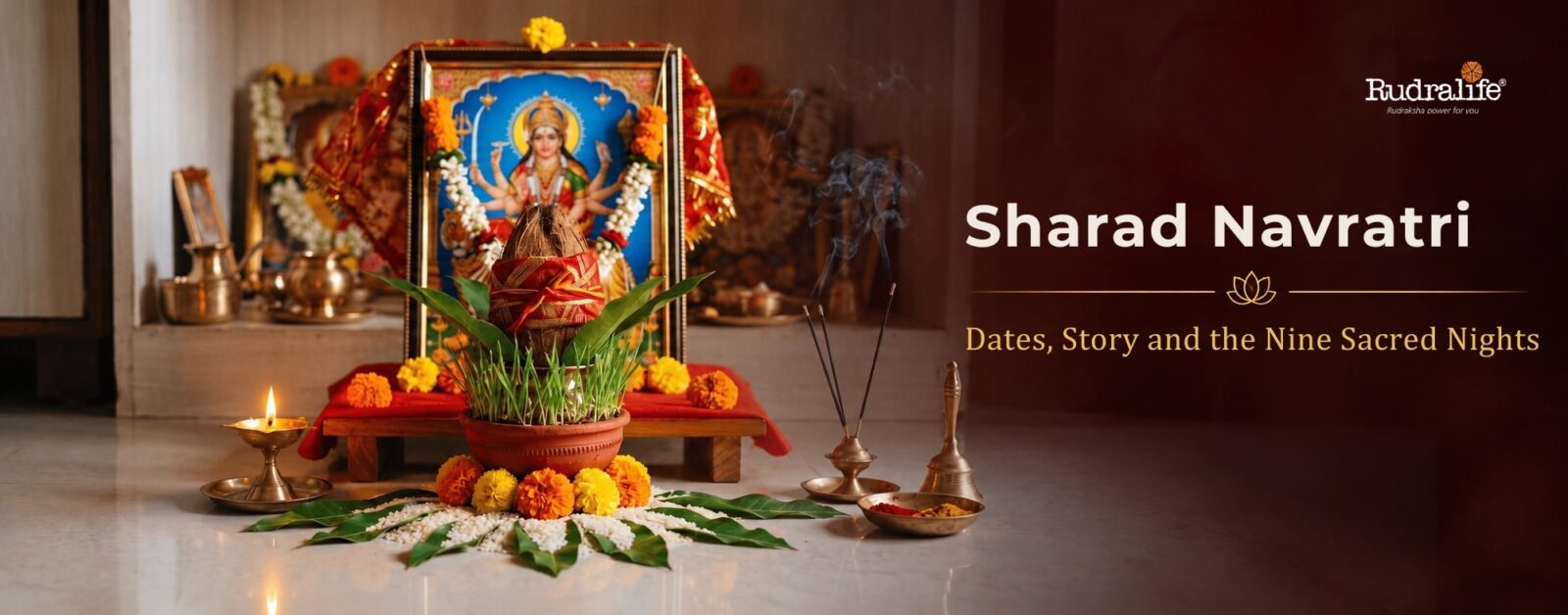
Sharad Navratri 2026 arrives with the same quiet pull it brings every year, a sense that something within us is being asked to rise, settle, and turn inward for nine nights before it can truly celebrate.
Across India and among devotees everywhere, Navratri 2026 is devoted to Maa Durga in many forms, and it ends in one of the most joyous festivals of the year.
Here’s everything you need to know about Sharad Navratri 2026, the dates, the story, and how it’s celebrated.
Key Takeaways
- Sharad Navratri 2026 begins on Sunday, October 11, and concludes with Vijayadashami (Dussehra) on Tuesday, October 20
- Navratri 2026 honours the Navadurga, nine forms of Goddess Durga, each with its own day and colour
- Sharad Navratri 2026 commemorates Durga’s victory over the demon Mahishasura, a story of good triumphing over evil
- Ghatasthapana, fasting, Garba and Dandiya, Kanya Pujan, and Durga Ashtami are among the central observances of the festival
- Rudralife’s Vedic pandits perform Navchandi Maha Puja during Navratri 2026, in your name and gotra
- Sharad Navratri 2026 is the most widely celebrated of the four seasonal Navratris observed in the Hindu calendar
- The Navratri 2026 calendar falls in the Hindu month of Ashwin, during the bright fortnight (Shukla Paksha)
When Is Sharad Navratri 2026?
Sharad Navratri 2026 begins on Sunday, October 11, with Ghatasthapana (the setting up of the sacred kalash), and continues through nine nights of worship.
The Navratri 2026 dates conclude on Tuesday, October 20, with Vijayadashami, also known as Dussehra, marking the victory of good over evil.
The festival falls in the Hindu month of Ashwin, during the bright fortnight, and is the most prominent of the four seasonal Navratris observed through the year, the others being Chaitra, Magha, and Ashada Navratri.
If you’re searching for the exact Navratri 2026 calendar, this nine-night window from October 11 to October 19, followed by Dussehra on October 20, is the one to mark.
The Story Behind Sharad Navratri 2026
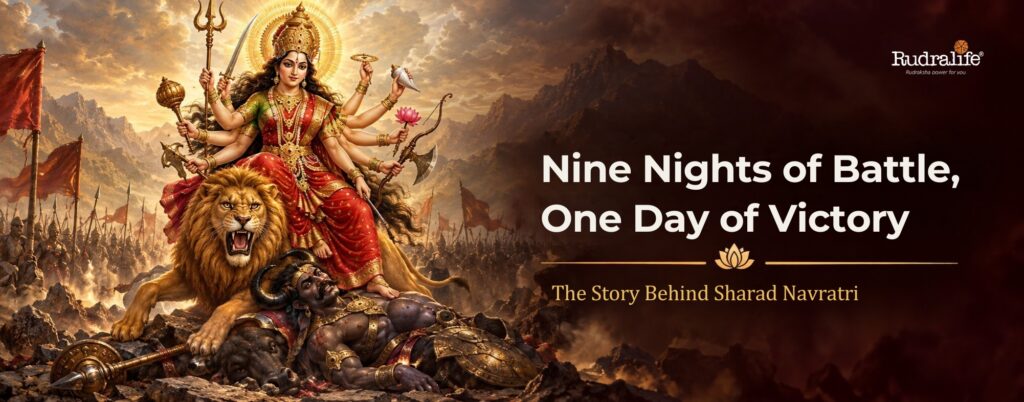
Sharad Navratri 2026, like every Navratri before it, commemorates the battle between Goddess Durga and the demon Mahishasura, a shape-shifting asura whose tyranny none of the gods could end alone.
According to the Puranas, the combined energies of the gods took form as Durga, who fought Mahishasura for nine days and nights before finally defeating him on the tenth, the day now celebrated as Vijayadashami.
The nine nights that precede it are devoted to invoking her strength, and the tenth celebrates her triumph.
This story is the heart of why Navratri 2026 is observed with such devotion across the country.
The Nine Forms of Durga in Sharad Navratri 2026 and Their Colours
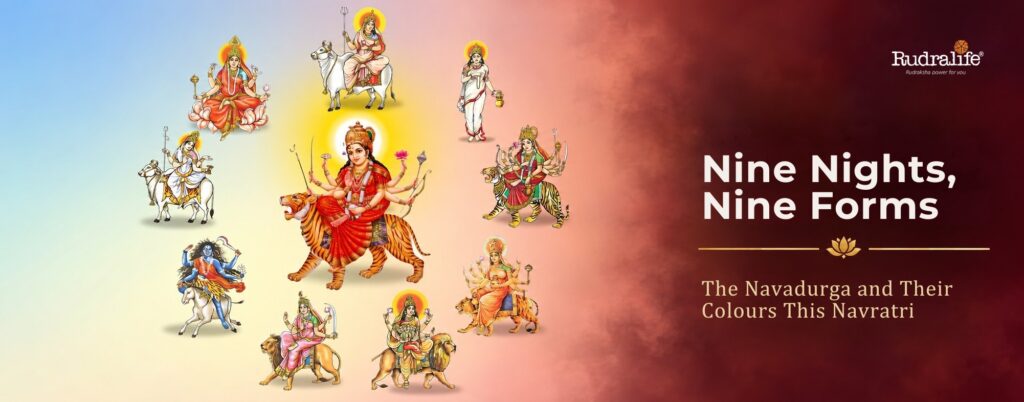
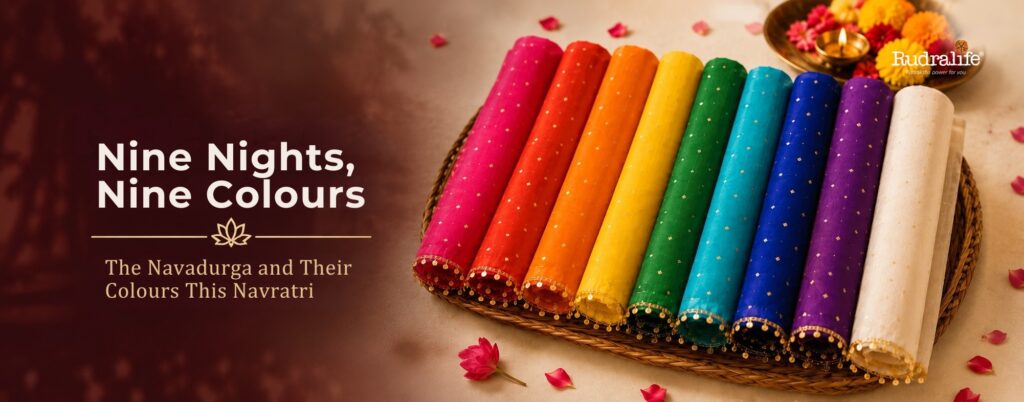
Each of the nine days of the festival is dedicated to a different form of the Goddess, the Navadurga, and devotees traditionally wear a specific colour each day as a mark of respect and devotion.
| Day | Navratri 2026 Date | Goddess | Colour |
| Day 1 | Oct 11 | Maa Shailputri | Orange |
| Day 2 | Oct 12 | Maa Brahmacharini | White |
| Day 3 | Oct 13 | Maa Chandraghanta | Red |
| Day 4 | Oct 14 | Maa Kushmanda | Royal Blue |
| Day 5 | Oct 15 | Maa Skandamata | Yellow |
| Day 6 | Oct 16 | Maa Katyayani | Green |
| Day 7 | Oct 17 | Maa Kalaratri | Grey |
| Day 8 | Oct 18 (Durga Ashtami) | Maa Mahagauri | Purple |
| Day 9 | Oct 19 (Maha Navami) | Maa Siddhidatri | Peacock Green |
Colour sequences for Sharad Navratri 2026 can vary slightly by region and panchang, devotees are encouraged to follow their family or local temple’s tradition.
How Sharad Navratri 2026 Is Observed
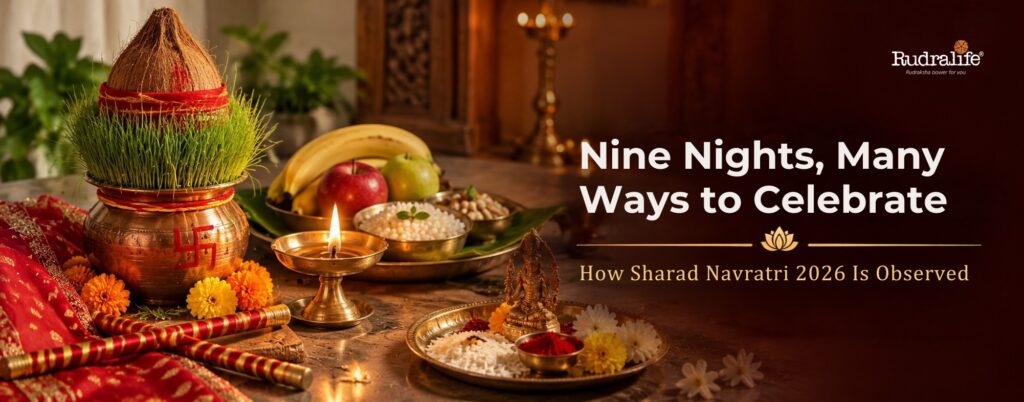
Navratri 2026 is marked differently across India, but a few observances run through nearly every household and community during these nine nights:
- Ghatasthapana, the ritual installation of a kalash on Day 1, inviting the Goddess’s presence into the home According to Drik Panchang, the Ghatasthapana Muhurat for October 11, 2026 falls between 06:31 AM and 10:27 AM (a duration of 3 hours 56 minutes), with the Abhijit Muhurat window at 12:01 PM to 12:49 PM (47 minutes).
Panchang timings can vary slightly by location and source, devotees are encouraged to confirm the exact muhurat for their city with their family priest or a trusted local panchang before performing Ghatasthapana. - Fasting (Vrat), many devotees observe a fast for all nine days of Sharad Navratri 2026 or on select days, eating simple, sattvic food
- Garba and Dandiya, the nightly circular dances of Navratri 2026, especially prominent in Gujarat and now celebrated widely across the country and abroad
- Kanya Pujan, the worship of young girls, usually on Ashtami or Navami, honouring them as living forms of the Goddess
- Durga Puja, particularly significant in West Bengal and eastern India, where elaborate pandals and idols mark the final days of the festival
- Dussehra, the closing day of Sharad Navratri 2026, celebrating Durga’s victory and, in North India, Lord Rama’s victory over Ravana
Rudralife’s Navratri Puja
Nine nights is a long observance, and not every devotee can keep all of them. Work, travel and family often make it difficult to sit for the full vidhi each evening, particularly on Ashtami and Navami when the puja is at its fullest.
For devotees who would like the days marked formally, Rudralife’s Vedic pandits perform Navchandi Maha Puja during Sharad Navratri 2026, from 11 October to 20 October.
At the heart of it is Shri Suktham Path and Dashansh Mantra Japa for each of the 9 incarnations of Goddess Durga, carried out in your name and gotra, so you can take part from wherever you are.
Rudraksha and Sharad Navratri 2026
At its heart, Sharad Navratri 2026 is a season devoted to the Divine Mother, and a few mukhis carry a particular closeness to her many forms.
- Nine Mukhi (Nau Mukhi) is the primary Rudraksha associated with this festival, linked directly to Goddess Durga. Devotees traditionally turn to it for courage, protection, and inner strength, the very qualities the nine nights are meant to awaken.
Nine Mukhi — Buy a certified 9 Mukhi Rudraksha → - Eighteen Mukhi (Athara Mukhi) carries the energy of Bhumi Devi, the Earth Goddess, another revered form of the Divine Mother associated with stability, grounding, and abundance.
Eighteen Mukhi — Buy a certified 18 Mukhi Rudraksha → - Seven Mukhi (Saat Mukhi) is associated with Goddess Mahalakshmi, and devotees often turn to it during this season of worship for her blessings of prosperity and well-being.
Seven Mukhi — Buy a certified 7 Mukhi Rudraksha → - Gaurishankar Rudraksha, a naturally joined bead formed of two Rudraksha grown together as one, represents the union of Gauri (Parvati) and Shankar (Shiva), a fitting presence during a festival that honours the Goddess alongside Lord Shiva.
Gaurishankar — Buy a Gauri Shankar Rudraksha → - Two Mukhi (Do Mukhi) represents Ardhanarishwara, the combined form of Shiva and Shakti as one being, half masculine and half feminine. Devotees wear it seeking harmony, in relationships, and within themselves.
Two Mukhi — Buy a certified 2 Mukhi Rudraksha → - Devotees who prefer a bracelet often choose our 9 Mukhi Durga Shakti Bracelet, which carries the same association with Maa Durga in a form made for daily wear.
Buy the 9 Mukhi Durga Shakti Bracelet →
Not sure which of these is right for you? Our consultation is free, based on your date of birth alone, with no obligation attached. Get a personalised recommendation →
As the Shastras confirm, mukhis do not conflict with one another. A devotee can wear more than one of these together through the nine nights, drawing on each form of the Goddess’s energy at once.
FAQs
1. When does Sharad Navratri 2026 start and end? Sharad Navratri 2026 begins on Sunday, October 11, and ends with Vijayadashami on Tuesday, October 20.
2. What is the significance of Sharad Navratri 2026? Sharad Navratri 2026 commemorates Goddess Durga’s nine-day battle against the demon Mahishasura, culminating in her victory on Vijayadashami, a story of good triumphing over evil.
3. What are the nine colours of Navratri 2026? Starting Day 1 of the festival, the colours are orange, white, red, royal blue, yellow, green, grey, purple, and peacock green.
4. What is Ghatasthapana in Sharad Navratri 2026? Ghatasthapana is the ritual of installing a sacred kalash on the first day of Navratri 2026, marking the beginning of the Goddess’s worship in the home.
5. Is Navratri 2026 celebrated the same way across India? No. While the underlying devotion to Durga is shared, Sharad Navratri 2026 practices vary, from Garba and Dandiya in Gujarat, to Durga Puja pandals in Bengal, to Ramlila and Dussehra celebrations in North India.
6. How many Navratris are there in a year, and is Sharad Navratri 2026 the main one? There are four seasonal Navratris, Chaitra, Ashada, Sharad, and Magha, though Sharad Navratri 2026 is the most widely observed of them all.
The Bottom Line
For 25 years, Rudralife has walked alongside devotees through every festival season, including the nine sacred nights of Sharad Navratri 2026.
If you’d like a Rudraksha recommendation ahead of Navratri 2026, simply share your date of birth with us. Wishing you a blessed Sharad Navratri 2026.
Get a personalised recommendation →
Related Reading
Navaratri — Wikipedia — the festival’s history and how it is observed across regions
Durga — Wikipedia — the Goddess and her nine forms







Leave a comment