






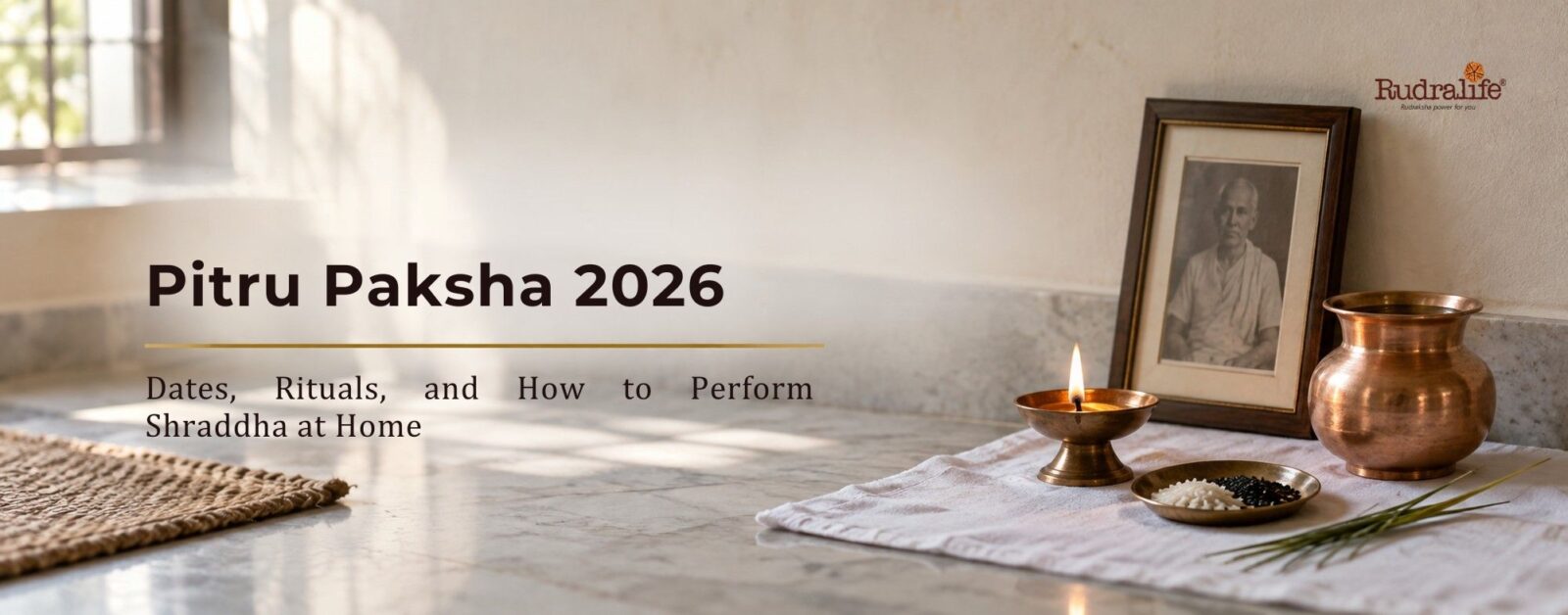
Pitru Paksha is the fortnight each year when Hindu families remember the people who came before them.
This guide covers everything you need for Pitru Paksha 2026: the dates, why it is observed, how to perform Shraddha and Tarpan at home, what to eat and avoid, and how Rudralife’s Vedic pandits perform a Pitru Paksha puja in your family’s name.
Key Takeaways
- Pitru Paksha 2026 begins with Purnima Shraddha on Saturday, 26 September and ends on Sarva Pitru Amavasya, Saturday, 10 October
- Shraddha is performed on the tithi on which the ancestor passed away. If the tithi is unknown, Sarva Pitru Amavasya covers all ancestors
- The core rituals are Shraddha, Tarpan, Pind Daan, feeding Brahmins, and offering food to crows, cows and dogs
- The afternoon (Aparahna Kaal) is traditionally the preferred time for ancestral rites
- Sharad Navratri begins the morning after Mahalaya Amavasya, on 11 October 2026
- Rudralife’s Pitru Paksha Sankalp Puja is performed by Vedic pandits who speak each devotee’s name and gotra during the sankalp
What Is Pitru Paksha?
The word comes from two Sanskrit words: Pitru, meaning ancestors, and Paksha, meaning fortnight. It falls in the Krishna Paksha (waning moon) of the month of Bhadrapada or Ashwin, depending on the calendar your region follows.
It is known by different names across India. In the South, it is Mahalaya Paksha. In North India it is often called Shraddh or Pitra Paksha. In Rajasthan, many families call it Kanagat. The rituals are the same everywhere; only the name changes.
Shraddha is usually performed for three generations of ancestors on both the paternal side and, in many families, the maternal side as well. Many households also remember teachers and relatives who had no one of their own to perform these rites.
Pitru Paksha 2026 Dates
| Day | Date |
| Purnima Shraddha | Saturday, 26 September 2026 |
| Pratipada Shraddha (fortnight begins) | Sunday, 27 September 2026 |
| Sarva Pitru Amavasya / Mahalaya Amavasya | Saturday, 10 October 2026 |
| Sharad Navratri begins | Sunday, 11 October 2026 |
To find your ancestor’s exact Shraddha day, match the tithi of their passing with a panchang for your city. Tithi begins and end at an astronomical moment, not at midnight, so the date can shift by a day depending on where you live.
Note: Tithi dates are based on Drik Panchang for India. Timings vary by location, so please confirm with a panchang for your city or with your family pandit.
Why Is Pitru Paksha Observed? The Story of Karna
The most widely told origin comes from the Mahabharata. When Karna died in the Kurukshetra war and reached the heavens, he was offered gold and jewels instead of food. Puzzled, he asked Lord Indra why.
Indra explained that Karna had given generously all his life, but he had never offered food or water to his ancestors. Karna had not known his lineage during his lifetime. Indra allowed him to return to earth for fifteen days to make those offerings. These fifteen days came to be observed as Pitru Paksha.
During these fifteen days, the Vishwadevas, the deities who watch over the ancestors, release the Pitrus from their realm so they can come close to their families. The ancestors wait to receive water from their children. This is why Tarpan is at the centre of Pitru Paksha.
The story carries a plain message. Charity to the living matters, and so does gratitude to the people whose lives made ours possible.
The Main Rituals of Pitru Paksha
Shraddha is the complete ritual performed with devotion for the ancestors, including prayers, food offerings and feeding Brahmins. The word itself comes from shraddha, meaning faith.
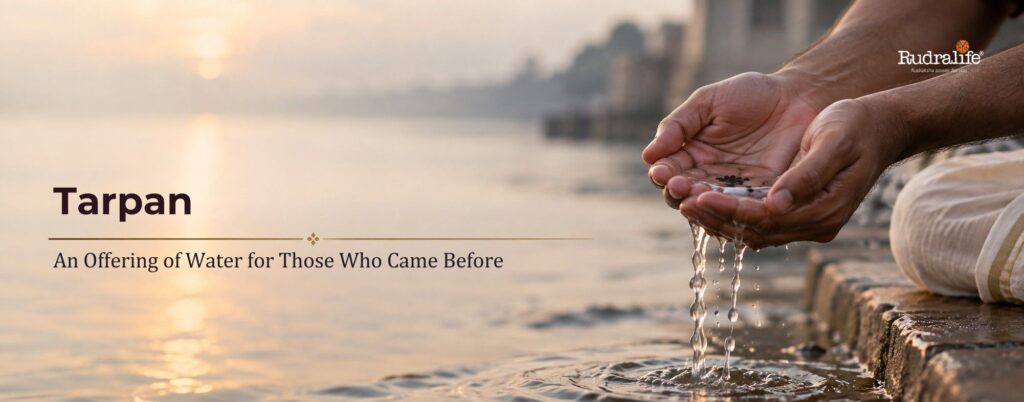
1. Tarpan is the offering of water mixed with milk and black sesame seeds, poured from the hands while the ancestors are remembered. There are three types: Dev Tarpan for the deities, Rishi Tarpan for the sages, and Pitru Tarpan for the ancestors. Tarpan can be done at a river, a tirth place, or at home.
2. Pind Daan is the offering of rice balls mixed with sesame, barley, ghee and honey. It symbolises nourishment for the departed. Gaya in Bihar is considered the most sacred place for Pind Daan, followed by Varanasi, Prayagraj, Haridwar and Rameswaram.
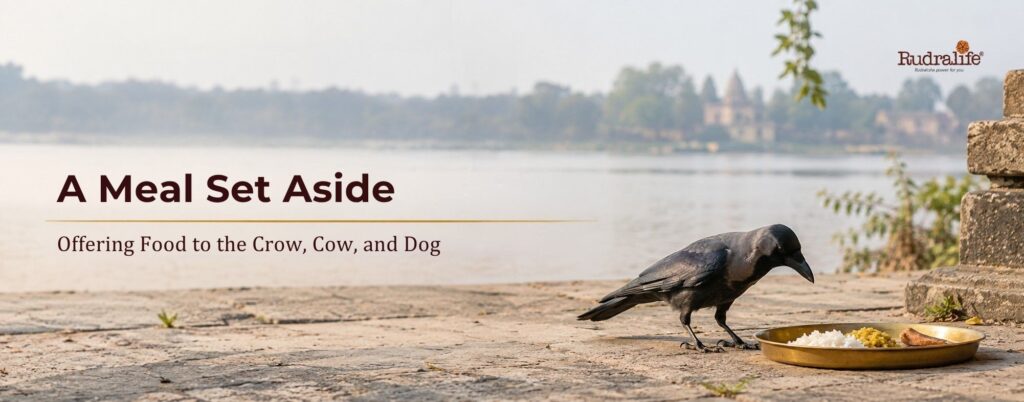
3. Panchbali is the offering of food to five beings: the cow, the dog, the crow, ants, and guests or deities. Crows in particular are traditionally associated with ancestors.
4. Daan (charity) of food, clothes, grain and essentials to those in need, made in the ancestors’ names, completes the observance.
Book Rudralife’s Pitru Paksha Sankalp Puja in your family’s name →
How to Perform Shraddha and Tarpan at Home
You do not need to travel to a tirtha to observe Pitru Paksha. A sincere Shraddha at home is fully valid.
Samagri you will need: a clean white cloth, a copper or brass vessel of water, black sesame seeds, barley, rice, kusha grass, a ghee diya, incense, white flowers, sattvic food prepared at home, and a photograph of the ancestor.
Simple vidhi:
1. Bathe early, wear clean clothes (white is traditional), and keep the home clean.
2. Set up a sacred space facing south, spread the white cloth, and place the ancestor’s photograph on it.
3. Light the diya and incense. Wear a ring made of kusha grass on the ring finger.
4. Take a sankalp, stating your name, gotra and the names of the ancestors you are remembering.
5. Perform Tarpan: hold water with black sesame, barley and kusha in your palms and let it flow gently while remembering each ancestor by name.
6. Offer Pind Daan if your family tradition includes it.
7. Set aside portions of the meal for the cow, dog, crow and brahman before anyone in the family eats.
8. Feed a Brahmin or someone in need, offer dakshina or daan, and close with a prayer for the peace of the departed.
If you cannot chant Shraddha mantras, reciting the Vishnu Sahasranama or a pitru mantra with devotion is accepted.
Many devotees chant on a 5 Mukhi Rudraksha japa mala through the fortnight to keep count and stay focused.
How to offer Tarpan:
Sit facing south. Take enough of the water, milk and sesame mixture to fill both palms. Tarpan is offered in three parts, and the way the water leaves the hand is different for each:
- Dev Tarpan: the water is released from the front of the fingers, for the deities.
- Rishi Tarpan: the water is released from the middle of the palm, for the sages.
- Pitru Tarpan: the water is released over the thumb, for the ancestors.
Pitru Mantra:
ॐ पितृगणाय विद्महे जगत धारिणी धीमहि तन्नो पितृः प्रचोदयात्।
Best time: The Aparahna Kaal, roughly between 1:00 PM and 3:30 PM, is traditionally preferred for ancestral rites.
Kutup and Rohina muhurats around midday are also considered auspicious. Please check the exact timings for your city.
Shop 5 Mukhi Rudraksha Japa Mala →
What to Eat and What to Avoid During Pitru Paksha
Food during this fortnight is sattvic: simple, fresh and light. Kheer, puri, seasonal vegetables, dal, and rice are commonly prepared for the Shraddha meal, often including dishes the ancestor loved.
Traditionally avoided:
- Non-vegetarian food, alcohol, onion and garlic
- Weddings, engagements, griha pravesh and other new beginnings
- Haircuts and shaving on the day of Shraddha, in many families
- Arguments and harsh words at home
These restrictions are not meant to create fear. They are meant to keep the fortnight quiet and focused on remembrance. Follow what your family tradition asks of you.
Who Can Perform Shraddha?
Traditionally, the eldest son performs Shraddha. The Garuda Purana and other texts also allow a daughter, wife, grandson, brother or other family member to perform it when a son is not available.
Any family member who performs it with a clear sankalp and devotion is accepted. If your family follows a specific parampara, check with your kul purohit.
For families living abroad, the question of whether to follow India’s tithi or your local one comes up often. Both are acceptable.
Many families keep the same day as their relatives in India so the whole family remembers together.
Sarva Pitru Amavasya: The Most Important Day
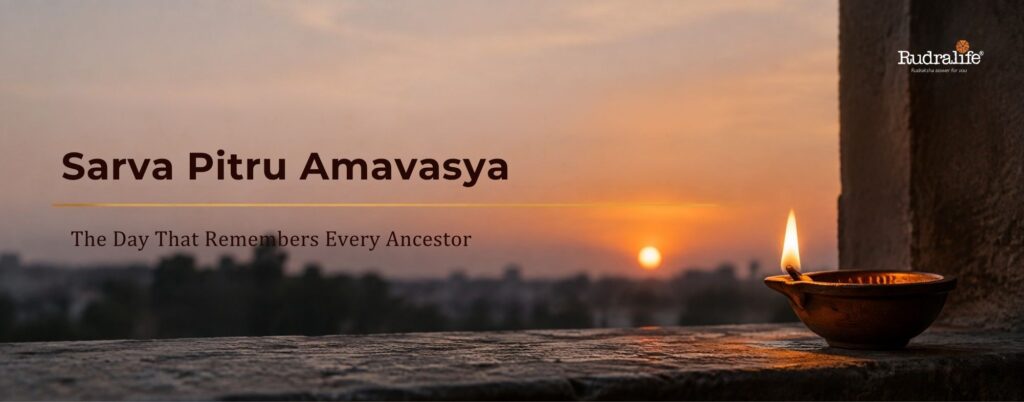
The last day of Pitru Paksha, Saturday, 10 October 2026, is Sarva Pitru Amavasya, also called Mahalaya Amavasya. On this day, Shraddha can be performed for every ancestor at once, including those whose tithi is unknown, forgotten, or was missed earlier in the fortnight.
In Bengal, Mahalaya marks the day Goddess Durga is invited to earth, with the recitation of the Mahishasura Mardini at dawn. The next morning, 11 October, Sharad Navratri begins, and the household moves from remembrance of ancestors to worship of the Devi.
Read our Sharad Navratri 2026 guide →
Rudralife’s Pitru Paksha Sankalp Puja 2026
Many families today cannot travel to Gaya or Varanasi, or cannot arrange a pandit on the right tithi. Rudralife’s Pitru Paksha Sankalp Puja is performed by Vedic pandits so that your ancestors are remembered with the correct vidhi, even when you cannot be present.
Puja name: Pitru Moksh Maha Puja
Date and muhurat: 10 Oct 2026 (Saturday), 2:15 pm (Laabh Muhurat) IST
What the puja includes: Shanti Paath, Devata Namaskar, Maha Sankalp, Ganga Pujan, Prithvi Pujan, Deepak Pujan, Surya Pujan, Dasho Disha Pujann, Hanuman Pujan, Bhairav Pujan, Kuldevi Pujan, Pitru Namaskar, Guru Vandana, Ganapathi Pujan, Abhishek ( Ganpati, Devi Lakshmi, Maha Vishnu ), Shodasopchar Pujan,108 Tulsi Archan, Vishnu Sahasranam Paath, Pitru Pujan, Aarti, Pushpanjali, Kshama Prarthana, Maha Prasad, Ashirvad, Brahman Bhojan
How your name is included: During the sankalp, the pandits speak each devotee’s name and gotra, so the puja is performed on behalf of your family.
Prasad kit: 33 Beads 5 Mukhi Kantha, Dry sweets safe to consume which are offered to God, Mauli to be tied around the wrists of family members, Akshat, Chandan which shall be applied on the forehead.
Watch live: The puja is live-streamed on Rudralife’s YouTube channel, with updates shared on WhatsApp and email.
Join Rudralife’s Pitru Paksha Sankalp Puja 2026 →
FAQ
When does Pitru Paksha 2026 start and end? Pitru Paksha 2026 begins with Purnima Shraddha on 26 September and ends on Sarva Pitru Amavasya, 10 October 2026.
What if I don’t know the tithi on which my ancestor passed away? Perform Shraddha on Sarva Pitru Amavasya, 10 October 2026. It is meant for all ancestors, including those whose tithi is unknown.
Can Shraddha be performed at home? Yes. Tarpan and Shraddha at home are fully valid. A river or temple is not required. What matters is the correct tithi, a clear sankalp and sincere devotion.
Can women perform Shraddha? Yes. The Garuda Purana permits a daughter or wife to perform Shraddha when a son is not available. Many families now accept this as standard practice.
Can I wear Rudraksha during Pitru Paksha? Yes. Rudraksha can be worn throughout Pitru Paksha. Many devotees also use a Rudraksha japa mala to chant pitru mantras during the fortnight.
Can we buy new things during Pitru Paksha? Tradition discourages new beginnings such as weddings, griha pravesh and major celebrations. Everyday needs and items for puja or daan are not affected. Follow what your family has always observed.
Why is food offered to crows during Shraddha? Crows are traditionally associated with ancestors. Offering them food is a way of reaching the ancestors, along with offerings to the cow, dog and ants.
Can I join Rudralife’s Pitru Paksha puja from abroad? The Vedic Sankalp Puja is available for devotees in India. Devotees outside India can watch the puja live on Rudralife’s YouTube channel.
Bottom Line
Pitru Paksha 2026 is a fortnight for gratitude. Whether you perform a full Shraddha at a tirtha, a simple Tarpan at home, or feed someone in your grandmother’s name, the intent is what the tradition honours. Note your ancestor’s tithi, keep the home quiet and sattvic, and set aside time on Sarva Pitru Amavasya for everyone you want to remember.
For 25 years, Rudralife has served devotees with authentic Nepal Rudraksha and Vedic Sankalp Pujas performed according to the scriptures. If you would like our pandits to perform the Pitru Paksha puja in your family’s name and gotra, we would be honoured to include you.
Join Rudralife’s Pitru Paksha Sankalp Puja 2026 →
Related Reading
Pitru Paksha — Wikipedia — the fortnight’s origins, regional names and observances
Śrāddha — Wikipedia — the ritual itself, across traditions
Garuda Purana — Wikipedia — the text you cite on who may perform Shraddha







Leave a comment