





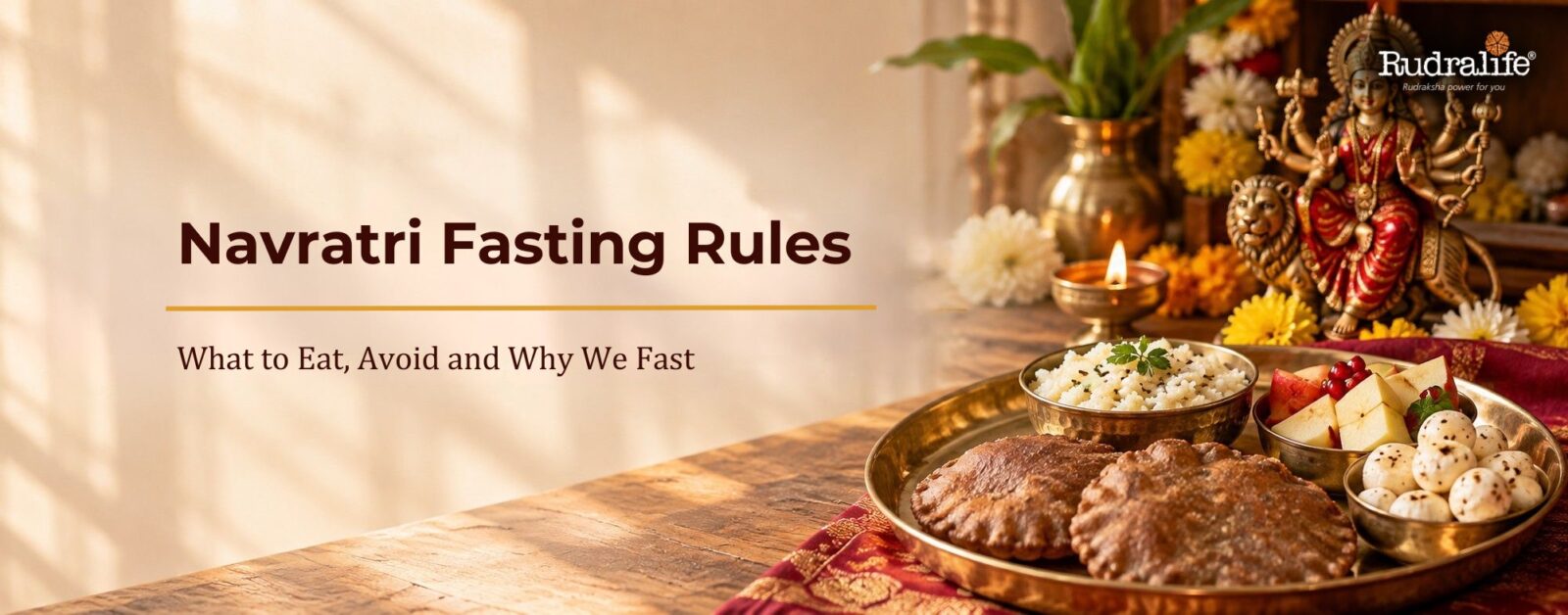
Navratri fasting rules are simple once you understand why they exist. The vrat is an offering of discipline to Maa Durga during Navratri, and its food rules follow the idea of sattvic eating: light, simple food that keeps the mind calm for prayer.
This guide covers both sides of the tradition. It explains why devotees fast, what the food restrictions mean, which flours, fruits, dairy and salt are allowed, what to avoid, and the everyday mistakes that make fasting harder than it needs to be.
Family customs differ across India, so follow your household tradition where it differs.
Key Takeaways
- Navratri fasting rules follow a vrat, or vow, offered to Maa Durga across her nine forms.
- The fast is treated as tapas: a small, chosen discipline that strengthens focus and devotion
- Sattvic food is preferred, and both Navratris fall at a change of season when lighter food is traditionally advised
- Kuttu, singhara, rajgira and samak rice replace wheat and regular rice; sendha namak replaces table salt
- Grains, pulses, onion, garlic, eggs, meat and alcohol are avoided for all nine days
- Too much fried food, too little water and heavy meals when breaking the fast are the most common mistakes
- Devotees can choose from several types of fast, and every sincere form of observance is valid
- Rudraksha linked to the Divine Mother, such as the 9 Mukhi, and a Navchandi Puja can deepen the nine-day practice alongside the fast
- Rudralife’s Navchandi Puja is streamed live on YouTube, so devotees anywhere can take part
Why Do We Fast During Navratri?
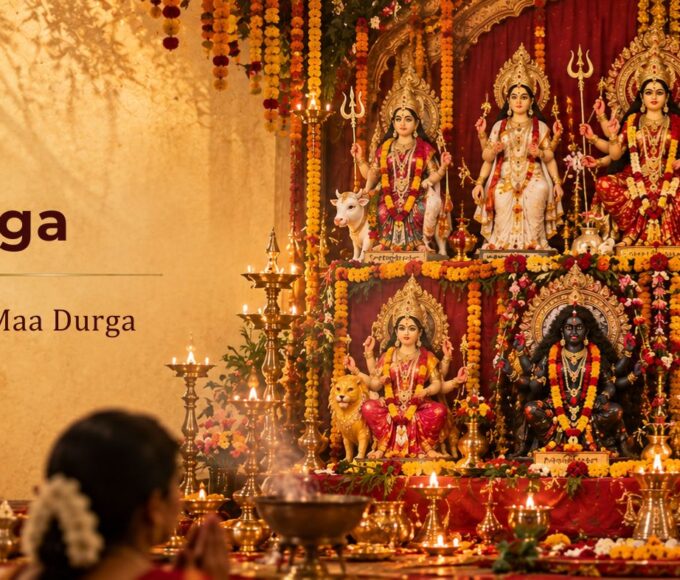
Navratri celebrates Maa Durga and her victory over Mahishasura, the victory of dharma over adharma. Each of the nine nights is dedicated to one of her forms, from Shailputri on the first day to Siddhidatri on the ninth.
Fasting is one of the oldest ways devotees honour the Goddess during these nights. When the body asks for less, the mind has more room for the Divine. By giving up certain foods for a set period, the devotee makes a small, willing offering of effort, not just of flowers or sweets.
The word vrat itself means a vow. A Navratri fast is a promise the devotee makes to themselves and to the Goddess, and keeping it for nine days is part of the worship.
Navratri fasting rules exist to support that promise, not to complicate it.
Self-Discipline and Devotion: The Vrat as Tapas
In Hindu tradition, tapas refers to a chosen discipline that builds inner strength. Fasting is one of its most accessible forms. It needs no special equipment, only a clear intention and consistency.
Maa Brahmacharini, worshipped on the second day, is closely linked to this idea. She is revered for the long austerities she undertook to attain Lord Shiva, and devotees see her as the embodiment of patient, steady discipline.
Read: Rudraksha for Navratri and Maa Brahmacharini’s mala →
The discipline of the vrat usually goes beyond food. Many devotees also:
- Wake early and keep a fixed time for daily puja
- Chant or do japa for a set number of rounds each day
- Read the Durga Saptashati over the nine days
- Speak less harshly, avoid gossip and keep the home calm
- Stay away from alcohol, tobacco and late nights
When you’re ready to begin, this walks through how japa is practised.
Seen this way, the fast is less about hunger and more about attention. Each vrat meal is a reminder of why the devotee is observing Navratri. The 9 Mukhi Rudraksha, associated with Maa Durga, is often worn during these nine days as part of this routine.
Build a steady japa practice this Navratri. Explore authentic Rudraksha japa malas →
The Meaning Behind Navratri Food Restrictions
Navratri fasting rules follow the principle of sattvic eating.
Navratri food rules follow the principle of sattvic eating. In Ayurvedic and yogic thought, food is grouped by its effect on the mind:
- Sattvic foods, such as fruit, milk, nuts and simple home cooking, are considered light and calming.
- Rajasic foods, such as onion, garlic and heavily spiced dishes, are considered stimulating.
- Tamasic foods, such as meat, alcohol and stale food, are considered dulling.
During Navratri, devotees lean towards sattvic food to support a calm, focused mind. This is why grains, pulses, onion and garlic are set aside.
There is also a seasonal reason. Chaitra Navratri falls in spring and Sharad Navratri in autumn. Both arrive at a change of season, a time traditionally seen as harder on digestion, and a lighter diet gives the body a rest during the transition.
Navratri Fasting Rules: Allowed Grains and Flours
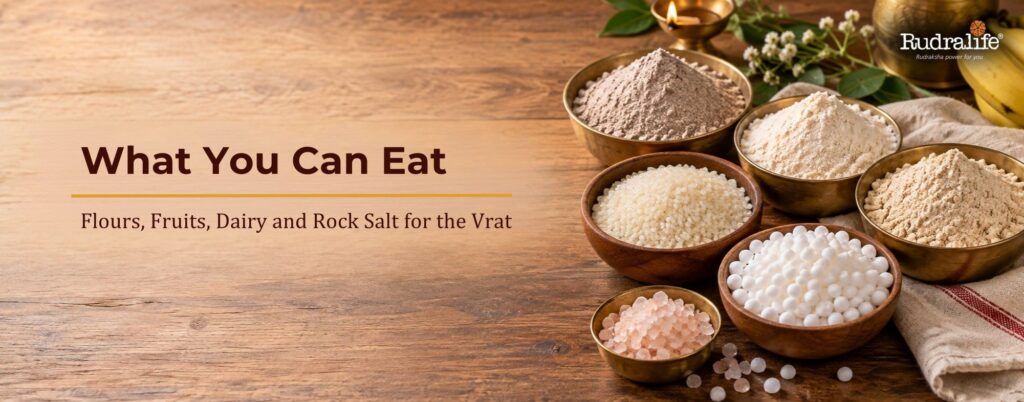
Wheat, regular rice, maida, suji and besan are not eaten during the vrat. In their place, families use seeds and flours that are not counted as grains in fasting tradition.
- Kuttu atta (buckwheat flour): puri, paratha, pakora and cheela
- Singhara atta (water chestnut flour): puri, halwa and as a thickener for curries
- Rajgira (amaranth): roti, laddoo, paratha and porridge
- Samak rice (sama ke chawal, barnyard millet): khichdi, pulao and kheer
- Sabudana (sago, tapioca pearls): khichdi, vada and kheer
Kuttu and singhara flour spoil faster than wheat flour. Buy small, fresh packs from a trusted shop, check the date, and discard any flour that smells stale or bitter.
Vegetables that are commonly allowed include potato, sweet potato, arbi (colocasia), raw banana, pumpkin, lauki (bottle gourd), cucumber and tomato. Some families also skip tomato, so follow your household custom.
Fruits, Dairy and Nuts: The Backbone of the Vrat Diet
Fruits, milk and nuts carry most of the nutrition during the nine days. They keep energy steady without making the body feel heavy.
Fruits: Banana, apple, papaya, pomegranate, guava, pear, chikoo and seasonal fruits are all suitable. Fresh coconut and coconut water are popular too.
Dairy: Milk, curd, buttermilk, paneer, ghee, khoa and makhana kheer are widely eaten. Many families prefer homemade curd and paneer so there is no doubt about additives.
Nuts and seeds: Almonds, cashews, walnuts, raisins, dates, makhana (fox nuts) and peanuts are common. Roasted makhana with sendha namak is a light snack that travels well.
Spices: Cumin, black pepper, green chilli, ginger, cardamom and fresh coriander are generally accepted. Many families avoid turmeric, hing, mustard seeds and garam masala during the vrat.
Rock Salt: Why Sendha Namak Replaces Table Salt
Regular iodised table salt is not used in vrat cooking. Sendha namak, a rock salt that is mined rather than processed from sea water, takes its place.
In fasting tradition, sendha namak is treated as a pure, minimally processed ingredient, which is why it suits a sattvic diet. It has a milder taste, so you may need a little more of it than regular salt.
Check packaged “vrat” snacks carefully. Some namkeens and chips labelled for fasting still contain regular salt, spice mixes or preservatives that your family may not accept.
Foods to Avoid During Navratri Fasting
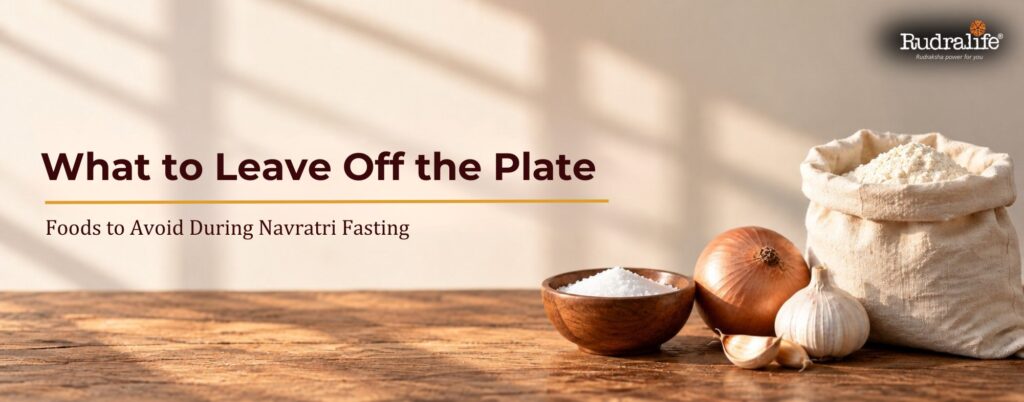
Under Navratri fasting rules, the following are generally set aside for all nine days.
The following are generally set aside for all nine days:
- Wheat, rice, maida, suji and all regular grains
- Pulses and lentils, including besan
- Onion and garlic
- Regular table salt
- Eggs, meat and fish
- Alcohol and tobacco
- Packaged foods containing preservatives, baking soda or regular spice blends
Some devotees also reduce tea and coffee during Navratri. This is a personal choice rather than a strict rule.
Seek Maa Durga’s blessings for your family with Rudralife’s Navchandi Puja →
Types of Navratri Fasts
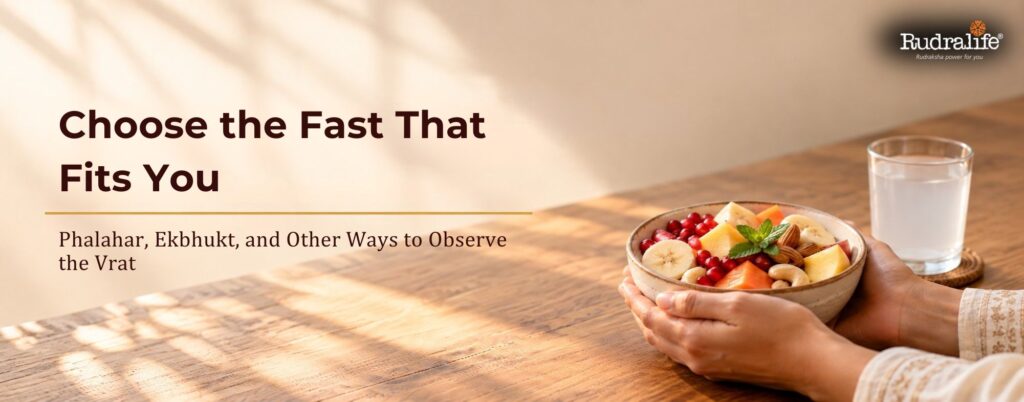
Navratri fasting rules allow for more than one form of vrat.
There is no single correct way to fast. Devotees choose the form that suits their health, work and family custom.
- Phalahar vrat: fruit, milk, nuts and vrat foods through the day
- Ekbhukt vrat: one sattvic meal a day, usually in the evening after puja
- First and last day: fasting only on Pratipada and on Ashtami or Navami
- Nirjala vrat: no food or water for the day; demanding, and kept by very few devotees
The same four types of vrat are observed during Shravan. Read: Shravan Fasting Diet →
The fast usually ends with Kanya Pujan on Ashtami or Navami, when young girls are honoured as forms of the Goddess and offered halwa, puri and kala chana. Start slowly after breaking the fast and return to regular meals over the next day.
Common Navratri Fasting Mistakes
Most fasting fatigue comes from habits rather than the Navratri fasting rules themselves.
1. Eating fried food at every meal. Kuttu puri and sabudana vada are tasty, but daily frying leaves many people sluggish and acidic. Try roasting, steaming or making rotis instead.
2. Not drinking enough water. Fruits and milk do not replace plain water. Keep coconut water, lemon water with sendha namak or buttermilk through the day.
3. Overdoing sabudana and potato. Both are filling but heavy on starch. Balance them with fruit, curd, paneer and vegetables.
4. Too much sugar and tea. Sweet kheer, halwa and repeated cups of tea can cause energy crashes. Keep sweets to one serving a day.
5. Breaking the fast with a heavy meal. After a full day of fasting, start with fruit, water or a light dish before a proper meal.
6. Ignoring health needs. Devotees who are diabetic, pregnant, elderly or on regular medication should speak with their doctor before a strict fast. A phalahar vrat is a respected option.
7. Forgetting the purpose. A fast kept with irritation or exhaustion loses its meaning. A simple phalahar vrat kept with sincerity carries more value than a strict one that leaves you drained.
Navratri Fasting Customs Across India
Navratri fasting rules are shared, but the way families keep them is not.
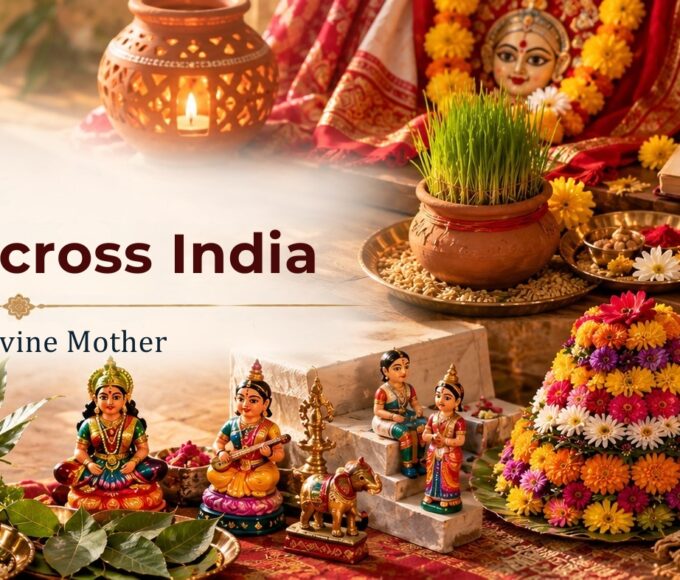
In North India, including Uttar Pradesh, Delhi, Punjab and Himachal Pradesh, nine-day fasting is widespread and Kanya Pujan is a central family ritual. In Gujarat, many devotees fast during the day and join garba and dandiya in the evening. In Maharashtra, Ghatasthapana marks the start of the festival, and many families keep a vrat with sabudana and rajgira dishes.
In West Bengal, Sharad Navratri is celebrated as Durga Puja, a time of feasting and bhog rather than fasting for most families. In Tamil Nadu, Karnataka and Andhra Pradesh, homes display Golu or Bommai Kolu, and the festival centres on visiting, singing and sharing sundal.
These differences are not contradictions. Each region honours the Divine Mother in the way its families have followed for generations, and the intention behind the practice is what gives it meaning.
Read: Navratri Celebrations Across India →
Planning to read the Durga Saptashati this Navratri? Read our Durga Saptashati guide →
Rudraksha and Navchandi Puja During Navratri
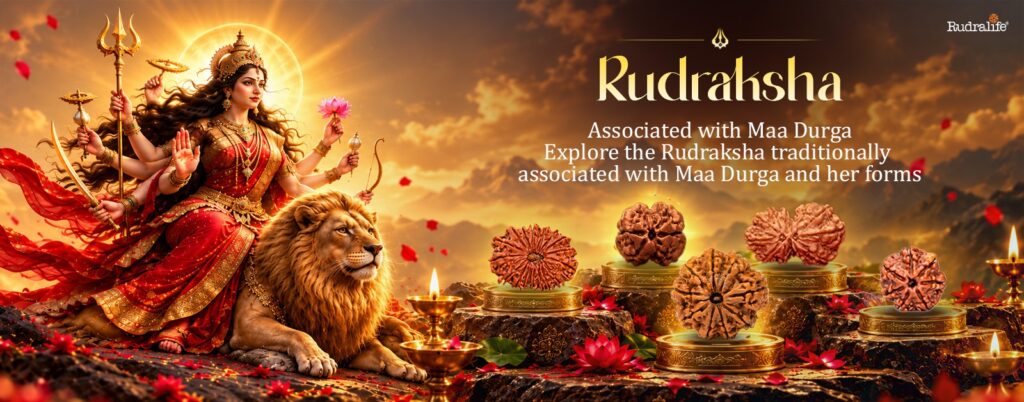
Fasting is one part of Navratri worship. Many devotees also begin wearing Rudraksha linked to the Divine Mother, or arrange a Navchandi Puja through the nine days. Five beads are traditionally associated with her forms.
9 Mukhi Rudraksha (Goddess Durga): The 9 Mukhi is associated with Goddess Durga and her nine forms, which makes it the bead most closely connected to Navratri. It is believed to support courage, self-confidence and inner strength.
Explore 9 Mukhi Rudraksha →
Buy the 9 Mukhi Durga Shakti Bracelet →
18 Mukhi Rudraksha (Bhumi Devi): The 18 Mukhi is associated with Bhumi Devi, the Earth Mother. It is traditionally worn for stability, grounding and the well-being of the home.
7 Mukhi Rudraksha (Mahalakshmi): The 7 Mukhi is associated with Goddess Mahalakshmi and is traditionally worn for prosperity and financial stability.
Gaurishankar Rudraksha (Gauri and Shankar): Two beads naturally joined together, the Gaurishankar represents the union of Goddess Gauri and Lord Shiva. It is traditionally worn for harmony in marriage and family relationships.
Explore Gaurishankar Rudraksha →
2 Mukhi Rudraksha (Ardhanareshwara): The 2 Mukhi represents Ardhanareshwara, the form in which Shiva and Shakti are one. It is traditionally worn for understanding and balance in relationships.
Rudraksha can be worn throughout the nine days, including while fasting, cooking and doing puja, and a japa mala is a simple way to keep count of mantra rounds through the vrat.
Any devotee can wear any of these Rudraksha, and Rudraksha has no negative effects. However, we recommend choosing Rudraksha according to your date of birth, so the beads you wear suit you best.
Alongside the fast, many devotees also arrange a Navchandi Puja, a Vedic ritual dedicated to Maa Chandi, a fierce form of Durga. It centres on the recitation of the Durga Saptashati followed by a havan, and Ashtami and Navami are considered the most auspicious days for it.
Rudralife performs it as a Vedic Sankalp Puja, with the pandits speaking each devotee’s name and gotra, streamed live on YouTube so devotees anywhere can watch.
Puja date and muhurat: 11 October to 20 October | Pandits: 2 each day
Book Rudralife’s Navchandi Puja → · Book a Rudraksha consultation →
Frequently Asked Questions
Is fasting compulsory during Navratri? No. Fasting is a personal choice. Devotees can observe Navratri through daily puja, japa, reading scripture or keeping a sattvic kitchen without a full fast.
Can I drink tea or coffee during Navratri fasting? Most families allow tea or coffee with milk. Some devotees give it up for the nine days as a personal discipline. If you drink it, avoid having it on an empty stomach.
Can children and elderly family members observe the Navratri vrat? They can take part in a gentler way, such as a phalahar fast or skipping only grains. Their meals should stay regular and filling. Speak with a doctor for anyone with a medical condition.
What should I do if I break my Navratri fast by mistake? There is no need for worry or guilt. Offer a short prayer to Maa Durga, continue your vrat the next day, and keep your intention steady.
Can I fast during Navratri if I am working or travelling? Yes. A phalahar vrat or fasting only on the first and last day is easier to manage. Carry fruit, roasted makhana or dry fruits so you are not left without suitable food.
Is Chaitra Navratri fasting different from Sharad Navratri fasting? The core rules are the same for both. Chaitra Navratri also ends with Ram Navami, which some families mark with a special prasad before breaking the fast.
Why do some devotees sleep on the floor or avoid cutting hair during Navratri? These are additional personal austerities followed in some families. They are not required, but devotees who keep them see them as part of the same nine-day discipline.
Which Rudraksha are associated with Navratri, and can I wear them while fasting? The 9 Mukhi is linked to Maa Durga, the 7 Mukhi to Mahalakshmi and the 18 Mukhi to Bhumi Devi. Rudraksha can be worn throughout Navratri, including while fasting, cooking and doing puja.
Bottom Line
Navratri fasting rules follow from one purpose: honouring Maa Durga through nine days of chosen discipline.
We fast during Navratri to honour Maa Durga through nine days of chosen discipline. The rules follow from that purpose: kuttu, singhara, rajgira, samak rice, fruit, dairy, nuts and sendha namak keep meals light and sattvic, while grains, pulses, onion and garlic wait until the nine days are over.
Drink enough water, go easy on fried food, and choose the form of fast that suits your health. The sincerity behind the vrat matters more than its strictness.
For 25 years, Rudralife has helped devotees bring authentic, X-ray verified Nepal Rudraksha into their spiritual practice, including during Navratri.
Find the Rudraksha that suits you with a personalised date-of-birth recommendation →
Disclaimer: Fasting customs vary by family, community and region. This article is for general informational purposes and is not medical or nutritional advice. Anyone who is pregnant, diabetic, elderly or on regular medication should consult a doctor before undertaking a fast.
Related Reading
- Navratri celebrates Maa Durga and her victory over Mahishasura
- Navratri Celebrations Across India
- Shravan Fasting Diet
- Rudraksha for Navratri and Maa Brahmacharini’s Mala
- Navratri Storie



Leave a comment