






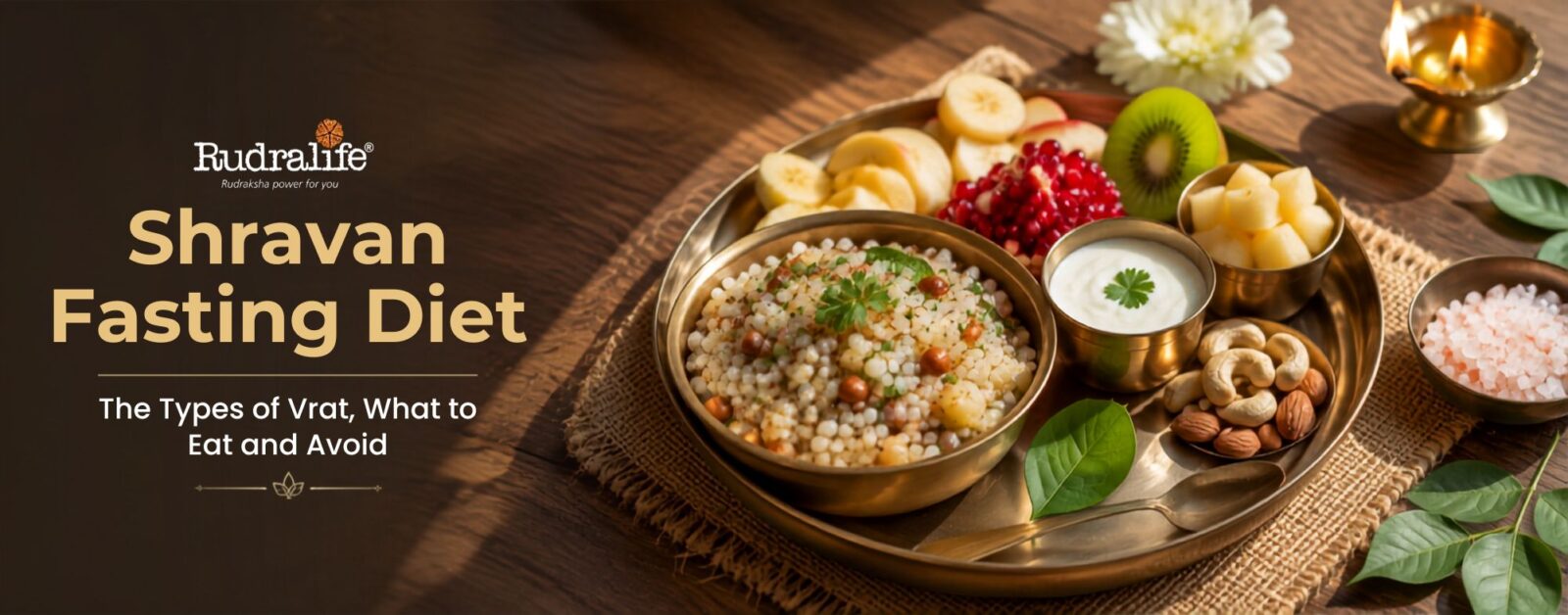
Shravan fasting is a satvik vrat observed through the month dedicated to Lord Shiva, and devotees practice it in four distinct forms, ranging from complete abstinence from food and water to a fuller vrat thali built around sabudana, vrat flours, and select vegetables.
Shravan is treated by devotees not as one fixed diet but as a spectrum of discipline, and every devotee is free to choose the form that suits their body, health, and level of devotion.
At Rudralife, many devotees preparing to wear or energise their Rudraksha mala this month ask us which fast to follow, so this guide lays out all four types clearly, along with what to eat, what to avoid, and how to choose.
Key Takeaways
- Shravan fasting is followed in four recognised forms, from complete abstinence to a fuller vrat meal.
- The four types are Nirahar Vrat, Jalahar Vrat, Phalahar Vrat, and Anukalpa Vrat.
- Grains, pulses, onion, garlic, and regular salt are avoided across all types where food is consumed; sendha namak (rock salt) replaces regular salt.
- Some devotees fast only on Shravan Somwar (Mondays), while others observe a chosen type through the entire month.
- Fasting timing follows one of two patterns, sunrise-to-sunset, or a full-day fast broken the next day after Shivling puja.
- The right type depends on personal capacity, health, and family tradition, no single form is considered more devotional than another.
Why Diet Matters During Shravan Vrat
Shravan is considered the holiest month for devotees of Lord Shiva, and fasting during this time is treated as an act of devotion rather than simply a dietary restriction.
Whichever of the four types a devotee chooses, the intent behind the vrat diet is the same: to keep the body light and the mind calm, supporting focus during prayer and Abhishek.
This is why the foods eaten during Shravan fasting are chosen carefully, following rules passed down through tradition.
The 4 Types of Shravan Fasting
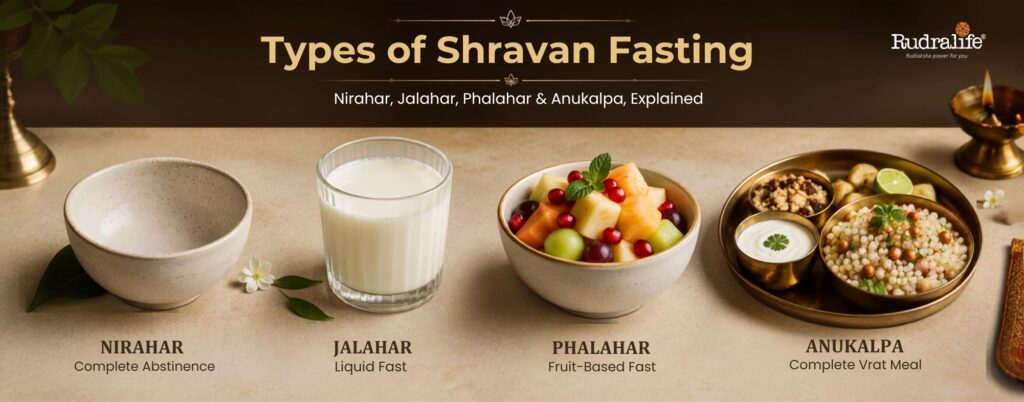
Not every devotee fasts the same way during Shravan. The tradition recognises four levels of vrat, each suited to a different level of physical capacity and spiritual intent.
1. Nirahar Vrat, Complete Abstinence
This is the strictest form of Shravan fasting. Devotees consume nothing at all, no food and no water, for the duration of the vrat, usually a single day. It is considered the most rigorous expression of discipline and is generally attempted only by those in good health and with prior fasting experience.
2. Jalahar Vrat, The Liquid-Based Fast
In this form, devotees avoid solid food entirely but can consume liquids such as water, milk, curd, and lassi throughout the day. It offers a middle path for those who want a strict fast without the physical strain of Nirahar Vrat, and milk in particular is considered pure and fitting for a fast observed in honour of Lord Shiva.
3. Phalahar Vrat, The Fruit-Based Fast
Here, the diet is built around fruits, along with milk and dairy. Devotees eat fresh fruit through the day, sometimes alongside dry fruits, to sustain energy while keeping the fast light and satvik. It is one of the more commonly followed types, as it balances devotion with practicality.
4. Anukalpa Vrat, The Full Vrat Thali
This is the fullest form of the Shravan fast and the one most devotees follow through the month or on Shravan Somwar. It allows sabudana, vrat flours like kuttu and singhara, potatoes and select vrat-friendly vegetables, packaged vrat snacks, and mild spices, all prepared with sendha namak instead of regular salt. It sustains energy for those observing a full working day while keeping the meal within satvik guidelines.
Foods to Avoid During Shravan Fast
Foods to Avoid During Shravan Fast
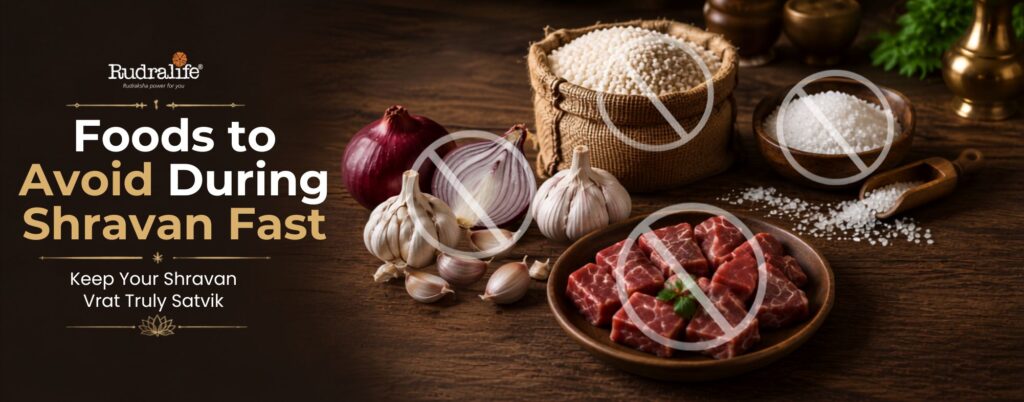
Across all types where food is permitted, certain foods stay off the plate to keep the fast satvik:
- Non-vegetarian food, eggs, and alcohol
- Grains and pulses, wheat, rice, and dals
- Onion and garlic, considered non-satvik and believed to stimulate the senses
- Regular (iodised) table salt
- Certain spices, turmeric, mustard seeds, hing (asafoetida), and garam masala
Choosing the Right Type of Fast for You
There is no single “correct” way to observe the Shravan vrat. Many devotees choose to fast only on Shravan Somwar (Mondays), which usually falls four or five times during the month, while others observe their chosen type through the entire month for deeper spiritual discipline.
Some devotees also move between types across the month, for instance, keeping a Nirahar or Jalahar fast on Mondays and an Anukalpa Vrat on other days. The choice depends entirely on personal capacity, health, and family tradition, and every form carries equal devotional weight.
Shravan Fasting Timings: The Two Ways to Keep the Fast
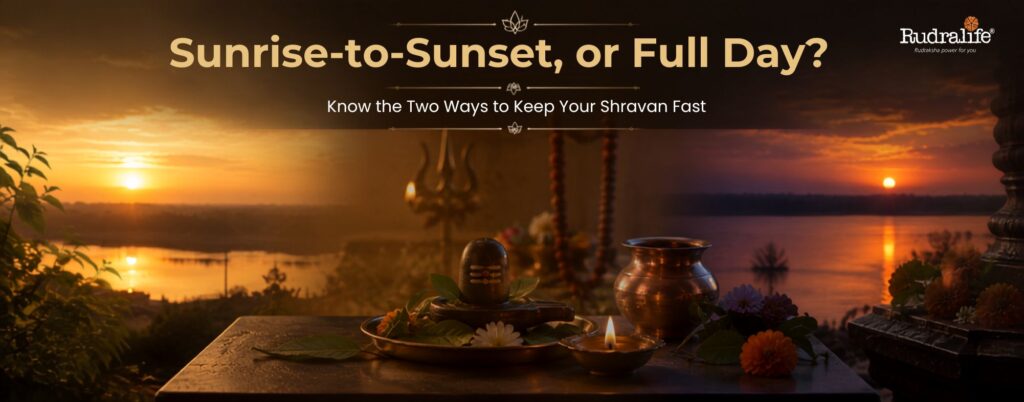
Alongside the four types of vrat, devotees also follow one of two fasting timings on Shravan Somwar.
Sunrise-to-sunset fast: The fast is kept only for the daylight hours, starting at sunrise and ending at sunset the same day. This is the timing most commonly followed in Maharashtra, Gujarat, and several other regions.
Every Monday during the holy month of Shravan. Begin prayers during Brahma Muhurat (4:00 AM to 6:00 AM), perform Jalabhishek/Shivling puja at a temple or home altar, and break the fast after evening prayers and sunset.
Join RudraLife’s live-streamed Shravan Somwar Puja from home →
Full-day fast, broken the next day: The fast is carried through the entire day and night and is broken only the next day, after performing the Shivling puja, either at home or at a temple.
Every Monday during the holy month of Shravan. Begin prayers during Brahma Muhurat (4:00 AM to 6:00 AM), perform Jalabhishek/Shivling puja at a temple or home altar, and break the fast the next day after performing the Jalabhishek/Shivling puja, either at home or at a temple.
If you’re setting up the puja at home, our guide on how to perform Shivling puja at home walks through the full process step by step read the full guide here →
Simple Tips for Fasting During Shravan
- Choose your fasting timing, sunrise-to-sunset or full-day, based on what your region and family follow, and stay consistent with it through the vrat
- Stay hydrated through the day, especially if observing a Jalahar or Anukalpa Vrat
- Choose foods that keep energy steady, such as dry fruits and dairy, rather than skipping meals entirely
- If you have any medical condition, speak with a healthcare professional before undertaking a strict fast such as Nirahar Vrat
- Many devotees also wear a Rudraksha mala during their Shravan fasting and puja, as it
is traditionally associated with focus and devotion in Shiva worship, some choose to have their mala energised beforehand as part of their Shravan preparation - As a special offer this Shravan, RudraLife is giving devotees exclusive deals on Rudraksha malas and puja bookings
view offers here →
Energise your Rudraksha mala before Shravan Somwar
FAQs
1. Can I drink tea or coffee during Shravan fasting? You can consume tea as per your need, but we recommend avoiding it, as it falls under tamsik food.
2. Is sabudana khichdi enough to sustain a full day of fasting? For most people following an Anukalpa Vrat, yes, sabudana khichdi paired with fruits or dairy throughout the day provides enough energy for a single-day fast. Those observing a stricter Nirahar or Jalahar fast won’t include it at all.
3. Can pregnant women or people with health conditions observe Shravan fasting? It’s advisable to consult a doctor first. A lighter type such as Phalahar or Anukalpa Vrat is usually recommended over Nirahar Vrat, and fasting can always be shortened or skipped without it being seen as any less devotional.
4. Can I switch between the four types of fasting during the month? Yes, many devotees do. It’s common to keep a stricter fast like Nirahar or Jalahar Vrat on Shravan Somwar and a fuller Anukalpa Vrat on other days of the month.
5. Can I eat outside food or restaurant meals during Shravan fasting? It’s best avoided, since most restaurants don’t prepare food with sendha namak or vrat-specific ingredients. Home-cooked vrat meals are the traditional and safer choice, whichever of the four types you’re following.
Bottom Line
Shravan fasting isn’t one fixed diet, it’s a spectrum of devotion, from the complete stillness of Nirahar Vrat to the sustaining meals of an Anukalpa Vrat.
What matters is choosing the type that fits your body and your capacity for the month, not matching what anyone else is doing. Whether you keep a Jalahar fast on Shravan Somwar or an Anukalpa Vrat through the entire month, sticking to satvik foods and sendha namak keeps the vrat both meaningful and manageable, all while honouring Lord Shiva through the discipline you choose.
Rudralife’s Note: This blog is for informational and devotional guidance only and does not constitute medical or nutritional advice.
Fasting practices vary by region, family tradition, and personal health. Please consult a qualified healthcare professional before undertaking a strict fast, especially Nirahar Vrat, or if you have any medical condition.







Leave a comment