






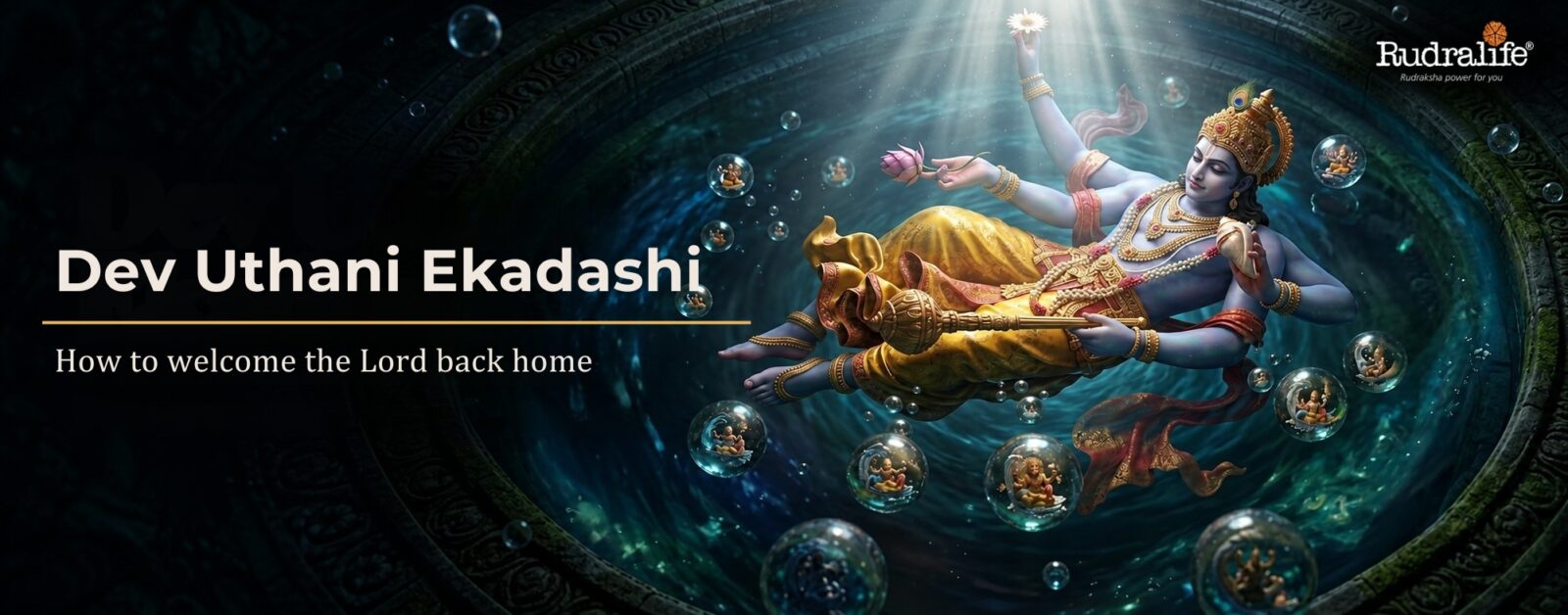
Dev Uthani Ekadashi 2026 falls on Friday, 20 November, & for many homes it is the morning the year quietly turns. After four months of rest, Lord Vishnu is believed to wake from his yoga nidra, Chaturmas comes to an end, & the season of weddings, griha pravesh & new beginnings opens again.
Also known as Prabodhini Ekadashi or Devutthana Ekadashi, it is a day of fasting, lamps, sugarcane & soft prayers sung to wake the Lord. Here is everything you need to know, from the date & vrat rules to the Tulsi Vivah that follows.
Key takeaways
- Dev Uthani Ekadashi 2026 is observed on Friday, 20 November by Smarta households & on Saturday, 21 November in the Vaishnava tradition
- It falls on the Shukla Paksha Ekadashi of Kartik month & marks the end of Chaturmas
- Tradition holds that Lord Vishnu wakes from his four-month yoga nidra on this day, so auspicious ceremonies like weddings resume from here
- Tulsi Vivah, the sacred marriage of Tulsi with Lord Vishnu in his Shaligram form, is celebrated on Saturday, 21 November 2026
- The vrat is broken on Dwadashi within the parana window, which varies by city
- Many devotees see this as a gentle time to begin a new spiritual practice, including wearing Rudraksha
- Rudralife’s Dosh Nivaran Maha Anushthan is performed on Saturday, 14 November 2026 at 1:30 PM IST, with 8 Vedic pandits
Dev Uthani Ekadashi 2026 date & parana
Dev Uthani Ekadashi falls on the Shukla Paksha Ekadashi of Kartik month. In 2026, the observance is spread across two days, depending on the tradition your family follows.
- Smarta households: Friday, 20 November 2026
- Vaishnava tradition: Saturday, 21 November 2026
- Tulsi Vivah: Saturday, 21 November 2026 (Kartik Shukla Dwadashi)
- Parana for Smarta observers: Saturday, 21 November, within the Dwadashi window
- Parana for Vaishnava observers: Sunday, 22 November, within the Dwadashi window
When the Ekadashi tithi stretches across two sunrises, Smarta & Vaishnava traditions follow slightly different rules to choose the fasting day. Neither is wrong; most families simply follow what their elders have always kept.
Devotees outside India may find the date shifts by a day, so it helps to check a local panchang.
Check your city’s muhurat on Drik Panchang →
Why Lord Vishnu wakes on Dev Uthani Ekadashi
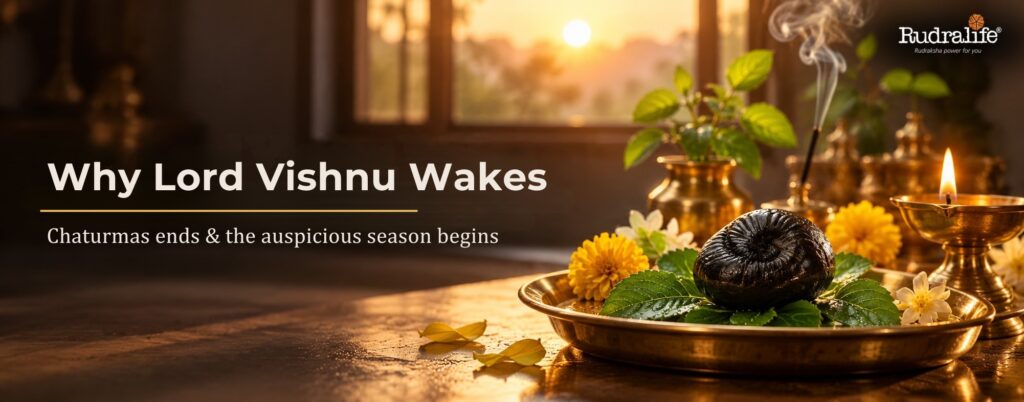
Four months earlier, on Devshayani Ekadashi in Ashadha, Lord Vishnu is believed to go into yoga nidra, resting on Shesha Naga in the Kshir Sagar. This period of rest is known as Chaturmas.
During Chaturmas, families traditionally hold back from weddings, griha pravesh & other big ceremonies. The months are kept for turning inward, with vrat, japa & simpler living.
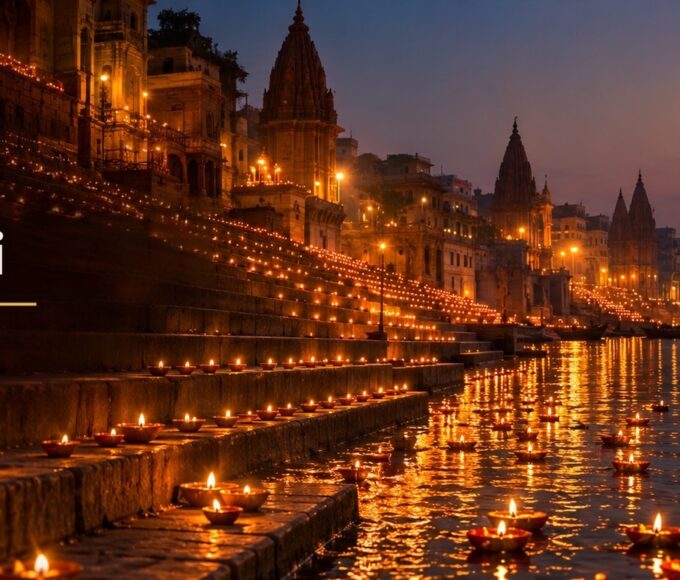
Dev Uthani means “the rising of the Lord,” & Prabodhini means “the awakening.” On this Ekadashi, devotees gently wake the Lord with songs, lamps & the sound of conch & bells. His waking is seen as the world waking with him.
Significance of Dev Uthani Ekadashi
- Chaturmas ends: the four-month pause closes, & the auspicious calendar opens again.
- Weddings resume: the Hindu wedding season traditionally begins from this day & the Tulsi Vivah that follows.
- New beginnings: griha pravesh, mundan & other samskaras are planned from here onwards.
- Bhishma Panchak begins: a five-day observance of devotion & restraint that runs from this Ekadashi to Kartik Purnima.
- Hari & Har together: Kartik is a month dear to both Lord Vishnu & Lord Shiva, which is why many devotees honour both through these days.
How to observe the Dev Uthani Ekadashi vrat
1. Begin on Dashami. Keep the evening meal light & sattvic, & many families avoid grains after sunset.
2. Bathe early & take sankalp. Clean the puja space, light a diya & take a quiet resolve for the vrat.
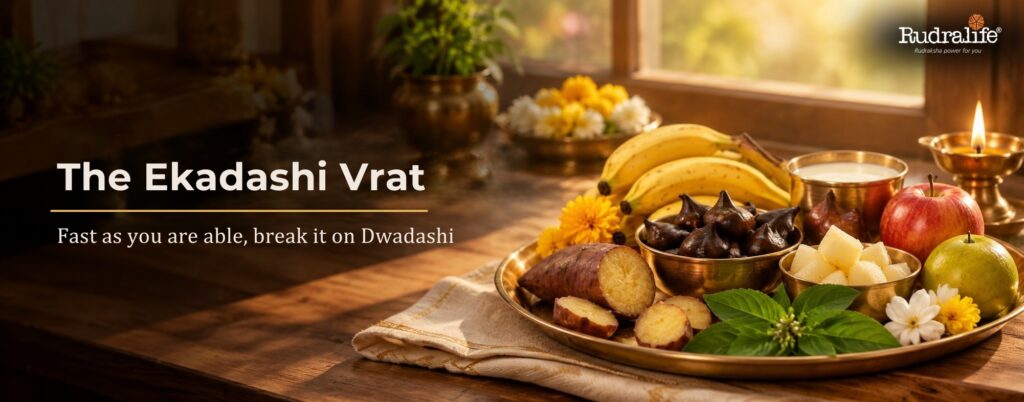
3. Prepare the Lord’s welcome. In many North Indian homes, the Lord’s footprints are drawn in rice flour or geru, & sugarcane, singhara, sweet potato & seasonal fruits are placed beside them.
4. Offer tulsi & yellow flowers. Tulsi leaves are traditionally plucked a day before, since many avoid plucking them on Ekadashi.
5. Wake the Lord in the evening. Light lamps, ring bells, blow the conch & sing “Uttishtha Govinda, tyaja nidram Jagatpate” to invite Him to rise.
6. Chant & read. “Om Namo Bhagavate Vasudevaya” & the Vishnu Sahasranama are commonly recited through the day.
7. Fast as you are able. Some keep a nirjala fast, others take fruit & milk. Rice & grains are traditionally avoided.
8. Break the fast on Dwadashi. Parana is done the next morning within the window given by your panchang.
If you are elderly, pregnant or managing a health condition, a lighter phalahar fast is a gentle choice, & it is wise to speak with your doctor first.
Tulsi Vivah 2026
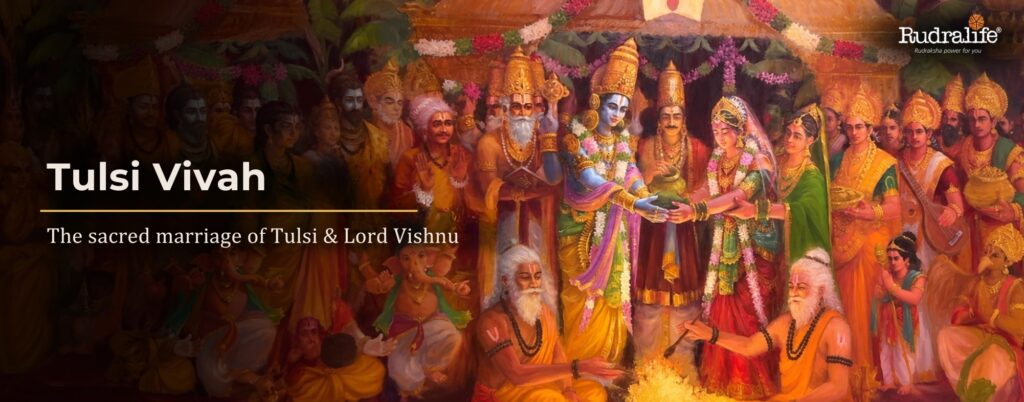
Tulsi Vivah falls on Saturday, 21 November 2026, the Dwadashi right after Dev Uthani Ekadashi. It is the sacred marriage of Tulsi Mata with Lord Vishnu in his Shaligram form.
Tradition tells of Vrinda, the deeply devoted wife of Jalandhar. Her devotion was so pure that she was blessed to be worshipped as Tulsi & wedded to the Lord every year.
In homes & temples, the Tulsi plant is dressed as a bride in a red chunri & bangles, a mandap of sugarcane is raised around her, & the Shaligram or an idol of Lord Vishnu is placed beside her. Families perform the rituals much like a real wedding, & many see it as the soft opening of the wedding season.
Learn how to do japa on a Rudraksha mala
Rudraksha & Lord Vishnu on Dev Uthani Ekadashi
Every Rudraksha is Shiva’s, yet Kartik reminds us how closely Hari & Har walk together. Two Rudraksha are especially linked with Lord Vishnu in Rudraksha tradition.
- 10 Mukhi Rudraksha: associated with Lord Vishnu, the preserver. Devotees believe it brings a sense of protection & steadiness, & it is often worn to feel guarded through life’s ups & downs.
- 19 Mukhi Rudraksha: associated with Lord Narayan. In tradition, it is linked with abundance, fulfilment & a settled, contented home.
On a day that celebrates the Lord’s awakening, wearing a bead linked to Him is a quiet way to carry the devotion of Dev Uthani Ekadashi forward.
Because Dev Uthani Ekadashi opens a season of auspicious beginnings, many devotees choose this time to start wearing Rudraksha or to begin daily japa on a Rudraksha mala. The quiet of an Ekadashi fast suits this kind of practice well.
At Rudralife, recommendations are based on a date of birth analysis using astro-numerology, so the bead you wear is chosen for you.
Find the Rudraksha that suits you →
If you prefer to see Rudraksha in person, come visit us →
Dosh Nivaran Maha Anushthan on 14 November 2026
As Chaturmas draws to a close, many families like to clear the way before the auspicious season begins. Over its 25 years, Rudralife has conducted pujas like these, & this year the Dosh Nivaran Maha Anushthan is being performed ahead of Dev Uthani Ekadashi.
This Maha Anushthan is traditionally performed to ease the effects of planetary doshas & karmic imbalances. In tradition, doshas are seen in repeated obstacles, delays in work, stress, health concerns or unrest at home. Through Vedic mantras & disciplined rituals, the Anushthan is offered to bring calm & balance to the mind, the body & the home.
- Date: Saturday, 14 November 2026
- Muhurat: 1:30 PM IST (Laabh Muhurat)
- Duration: 3 to 4 hours
- Pandits: 8 Vedic pandits
What the Anushthan includes
The puja begins with Shanti Paath, Devata Namaskar & the Maha Sankalp, followed by Ganga Pujan, Hanuman Pujan, Bhairav Pujan, Kuldevi Pujan, Pitru Namaskar, Guru Vandana & Ganapati Pujan. Abhishek is then offered to Lord Ganapati, Maa Durga, Bhairav, Hanuman & Lord Shiva.
After Pradhan Sthapan, Kshetrapal Pujan & Bhairav Stotra Paath, the pandits recite the Divya Kavach, Sankatmochan, Argala & Kilak Paath, Siddha Kunjika Stotra & the Dosh Nivaran Mantra Jaap. The Anushthan closes with the Sarva Dosh Nivaran Homa, Arogya Homa & Mahalakshmi Homa, followed by Beej Mantra Jaap, aarti, pushpanjali, ashirvad & maha prasad.
The pandits perform the Anushthan as per Vedic vidhi vidhan, speaking your full name & gotra in the sankalp. You will receive a personal WhatsApp video of the pandits chanting your name & gotra, along with mahaprasad energised in the puja itself.
Join the Dosh Nivaran Maha Anushthan →
Frequently asked questions
1. When is Dev Uthani Ekadashi in 2026? Dev Uthani Ekadashi 2026 is on Friday, 20 November for Smarta households & Saturday, 21 November for those following the Vaishnava tradition.
2. Why are there two dates for Dev Uthani Ekadashi? When the Ekadashi tithi spans two sunrises, Smarta & Vaishnava traditions use different rules to fix the fasting day. Families usually follow the date their elders have always kept.
3. When is the Dosh Nivaran Maha Anushthan in 2026? Rudralife’s Dosh Nivaran Maha Anushthan is on Saturday, 14 November 2026 at 1:30 PM IST, performed by 8 Vedic pandits over 3 to 4 hours.
4. When is Tulsi Vivah in 2026? Tulsi Vivah 2026 falls on Saturday, 21 November, on Kartik Shukla Dwadashi, the day after the Smarta Ekadashi.
5. What can I eat during the Dev Uthani Ekadashi fast? Fruit, milk, singhara, sweet potato & other phalahar foods are commonly taken. Rice & grains are traditionally avoided, & some devotees keep a nirjala fast.
6. When should I break the Dev Uthani Ekadashi fast? The fast is broken on Dwadashi within the parana window. Smarta observers break it on 21 November & Vaishnava observers on 22 November, as per their local panchang.
7. Why do weddings start after Dev Uthani Ekadashi? Tradition holds that Lord Vishnu rests through Chaturmas, so big ceremonies are held back. Once He wakes on this day, the wedding season & other auspicious ceremonies begin again.
8. Which Rudraksha is linked with Lord Vishnu? The 10 Mukhi Rudraksha is associated with Lord Vishnu & the 19 Mukhi with Lord Narayan. A date of birth recommendation can help you choose the bead that suits you.
Bottom line
Dev Uthani Ekadashi 2026 is a soft turning point in the year. Whether you fast on 20 or 21 November, light a lamp, sing to wake the Lord & let the season of new beginnings arrive gently in your home.
Disclaimer: Festival dates & parana timings may vary by city & tradition. Please confirm with your local panchang or family priest. Fasting guidance is traditional & not medical advice.






Leave a comment