







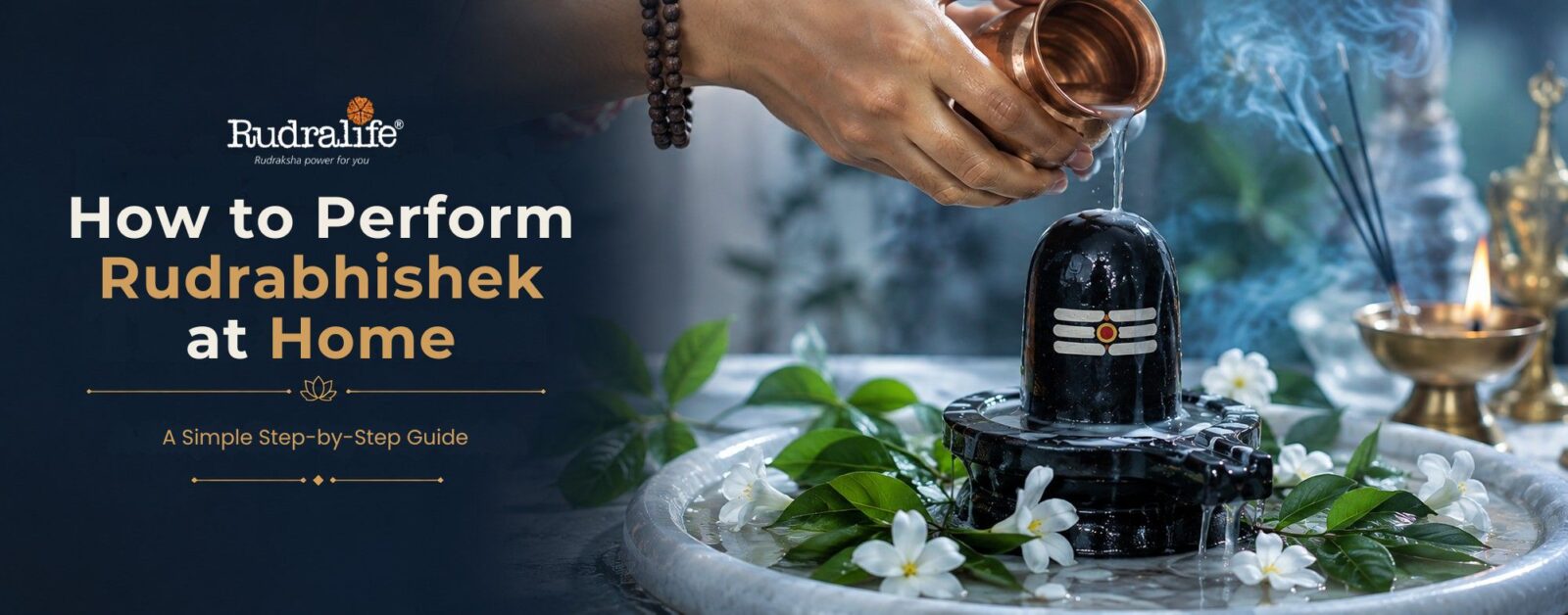
Rudrabhishek means, quite literally, bathing the Shiva Linga, pouring water, milk, honey, and other sacred substances over it while chanting mantras in Shiva’s honour. It’s one of the oldest and most cherished forms of worship in the Shaiva tradition, and it doesn’t require a grand temple or an elaborate setup. It asks only for sincerity, a little preparation, and a quiet hour.
Key Takeaways
- Rudrabhishek is the ritual bathing of the Shiva Linga with water, milk, curd, honey, ghee, and other sacred substances, accompanied by mantra chanting.
- Shravan Mondays (Shravan Somvar) are considered especially suited for this ritual, as Monday already belongs to Shiva and falls within His sacred month.
- You don’t need every item on the samagri list, even water and a sincere heart are enough to begin.
- The Rudra Gayatri Mantra is traditionally chanted through the abhishek itself, alongside “Om Namah Shivaya.”
- If you can’t perform it at home, Rudralife’s Vedic priests have carried out Sankalp Puja on devotees’ behalf for over 25 years.
Why Shravan Mondays Are Ideal for Rudrabhishek
Shravan Mondays, Shravan Somvar, are considered especially suited for this. Monday already belongs to Shiva in the Hindu week, and when it falls within His own sacred month, that significance deepens. Many devotees choose to perform Rudrabhishek at home on these Mondays, in whatever way their homes and circumstances allow.
The next Shravan Somvar falls on 17 August. In North India, 24 August follows; across the South and West, Somvars continue on 24 and 31 August and 7 September.
See the full Shravan 2026 calendar →
Every Somvar and festival date, in both regional calendars.
Dr. Tanay Seetha explains why each Shravan Somvar carries a different puja, and how the tithi of the day decides which ritual is performed.
If you’ve wanted to try this yourself but weren’t sure where to begin, here’s a simple guide.
What You’ll Need (Samagri)

You don’t need everything on this list to begin, even water and a sincere heart are enough. But if you’d like to follow the fuller tradition, here’s what is typically gathered:
- A Shiva Linga (or an image/idol of Shiva, if a Linga isn’t available)
- A copper or steel vessel for pouring
- Clean water (ideally Gangajal, if you have it)
- Raw milk
- Curd (dahi)
- Honey
- Ghee
- Bel patra (bilva leaves), considered especially dear to Shiva
- White flowers, particularly Datura or Akand, if available
- A diya (lamp) with sesame or ghee
- Incense (dhoop or agarbatti)
- A small plate for offerings (fruits, if you wish to include them)
You can perform the abhishek with just one or two of these, say, water and milk, and it will still be complete. What matters more than the length of the list is the attention you bring to it.
No Shiva Linga at home? An image, an idol, or even a Rudraksha bead can take its place, since Rudraksha is traditionally considered a form of Shiva himself.
Read: What Is Rudraksha? A Complete Beginner’s Guide →
The Rudrabhishek Ritual, Step by Step
1. Prepare yourself and the space
Wake, if you can, before sunrise. Bathe and wear clean clothes. Clean the space where you’ll perform the puja, even a small corner of your home is enough, and place the Shiva Linga or image where you can sit comfortably before it.
2. Light the lamp and offer a moment of intention
Light your diya and incense. Sit for a moment with your eyes closed. This is a good time to silently set your sankalp, your intention for the puja, whether it’s for peace of mind, a family member’s health, or simply gratitude.
3. Begin the abhishek, pour each substance one at a time
Pour each item slowly and gently over the Linga, one at a time, allowing a moment between each:
- Begin with water
- Then milk
- Then curd
- Then honey
- Then ghee
With each pour, chant “ॐ नमः शिवाय ” Om Namah Shivaye quietly, or if you know it,
The Rudra Gayatri Mantra,”ॐ तत्पुरुषाय विद्महे महादेवाय धीमहि।तन्नो रुद्रः प्रचोदयात्॥” Om Tatpurushaya Vidmahe, Mahadevaya Dhimahi, Tanno Rudrah Prachodayat
This mantra is traditionally chanted through the abhishek itself, invoking Shiva’s form and grace with each offering.
If you’d like to understand its meaning and pronunciation in more depth before you begin, our guide covers this and nine other essential Shiva mantras.
Read: Powerful Lord Shiva Mantras to Chant During Shravan →
4. Offer bel patra and flowers
After the liquid offerings, gently place bel leaves and flowers at the base of the Linga. Bel patra is considered one of the most beloved offerings to Shiva, even a single leaf, offered with devotion, is said to be enough.
5. Offer light and complete the aarti
Circle the diya gently before the Linga in a clockwise motion, and if you know it, sing or recite a short aarti. This marks the closing of the ritual.
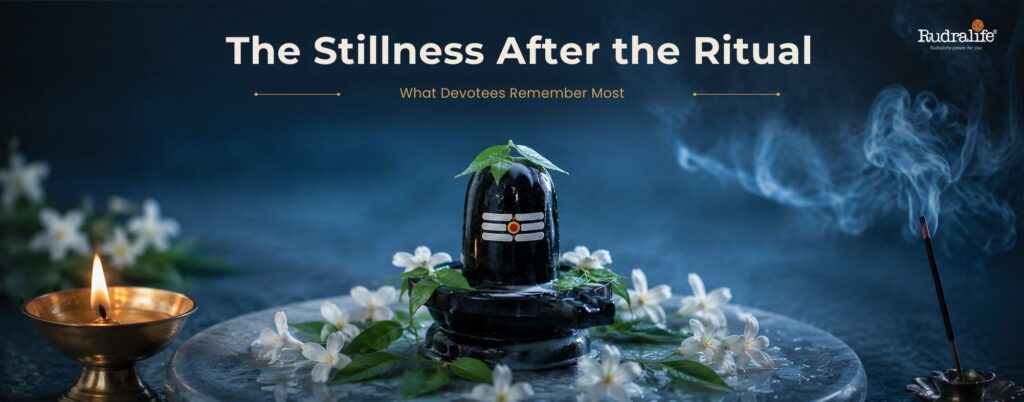
6. Sit in stillness for a few moments
Before you get up, sit quietly for a minute or two. This part is easy to skip, but it’s often the part devotees remember most, the stillness right after the ritual, when nothing is asked for and nothing is expected.
If You Can’t Be There Yourself
Not everyone can wake before sunrise, gather the samagri, or set aside an hour on a Shravan Monday, and that doesn’t take anything away from your devotion. Life doesn’t always allow for it, and Shiva has never asked for perfect circumstances, only a sincere heart.
For over 25 years, Rudralife’s Vedic priests have performed Sankalp Puja on behalf of devotees who couldn’t be present in person, carrying out the same Rudrabhishek, with your name and sankalp spoken during the ritual, so that your intention still reaches Mahadev.
If this Shravan Monday finds you unable to perform it at home, this is simply the same devotion, carried on your behalf.
This is the Rudrabhishek our pandits performed for the first Shravan Somvar this year, with each devotee’s name and gotra chanted during the ritual.
Book a Shravan Somvar Sankalp Puja →
Performed in your name and gotra, with a personalised video of the pandit chanting your sankalp.
The next Somvar is 17 August.
Frequently Asked Questions
Do I need a priest to perform Rudrabhishek at home? No. Rudrabhishek can be performed by anyone at home, with or without prior experience. A priest is traditionally involved for temple-scale or elaborate versions, but the home ritual is meant to be simple and accessible.
What if I don’t have all the samagri items? That’s alright. Even water alone, offered with sincerity, is considered a complete Rudrabhishek. The full list is a tradition to grow into, not a requirement to begin.
Can women perform Rudrabhishek? Yes. Rudrabhishek can be performed by anyone, regardless of gender, who wishes to worship Shiva with devotion.
What’s the difference between Rudrabhishek and a regular Shiva puja? A regular Shiva puja may involve offerings, prayers, and aarti without the ritual bathing of the Linga. Rudrabhishek specifically centers on this abhishek (bathing) sequence with sacred substances.
Read: Shiva Puja at Home During Shravan →
Read: What Does the Concept of Abhishek Mean? →
Can I perform Rudrabhishek on days other than Monday? Yes, though Shravan Mondays are considered especially auspicious. Many devotees also perform it on Shivratri or as a personal practice on any day.
Read: Laghu Rudri Puja in Shravan →
Eleven pandits, eleven recitations, performed on a single Somvar.
What if I can’t perform it myself this Shravan? Rudralife’s Vedic priests can perform a Sankalp Puja Rudrabhishek in your name and gotra, so your intention still reaches Mahadev even if you can’t be present.
The Bottom Line
Rudrabhishek doesn’t ask for a grand setup, only sincerity, a little preparation, and a quiet hour with Shiva. Whether you perform it yourself this Shravan Monday or have it performed in your name, the devotion behind it is what reaches Mahadev.
Book a Shravan Somvar Sankalp Puja →
For the Mondays you can’t keep yourself.







Leave a comment