






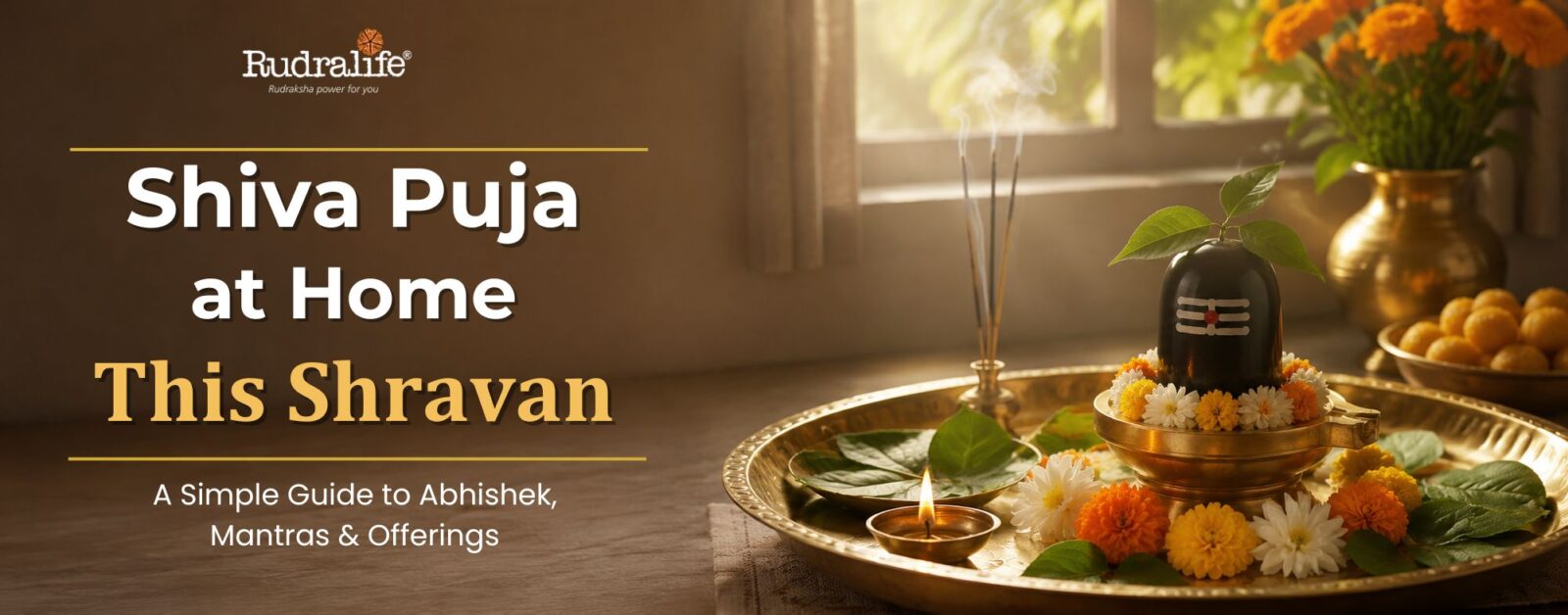
To perform Shiva Puja at home during Shravan, clean your space and place the Shivling facing north or east, take a sankalp, light a lamp, and perform Abhishek by pouring water and Panchamrit over the Shivling while chanting Om Namah Shivaye.
Then offer Bilva leaves, sandalwood, and flowers, and finish with aarti. Lord Shiva is known to be pleased by devotion above all else, even a simple offering of water, given with sincerity, is enough.
Key Takeaways
- Shiva Puja can be done at home; a temple visit is not required.
- The heart of the worship is Abhishek, bathing the Shivling with water and Panchamrit.
- Bilva (Bel Patra) leaves are essential and dear to Lord Shiva.
- Never offer Tulsi or Ketaki flowers to Shiva, these are the only two forbidden offerings.
- Even simple water offered with devotion is complete worship, as Shiva is “Bholenath.”
- Shravan Somwar (Mondays) are the most auspicious days for Shiva Puja.
- If you can’t perform the puja yourself every Somwar, Sankalp Puja lets you take part using your name and gotra.
Three Ways to Perform Shiva Puja at Home
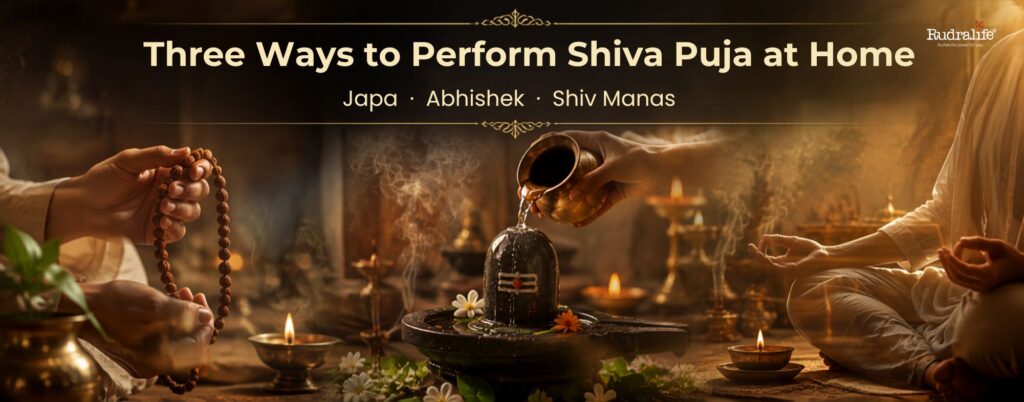
Not every day allows for a full Abhishek, and Lord Shiva does not expect one. Depending on the time and space you have, you can worship him in one of three ways, or move between them as your Shravan goes.
1. Japa, Chanting Om Namah Shivaye The simplest way to worship. Clean yourself and your space, sit facing east, and chant “Om Namah Shivaye” 108 times using a japa mala to keep count. No Shivling or puja items are needed, just a quiet mind and sincere repetition of the mantra.
2. Abhishek This is the fuller worship, involving the full ritual of bathing the Shivling and offering Bilva leaves, chanting, and aarti. If you don’t have a Shivling, Abhishek can be performed on any idol of Lord Shiva, a photo frame, a sopari, or even a Rudraksha bead, since Rudraksha is considered a form of Lord Shiva himself. The complete step-by-step is covered later in this guide.
3. Shiv Manas Puja A form of mental worship, where you visualize offering water, flowers, incense, and every other item of puja to Lord Shiva in your mind, without any physical items at all. It suits days when you’re travelling or otherwise unable to set up a puja space, since the devotion is carried entirely in thought and intention.
If none of these are possible on a given Somwar, Rudralife’s Sankalp Puja lets a Vedic pandit perform the worship in your name and gotra, so the blessings still reach you.
Rudralife Shravan Sankalp Puja
Some Shravan Somwars are difficult to keep, work, travel, or simply the exhaustion of the season can get in the way. For these days, Rudralife offers Sankalp Puja, where Vedic pandits perform the puja using your name and gotra, so the worship is still offered in your name and you receive its blessings, wherever you are.
The Shivling Abhishek is performed as part of a larger Vedic ritual conducted by the pandits, alongside worship of other deities as per tradition.
Watch the puja performed for the first Shravan Somvar (North India) here
You’ll also receive a personalised video of the pandit chanting your name and gotra during the puja.
Each Shravan Somvar carries its own significance
- 1st Somvar: Rudrabhishek with Sugarcane Juice, for prosperity
Book This Somwar’s Puja → - 2nd Somvar: Ardhnarishwar Puja, for relationship harmony
Book This Somwar’s Puja → - 3rd Somvar (also Nag Panchami): Laghu Rudrabhishek, for protection
Book This Somwar’s Puja → - 4th Somvar: Shatru Nivaran Vijay Rudrabhishek, for protection from enemies and legal victory
Book This Somwar’s Puja → - 5th Somvar: Parthiv Shivling with Sahasra Bilwarchan, for peace
Book This Somwar’s Puja → - 6th Somvar: Shadang Rudrabhishek, for purity and well-being
Book This Somwar’s Puja →
Book all Shravan Somvar Puja Now →
This is not a replacement for your own devotion; it’s simply a way to stay connected to Shiva Puja on the days your own worship isn’t possible.
Why Shravan Is the Best Time for Shiva Puja at Home
Shravan is the month most sacred to Lord Shiva. According to tradition, when the Halahala poison emerged during the Samudra Manthan, Shiva drank it to protect creation and held it in his throat, becoming Neelkanth.
To cool him, the gods offered water, milk, and Bilva leaves. Devotees have continued this practice through Shravan ever since. This is why Abhishek at home during Shravan, especially on Mondays, carries such deep significance.
Which Rudraksha to Use for the Puja
Every Rudraksha bead is associated with Lord Shiva, so any Rudraksha can be used in place of a Shivling for this puja. But four are considered directly connected to him:
| Mukhi | Presiding Deity |
| 1 Mukhi | Lord Shiva |
| 5 Mukhi | Lord Kaalagni Rudra (a form of Lord Shiva) |
| 15 Mukhi | Lord Pashupatinath |
| Sawar | Lord Shiva |
Note: the authentic 1 Mukhi Rudraksha is the South Indian Kaju Dana; a round 1 Mukhi Nepal Rudraksha does not exist.
As Rudralife celebrates 25 years, this Shravan brings special pricing on these beads, making it easier to bring one home in time for your puja.
How to Perform Shiva Puja (Abhishek) at Home: Step by Step
Step 1: Purify Yourself and the Space Take a bath and wear clean clothes, preferably white or light-coloured. Clean the puja area and place the Shivling on a clean plate, facing north or east.
Step 2: Take a Sankalp Sit calmly, close your eyes, and take a sankalp, a sincere intention to perform the worship with devotion for the wellbeing of yourself, your family, and all beings.
Step 3: Light the Lamp and Invoke Shiva Light a ghee or oil lamp along with incense. Chant “Om Namah Shivaye” slowly a few times to calm the mind and invoke Lord Shiva’s presence.
Step 4: Perform the Abhishek This is the heart of the puja. Pour clean water or Gangajal slowly over the Shivling while chanting Om Namah Shivaye, the water should flow continuously.
Then offer Panchamrit (milk, curd, ghee, honey, sugar), and finish by rinsing again with clean water. Never use hot water, and let the liquids drain away rather than collect.
Step 5: Offer Bilva, Sandalwood and Flowers Apply a small tilak of sandalwood paste. Place Bilva (Bel Patra) leaves on the Shivling with the smooth side facing upward, then offer flowers and akshat.
Step 6: Chant, Offer Naivedya and Do Aarti Chant “Om Namah Shivaye” 108 times, or recite the Mahamrityunjaya Mantra. Offer fruits or sweets as naivedya, then perform the aarti. Sit quietly for a few minutes afterwards and meditate.
Puja Items You Will Need
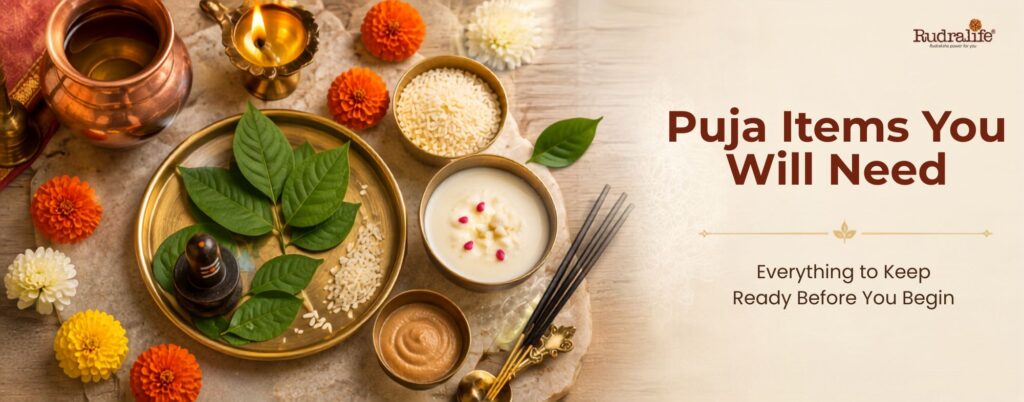
Keep these ready before you begin:
- A Shivling or an image of Lord Shiva, on a clean plate or self-draining base. If you have neither, a sopari or a Rudraksha bead can be used in their place.
- Clean water or Gangajal
- Panchamrit, milk, curd, ghee, honey, and sugar
- Bilva (Bel Patra) leaves
- Sandalwood paste, akshat (rice), and flowers
- A ghee or oil lamp and incense sticks
- Fruits or sweets for naivedya (offering)
Mantras to Chant During Shiva Puja
Panchakshari Mantra:
“Om Namah Shivaye”
the simplest and most powerful chant, suitable for everyone
Mahamrityunjaya Mantra:
ॐ हौं जूं सः । ॐ भूर्भुवः स्वः । ॐ त्र्यम्बकं यजामहे सुगन्धिं पुष्टिवर्धनम् ।
उर्वारुकमिव बन्धनान्मृत्योर्मुक्षीय मामृतात् । ॐ स्वः भुवः भूः । ॐ सः जूं हौं ॐ ।
Chanted for health, protection, and release from fear

Do’s and Don’ts of Shiva Puja
- Do use clean, cool water, never hot water on the Shivling.
- Do offer Bilva leaves with the smooth side up.
- Don’t offer Tulsi (basil) or Ketaki flowers, these are the only two offerings forbidden to Shiva.
- Do let the Abhishek liquids drain away, not collect.
- Do remember that sincerity matters more than perfection, even plain water offered with love is complete worship.
Best Time to Perform Shiva Puja During Shravan
The most auspicious times are the early-morning Brahma Muhurta (around 4–6 AM) or the Pradosh Kaal at dusk. During Shravan, Mondays (Somwar) are considered the most powerful days for Shiva Puja, followed by Pradosh and Shivratri.
Many devotees also wear a Rudraksha mala during their puja, as it is traditionally associated with Lord Shiva worship and helps maintain focus while chanting.
Rudralife’s malas are sourced directly from Rudraksha farmers in Nepal and undergo strict authentication and ACE energisation before reaching you.
Explore Authentic Rudraksha Malas →
In Shravan many devotees choose to begin their Rudraksha journey. If you’ve been waiting for the right time to start yours, this Shravan is it.
Speak With a Rudralife Expert – Free Personalised Consultation →
FAQs
1. Can I perform Shiva Puja at home during Shravan? Yes. There is no restriction that it must be done in a temple. Daily or weekly Abhishek at home strengthens devotion and creates a calm, sacred atmosphere.
2. What should I offer during Shiva Puja? Water or Gangajal, Panchamrit, Bilva leaves, sandalwood, flowers, and fruits or sweets. Even a simple offering of water with devotion is enough.
3. Which offerings are forbidden in Shiva Puja? Tulsi (basil) leaves and Ketaki flowers are the only two offerings never made to Lord Shiva.
4. Can women perform Shiva Puja and Abhishek? Yes. There is no restriction on women worshipping Lord Shiva.
5. What is the best time for Shiva Puja during Shravan? Early morning Brahma Muhurt starts about one hour and thirty-six minutes before sunrise and ends forty-eight minutes before it, usually around 4:00 AM to 5:30 AM.
or Dusk Pradosh Kaal Begins about 1.5 hours before sunset and concludes 1.5 hours after sunset , and especially on Shravan Somwar (Mondays).
6. How is Sankalp Puja different from doing the puja myself? In Sankalp Puja, a Vedic pandit performs the ritual on your behalf using your name and gotra, so you receive the puja’s blessings without performing it yourself, useful for Somwars when you’re travelling, unwell, or simply unable to set aside the time.
Bottom Line
Shiva Puja at home during Shravan does not need to be elaborate, a clean space, a Shivling, water, Bilva leaves, and a sincere heart are enough.
Follow the simple steps of Abhishek, chanting, and aarti, and remember that Lord Shiva, known as Bholenath, is pleased by devotion far more than by grandeur. And if you can’t be there in person every Somwar, Sankalp Puja lets you take part all the same.
This Shravan, let your home, or your name and gotra, become a place of quiet, sacred worship.
Disclaimer: This article is for informational and devotional guidance. Puja practices vary by region and tradition; follow the customs of your family or a qualified Vedic pandit where they differ.








Leave a comment