






Kojagari Purnima is the full moon night of Ashwin, when the moon is said to shine with all sixteen of its kalas & Goddess Lakshmi is believed to walk the earth asking one quiet question: ko jagarti? who is awake?
Homes keep a lamp lit, families sit up in prayer, & a bowl of kheer rests under the moonlight until morning. In 2026, Kojagari Purnima falls on Sunday, 25 October.
Key takeaways
- Kojagari Purnima 2026 is on Sunday, 25 October; Purnima tithi runs from 11:55 AM on 25 October to 9:41 AM on 26 October (Mumbai)
- The Nishita puja window is 11:58 PM on 25 October to 12:47 AM on 26 October
- Kojagari comes from ko jagarti, “who is awake” & the night is kept as a vigil for Goddess Lakshmi
- Bengal, Odisha & Assam observe it as Lakshmi Puja; most of India knows it as Sharad Purnima
- Kheer left under the full moon & shared at dawn is the most loved tradition of the night
- Rudraksha associated with Goddess Lakshmi & the Moon can be worn as part of your Kojagari prayers
When is Kojagari Purnima 2026?
Kojagari Purnima 2026 is observed on Sunday, 25 October. The puja is done on the day the Purnima tithi covers Nishita kaal, the deepest part of the night, which is why the date is chosen by midnight rather than sunrise.
Timings for Mumbai, per Drik Panchang:
- Kojagari puja: Sunday, 25 October 2026
- Nishita puja time: 11:58 PM to 12:47 AM, 26 October
- Moonrise: 5:28 PM
- Purnima tithi begins: 11:55 AM, 25 October
- Purnima tithi ends: 9:41 AM, 26 October
Timings shift slightly from city to city, so check your local panchang.
Source: Drik Panchang, Kojagara Puja 2026 (Mumbai)
What does Kojagari mean?
Kojagari comes from the Sanskrit ko jagarti, “who is awake?” The mahatmya of the vrat, attributed to the sage Valakhilya, says Goddess Lakshmi moves from home to home on this night & blesses those she finds awake in devotion.
Being awake here means more than staying up. It is wakefulness of the heart: a lamp kept burning, the mind turned toward prayer, a home that is ready to receive. That is why the vrat is also called the Kojagara jagaran.
Know which Rudraksha suits you, based on your date of birth →
Why Goddess Lakshmi is worshipped on this night
Tradition holds that Goddess Lakshmi emerged from the Samudra Manthan on Sharad Purnima, which makes this full moon her own night. It also comes just after Navratri & Dussehra, when the harvest is ripening & homes turn toward gratitude for abundance.
The moon matters too. On Sharad Purnima it is believed to rise with all sixteen kalas, its fullest form of the year, & its light is said to carry a cooling, nourishing quality. In Braj, this is also remembered as the night of Shri Krishna’s Maha Raas.
So Kojagari Purnima brings three things together: the goddess of prosperity, the most complete moon of the year, & a night kept awake in devotion.
How Kojagari Purnima is celebrated across India

The same full moon is welcomed in many ways, each carrying its own flavour of devotion.
- West Bengal, Assam & Tripura: Known as Kojagori Lokkhi Puja, it comes five days after Bijoya Dashami. Homes draw alpana footprints leading to the puja space, read the Lakshmir Panchali & offer khichuri, narkel naru & seasonal fruit.
- Odisha: Celebrated as Kumar Purnima, when young women offer prayers to Kartikeya & the moon, with games & songs through the evening.
- Mithila (Bihar): Kojagara is special for newly married grooms, with makhana, paan & sweets shared among family & neighbours.
- Maharashtra: Kojagiri Purnima is marked with saffron-cardamom milk warmed under the moon, & in many homes the eldest child is honoured.
- Gujarat: Sharad Poonam evenings carry the last garba of the season, followed by doodh-pauva under the moonlight.
- North India & Braj: Observed as Sharad Purnima, with kheer kept under the moon & Raas celebrations in Vrindavan & Mathura temples.
Kojagari puja vidhi at home
The puja is simple & can be done by anyone in the family. What matters most is a clean space, a steady lamp & a quiet mind.
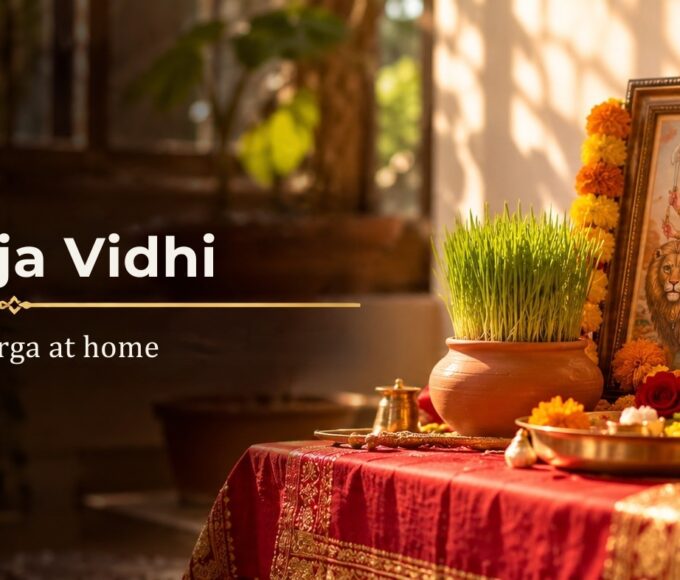
1. Prepare the home: Clean the house, especially the entrance & the puja space. Draw a rangoli or alpana, with small footprints leading inward.
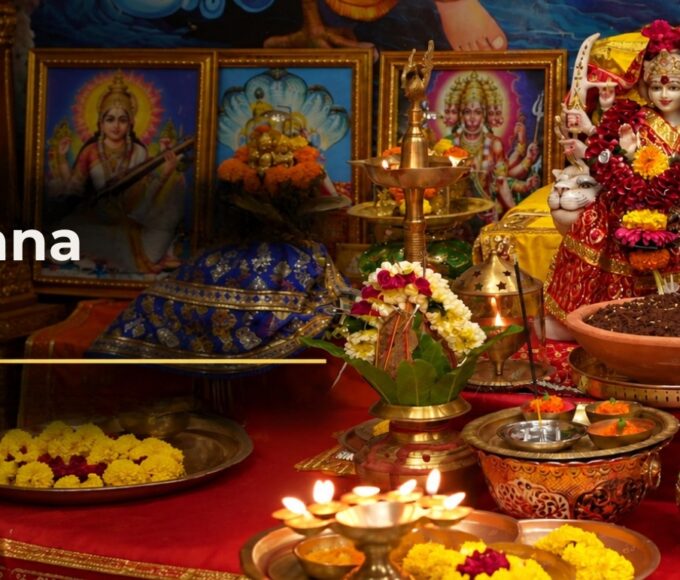
2. Set up the altar: Place an idol or image of Goddess Lakshmi on a red or yellow cloth. Keep a kalash of water with mango leaves & a coconut beside her.
3. Light the lamp: Light a ghee diya at dusk & keep it burning through the night.
4. Offer & pray: Offer flowers, kumkum, rice, a lotus if you have one, & a sweet such as kheer or naru. Chant the Shri Suktam, the Lakshmi Ashtakam or simply Om Shreem Mahalakshmiyai Namah.
5. Pray to the moon: After moonrise, offer arghya of water & milk to the moon with folded hands.
6. Keep the vigil: Stay awake into the night with bhajans, japa or reading the vrat katha. Many devotees fast during the day & break it after the puja.
The kheer under the moonlight
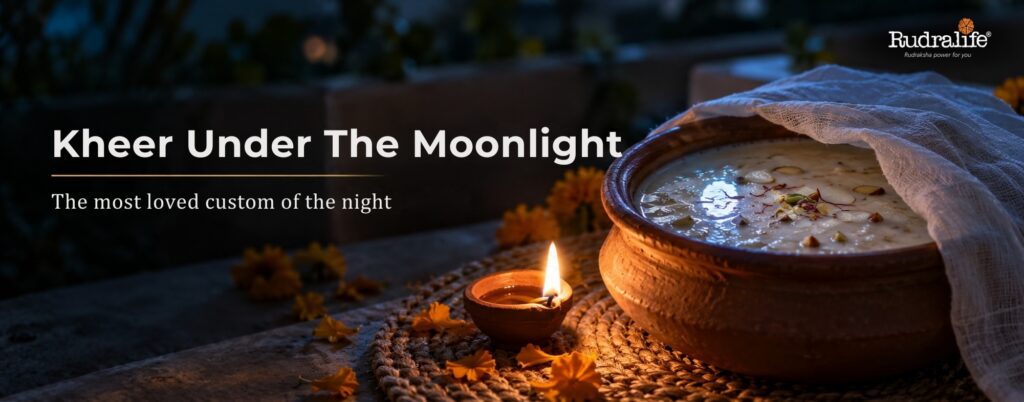
The most loved custom of the night is the bowl of kheer placed under the open sky. Rice, milk & sugar are slow-cooked, covered with a fine cloth & left in the moonlight for a few hours, often until dawn.
It is believed that the moon’s rays on this night carry amrit, & the kheer absorbs that blessing. In the morning, it is first offered to Goddess Lakshmi & then shared as prasad with the whole family.
Watch: how to do Rudraksha japa
Rudraksha for Kojagari Purnima
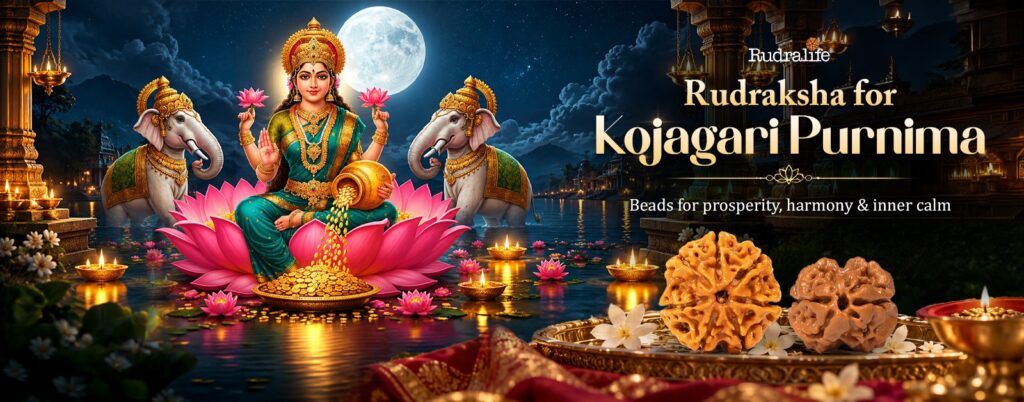
Rudraksha has long been part of Lakshmi worship, & a Kojagari night spent in japa is a gentle time to begin wearing one. Two beads are especially close to this festival.
- 7 Mukhi Rudraksha: Representing Goddess Mahalakshmi, this bead blesses the wearer with prosperity, steady progress & freedom from financial worry.
- 2 Mukhi Rudraksha: Representing Ardhanareshwar & ruled by the Moon, this bead blesses the wearer with emotional balance, harmony in relationships & inner calm.
For the whole home, the Ganesh Lakshmi Bandh & the Seven Mukhi Cash Box are kept in the puja space or locker as a quiet invocation of abundance for the family.
Every devotee is different. Rudralife’s recommendation is based on your date of birth through astro-numerology, so the bead you wear supports the planets that need balancing in your life.
Get your personalised Rudraksha recommendation →
If you prefer to see Rudraksha in person, come visit us at an upcoming Rudralife exhibition.
Lakshmi pujas on Kojagari
A Lakshmi puja performed by Vedic pandits on this full moon is a traditional way to seek her blessings for the year ahead. Over its 25 years, Rudralife has conducted pujas like these for devotees across the world.
In a Sankalp Puja, pandits perform each puja as per Vedic vidhi vidhan & speak the devotee’s name & gotra in the sankalp, wherever the devotee may be. The puja is streamed live on YouTube, & the devotee receives mahaprasad energised in the puja itself.
Explore Sankalp Pujas with Rudralife →
Frequently asked questions
1. When is Kojagari Purnima in 2026? Kojagari Purnima 2026 falls on Sunday, 25 October. The Nishita puja time in Mumbai is 11:58 PM to 12:47 AM.
2. Are Kojagari Purnima & Sharad Purnima the same? Yes, both fall on the full moon of Ashwin. Kojagari is the name used in Bengal, Odisha, Assam & Mithila, where the night centres on Lakshmi puja; most of India calls it Sharad Purnima.
3. Why do people stay awake on Kojagari night? Kojagari means “who is awake?” It is believed Goddess Lakshmi visits homes on this night & blesses those keeping a vigil in devotion.
4. Why is kheer kept under the moon? The full moon of Sharad Purnima is believed to carry amrit in its rays. Kheer left in the moonlight absorbs this blessing & is shared as prasad the next morning.
5. Can I fast on Kojagari Purnima? Many devotees keep a day-long fast & break it after the evening puja or with the moonlit kheer. Others simply perform the puja; both are sincere ways to observe the day.
6. Which Rudraksha is associated with Goddess Lakshmi? The 7 Mukhi Rudraksha represents Goddess Mahalakshmi. For a recommendation suited to you, Rudralife looks at your date of birth through astro-numerology.
7. Can I begin wearing Rudraksha on Kojagari Purnima? Yes. Purnima is considered an auspicious day to begin wearing Rudraksha, ideally after a short prayer & japa.
The bottom line
Kojagari Purnima asks very little of us: a clean home, a lit lamp & a heart that stays awake. On 25 October, keep the diya burning, leave a bowl of kheer under the moon & sit with Goddess Lakshmi for a while. Abundance, the tradition says, finds the homes that are ready for it.







Leave a comment